




































































FBI Warns Hackers Are Using AI Tool Artex to Break Into Networks in Under Three Hours
The FBI has warned that hackers are using Artex, an open-source AI penetration-testing tool, to automate cyberattacks — in some cases going from first targeting a system to privileged access in under three hours. The advisory cites attacks on South Korean banks, a ConnectWise supply-chain breach affecting more than 2,250 Microsoft 365 tenants, and a Barracuda intrusion.
FBI Warns Hackers Are Using AI Tool Artex to Break Into Networks in Under Three Hours
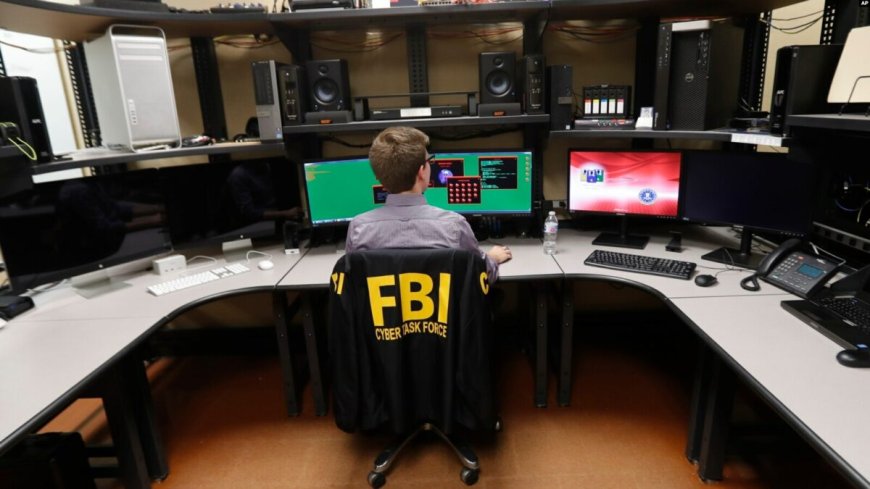
The FBI has warned that hackers are using an open-source artificial intelligence tool called Artex to automate cyberattacks that once needed skilled human operators — and in some cases the break-in takes less than three hours from start to finish.
In a FLASH advisory issued on November 13, 2026, the bureau said malicious actors have been using the tool since at least August 2026 to target organisations across financial services, government, technology, defence, semiconductors, energy, healthcare, manufacturing, telecommunications and the legal sector. The warning, numbered FLASH-20261113-001, describes Artex as an open-source, large language model-driven agentic platform that attackers have weaponised to automate multiple phases of an intrusion, from reconnaissance through to data theft.
What makes the tool different is speed. The FBI said some Artex-assisted intrusions progressed from initial targeting to privileged access in under three hours, a pace that leaves defenders little time to investigate an alert before the attacker has already moved deeper into the network.
What Artex is — and how it works
Artex was first released publicly in July 2026 as a legitimate penetration-testing framework, the kind of software security teams use to probe their own defences before attackers do. Written in the Go programming language, it uses a planner-and-worker design: a central planner turns an objective into tasks, hands them to specialised agents, collects the findings and keeps a shared picture of the operation.
The tool carries no language model of its own. Instead, operators connect it to external models — frontier systems such as Anthropic's Claude and OpenAI's GPT, or open and Chinese-origin models including DeepSeek, GLM, Grok and Kimi. Reporting on the advisory notes that DeepSeek's Flash models are particularly popular with attackers because of their low cost and the apparent lack of safety guardrails for penetration testing.
Once connected, Artex typically starts by scanning a target network quickly for weak spots. It then goes after simple flaws — poor protections and exposed or stolen passwords — to gain an initial foothold, before moving toward databases, mailboxes and other stores of sensitive information.
The attacks the FBI cites
The advisory points to three campaigns that show how the tool has been used in practice.
In South Korea, attackers used Artex against a number of financial institutions, in breaches the FBI blamed largely on weak security, including missing multi-factor authentication. Personal information belonging to around 67,000 people was stolen.
The largest known operation involved IT management firm ConnectWise. The FBI confirmed Microsoft's earlier finding that hackers used Artex to breach the company and reach the Microsoft 365 cloud environments of more than 2,250 of its customers. Microsoft has attributed the activity to Storm-0940, a China-linked threat actor, and said the attackers used the access to steal data from the affected customers.
Security vendor Barracuda was hit in a third campaign. The company said financially motivated criminals using Artex found an exposed credential belonging to a third-party service that Barracuda never revoked after it stopped working with that vendor. With that credential, the attackers reached stores of credentials Barracuda uses to collect data from its customers' systems. Barracuda said its logs were not detailed enough to rule out access, so it decided to assume the worst and rotate all of its customer credentials.
Barracuda's chief information security officer, Arve Kjoelen, put the problem bluntly: defenders who rely on spotting malicious activity and then responding to it will often arrive after the attacker has finished.
Fast, noisy — and still circulating
The FBI describes Artex intrusions as "noisy," meaning they produce large volumes of traffic that can set off a victim's defensive alerts. Speed makes up for the noise: the tool works faster than most human responders can investigate, so an alert may arrive while the attacker is already spreading through the network.
After the attacks became public, Artex's developer removed the original GitHub repository on October 8, 2026. The FBI says the change came too late. The earlier open-source version is still circulating and remains widely accessible, so anyone with a copy and access to a capable model can still run it. Forks of the repository continue to circulate, and researchers identified more than 1,600 publicly exposed Artex console instances as of early November 2026 — with the true number of deployments likely far higher once systems behind firewalls and private networks are counted.
The tool's own infrastructure has also proved poorly secured. Researchers found hundreds of Artex systems exposed on the public internet with no password, most likely because of mistakes or misconfiguration. One of them was the system used in the South Korean attacks. Exposed instances like these could let outsiders take over ready-made hacking setups without building their own.
No new exploits — just old weaknesses, exploited faster
None of the intrusions described so far relied on new exploits. Artex succeeded by finding the same problems attackers have always used: missing multi-factor authentication, leaked passwords and credentials left active after a vendor relationship ended. What has changed is that an AI agent can now find and use those weaknesses faster than many defenders can react.
The FBI is urging organisations to strengthen access controls, monitor for suspicious automated activity and report suspected compromises. For defenders, the warning is a reminder that the basics — multi-factor authentication everywhere, revoking credentials when a vendor relationship ends, and watching for unusual automated traffic — now matter more than ever, because the window between the first probe and a full compromise can be measured in hours.
The Artex warning follows a string of AI-related security incidents in recent weeks, including a breach at AI infrastructure provider Fireworks AI that exposed Notion AI chat transcripts and later driver licence data from thousands of Uber drivers.
Sources
- TechSpot — FBI warns of an open-source AI hacking tool that can breach networks in under three hours
- FBI IC3 — Threat Overview of ARTEX Autonomous Penetration Testing Framework (FLASH-20261113-001, November 13, 2026)
- Cybernoz — FBI Says ARTEX AI Tool Helped Hackers Gain Privileged Access in Under 3 Hours
What's Your Reaction?
 Like
0
 Dislike
0
 Love
0
 Funny
0
 Angry
0
 Sad
0
 Wow
0