






















































AI Selloff Forces Investors to Count Their Hidden Exposure as $25 Trillion Rides on the Trade
A Reuters analysis published on November 16, 2026, finds investors scrambling to work out how much artificial intelligence risk is really buried in their portfolios after the latest bruising selloff in AI stocks. At least $25.3 trillion sits in the world's largest companies with the most direct AI exposure, according to the MSCI Global Intelligence Index, while large US pension funds now hold 38.5 percent of their public equities in AI-related companies. Fund managers are running forensic reviews of bonds, loans and shares to map exposure that reaches far beyond chipmakers and data centres.
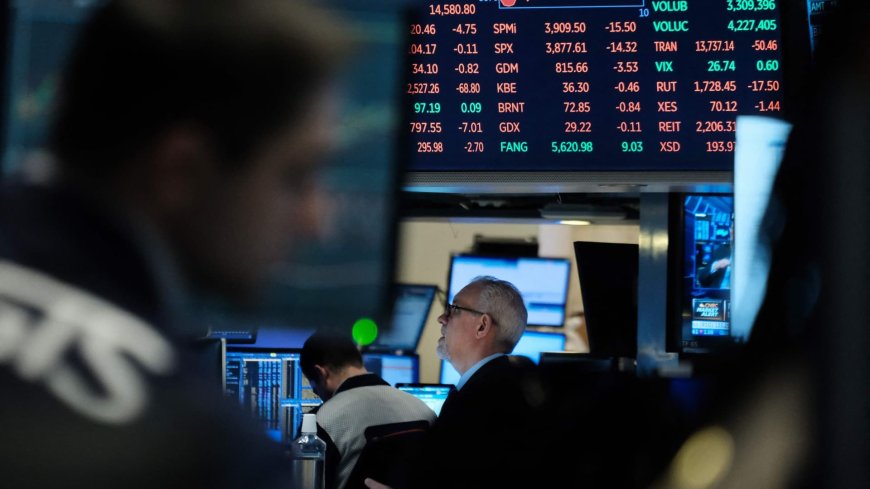
AI Selloff Forces Investors to Count Their Hidden Exposure as $25 Trillion Rides on the Trade
Until recently, artificial intelligence was the trade Wall Street could not get enough of. Now, after the latest bruising selloff in AI-related stocks, many portfolio managers are treating the sector with far greater caution — and trying to work out just how much AI risk is quietly embedded in their portfolios.
There is a lot at stake. At least $25.3 trillion is invested in the largest global companies with the most direct exposure to AI, according to the MSCI Global Intelligence Index, and beyond that sits further exposure to companies that may benefit — or suffer — as AI reshapes whole industries, exposure that is impossible to quantify precisely. That is the finding of a Reuters analysis published on November 16, 2026, by Suzanne McGee.
The latest leg of the selloff, including the slump on Wednesday that followed the resignation of Nvidia chief executive Jensen Huang, has put a new focus on how much AI exposure investors actually hold. The question is no longer whether AI matters to a portfolio, but how much of it is hiding in places no one thought to look.
A $25 trillion question with no clean answer
For Andy Goldberg, chief investment strategist at Nomura Asset Management, the scale of the problem hit home last month when he saw that wedding retailer David's Bridal planned to spin off and list its AI wedding-planning business next year.
"Since when was a wedding gown shop a play on AI?" Goldberg said, adding that exposure to AI now exists even in the most unlikely corners of the economy. David's Bridal chief executive Kelly Cook said the firm "has been a pioneer in applying AI to retail for several years."
From trucking companies using AI tools to tackle logistical problems to municipal bonds whose credit ratings may hinge on revenue from building new data centres, AI now touches both risk and return across portfolios, Goldberg said.
"No one fully understands how much exposure they have to AI; it's really become just one big trade at this point," Goldberg said. If investors decide to trim even 1 percent or 2 percent from their allocations to AI plays, he added, the reaction will be "something that (looks) like a rout."
The forensic task: screening every bond, loan and share
For investors trying to map that exposure, the process is increasingly becoming a forensic exercise.
At PGIM, the investment arm of Prudential Insurance, analysts and portfolio managers overseeing nearly $1 trillion in fixed-income investments began this year putting every bond, loan and structured security through two AI-focused screens. One evaluates AI's impact on a company's business model and credit profile; the other looks for exposure to events ranging from a slowdown in AI-related capital spending to a market crisis in the most unlikely companies.
"We know how to assess the direct exposure, like, I have a data center or I have chips" in the portfolio, said Brian Barnhurst, head of global credit research at PGIM. "But how about the indirect things? And that's critically important to understand."
Barnhurst said the approach helps analysts isolate "what does AI mean for this healthcare business, or this industrial business or this telecom business?" — the kind of second-order question that standard sector labels never answer.
Pension funds are deeper in AI than they look
The amount invested in AI is huge, and retirement savings are no exception. The Equable Institute, a nonpartisan pension fund think tank, calculated that a basket of 52 publicly traded AI-related companies made up 38.5 percent of public equity holdings at a group of large pension funds as of June 2026, up from 20.7 percent at the beginning of 2010.
Those funds have between 9 percent and 11 percent of their assets invested in AI-focused companies, Equable calculated. The figure excludes debt holdings, venture capital and other private equity investments, meaning it almost certainly understates their broader exposure.
"Understanding true portfolio exposure is becoming more important" at this point in the AI cycle, said Jay Jacobs, US head of equity ETFs at BlackRock. The fact that so many AI core holdings now dominate big indexes creates a degree of concentration that is "making diversification harder to achieve than investors may realize."
Overexposed — or just concentrated?
Adding to the uncertainty is the near-constant news around major AI players such as Nvidia, the looming initial public offering of Anthropic and concerns over CoreWeave. Some managers are responding by becoming pickier.
The market's willingness to pummel members of the AI trade "can be seen as an early warning indicator that we all need to be more selective in looking at the AI rollout," said Peter Berezin, chief economist at BCA Research, a market, economic and geopolitical analysis firm. "It's very possible that AI will end up making companies a lot more productive but not necessarily more profitable."
Powell Industries, whose power management systems are key components in data centres, illustrates the swings. Its stock, only $8 four years ago, this year traded as high as $328 but has since slumped to $146. Powell Industries did not respond to requests for comment.
Berezin said that bottlenecks in data centre construction will eventually ease, diminishing windfall gains for Powell and other AI beneficiaries. When that happens is another unknown.
Why the selloff keeps biting
That is a recipe for continued volatility, investors and analysts agree. The same forces that drove AI valuations to their peak in June have been reversing, with fresh worries piling up ever since.
"We've seen a sort of laundry list of concerns pile up" since June, when AI valuations peaked, said Shaon Baqui, a technology analyst at Janus Henderson. He said the US midterm election result "almost feels like putting gasoline on top of the fire," with Democratic gains raising concerns about the future of AI growth. The result, he said, is that investors "increasingly will want to separate the wheat from the chaff."
Liz Ann Sonders, chief investment strategist at the Schwab Center for Financial Research, said that even with careful research, "the math behind all of this AI exposure" makes such a concentrated market particularly difficult to navigate.
But a hard-headed assessment of AI portfolio concentration could uncover opportunities as well as risks, said Rob Arnott, founder of Syzygy Asset Management.
"There's a kind of tunnel vision at work here," he said. While investors are "taking on substantial risk in a segment of the market that is frothier, they are overlooking the chance to invest early in other companies for whom AI will create value that has so far gone unrecognized."
For now, the selloff has done what years of warnings could not: it has forced investors to stop treating AI as a single bet and start counting what they actually own. The neocloud stocks slid again on Friday as the Nvidia turmoil rattled the sector, and until managers can measure their true exposure, every fresh headline about the AI trade is likely to move the whole market with it.
Sources
What's Your Reaction?
 Like
0
 Dislike
0
 Love
0
 Funny
0
 Angry
0
 Sad
0
 Wow
0