


























































Nvidia Vera Rubin Debuts in MLPerf Training v6.1 With Up to 2x the Performance of GB300
Nvidia's Vera Rubin NVL72 platform has made its first appearance in MLPerf Training v6.1, posting the fastest time to train on six of the seven benchmarks and up to twice the performance per GPU of the GB300 NVL72. On the hardest test, DeepSeek-V3, it finished in 4.14 minutes against 8.03 minutes for GB300 on the same 1,024 GPUs. A separate 10x efficiency claim for agentic inference is still provisional and awaiting MLCommons verification.
Nvidia Vera Rubin Debuts in MLPerf Training v6.1 With Up to 2x the Performance of GB300
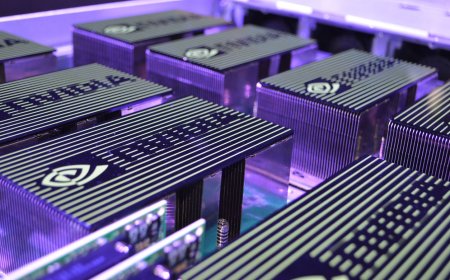
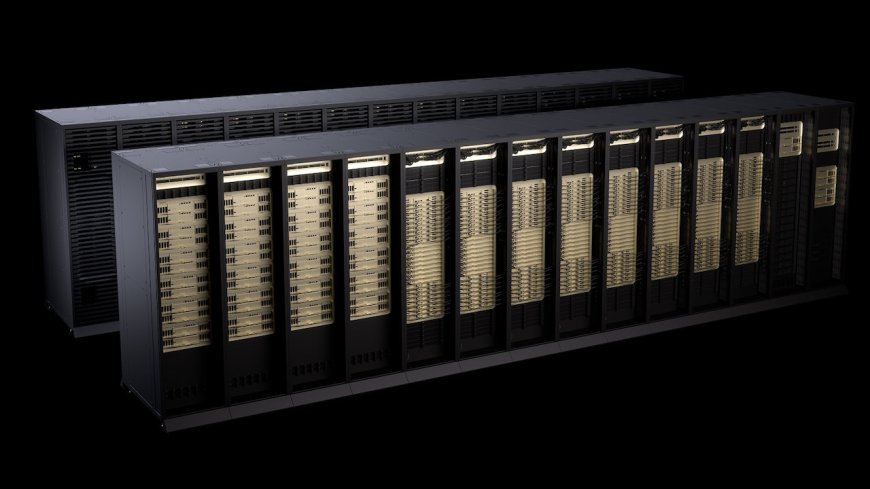
Nvidia's next-generation AI platform has posted its first public benchmark numbers, and they are strong — with one important caveat. In MLPerf Training v6.1, the results of which MLCommons published on November 16, 2026, the Vera Rubin NVL72 system recorded the fastest time to train on six of the seven benchmarks, delivering up to twice the performance per GPU of Nvidia's own GB300 NVL72, the Blackwell Ultra system it succeeds.
The debut matters because it is the first independent-style test of the platform Nvidia is positioning as the successor to its current flagship rack systems. Training speed is the currency of AI development: halving the time it takes to train a model roughly doubles how many experiments a team can run, and experiment throughput is what moves model quality forward.
The headline numbers
The widest gap came on the hardest workload in the suite. DeepSeek-V3 671B, a 671-billion-parameter mixture-of-experts model, took Vera Rubin NVL72 just 4.14 minutes to train using 1,024 GPUs across 16 racks. The same 1,024-GPU configuration of GB300 NVL72 needed 8.03 minutes — close to twice as long. Nvidia calls it the largest generational improvement in this round.
Across the rest of the suite, the advantage was narrower but consistent. Vera Rubin was 1.4 to 1.6 times faster per GPU than GB300 on every other benchmark: Qwen3.5 397B GRPO at 1.4x, gpt-oss 20B at 1.6x, Llama 2 70B LoRA at 1.5x, Llama 3.1 8B at 1.6x, the FLUX.1 image-generation model at 1.5x, and the DLRMv4 recommender at 1.4x. It was also the only platform to submit results across all seven benchmarks in the round.
Six of seven — and the one that got away
The seventh benchmark is where the story needs care. On DeepSeek-V3, the fastest absolute time of the round did not belong to Vera Rubin at all. A much larger GB300 NVL72 cluster — 10,240 GPUs spread across 160 racks — finished the same training run in 1.38 minutes. Nvidia presents the two results as complementary: Vera Rubin wins on performance per GPU, while GB300, the system shipping at scale today, holds the record for sheer cluster size. Together, Nvidia platforms hold the fastest time on every benchmark in v6.1.
The scaling numbers behind Vera Rubin's result are striking on their own. On DeepSeek-V3, the platform held above 97 percent scaling efficiency as it grew from 256 to 1,024 GPUs, cutting training time from about 16 minutes to about four. For a mixture-of-experts model, where every training step turns into a burst of all-to-all communication between experts, that kind of efficiency is as much a networking result as a chip result.
Networking is doing much of the work
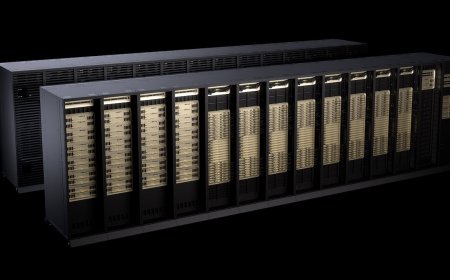
Inside each NVL72 rack, Vera Rubin connects 72 GPUs and 36 CPUs through a copper NVLink 6 spine delivering 3.6 terabytes per second per GPU and 260 terabytes per second per rack. Beyond the rack, the platform scales out through ConnectX-9 SuperNICs over Quantum-X800 InfiniBand or Spectrum-X Ethernet, with adaptive routing to keep bursty expert-to-expert traffic off the critical path. At the same 1,024-GPU scale, the generational staircase is now clear: GB200 NVL72 took 12.36 minutes on DeepSeek-V3, GB300 NVL72 took 8.03 minutes, and Vera Rubin NVL72 took 4.14 minutes.
Post-training takes centre stage
This round also adds the suite's first agentic reinforcement-learning post-training benchmark, Qwen3.5 397B GRPO, reflecting a shift in how AI models are actually built. Post-training — the cycle of generating rollouts, scoring them and updating weights — has become the differentiator for agentic accuracy, and it is demanding in a different way from pretraining: it is heavily CPU-bound, because driving the simulated environments behind each rollout falls to the processor.
Vera Rubin was fastest here too, finishing in 10.44 minutes at 1,024 GPUs against 13.78 minutes for GB300 at the same scale, and it did so on two different inference backends — NeMo RL with TensorRT-LLM, and vLLM at 10.94 minutes. Nvidia says the platform's Vera CPU sustains more than 22,500 concurrent reinforcement-learning environments across 256 CPUs in a single rack, keeping the accelerators fed with the feedback the training loop needs.
The 10x figure that still needs a check
Alongside the training results, Nvidia published a far more eye-catching number: on a Kimi K3 agentic-inference test, Vera Rubin NVL72 delivered more than 10 times the throughput per watt of GB300 NVL72. The figures behind it are 41,414.2 tokens per second at 100.89 kilowatts for Vera Rubin using 32 accelerators, against 2,210.4 tokens per second at 60 kilowatts for GB300 using 48 accelerators.
That comparison is not on the same footing as the training results, and Nvidia's own release says so. The Kimi K3 result comes from MLPerf Endpoints v1.0, published on November 9, 2026, and the Vera Rubin figures are provisional — pending MLCommons Association verification and subject to change on peer review. The GB300 figures in the same comparison are already verified. Until that verification lands, the 10x number should be read as Nvidia's claim, not a confirmed result. The two systems were also compared at different accelerator counts, which is a further reason to wait for the reviewed figures.
What the numbers do not tell us yet
Nvidia has not disclosed pricing, shipping timelines or general availability dates for Vera Rubin hardware, so the benchmarks say nothing about when customers can buy the systems or what they will cost. The round also included a debut from Google's TPUv7, known as Ironwood, so Vera Rubin is not the only new silicon in this MLPerf cycle — a comparison that will sharpen as more submissions are analysed.
There is also more performance already on the table. Since the v6.1 submissions were finalised, Nvidia has re-run several benchmarks on the same hardware with a newer software build, reporting up to 2.4 times faster training on DLRMv4 — but those reruns are unverified, have not been through MLPerf review, and are not part of the official results. The software stack, built on NeMo Framework 26.09, NeMo RL and recent PyTorch releases, is the same one customers receive, and Nvidia's argument is that the infrastructure keeps getting faster after it ships.
The results arrived on November 16, the day before Nvidia was due to report quarterly earnings, and they land in a week when the company's AI hardware story is under unusual scrutiny. Twenty partner organisations submitted results on Nvidia platforms in this round, and Nvidia says 80 percent of all closed-division submissions ran on its hardware — a reminder that the benchmark race is now as much about the ecosystem around the chips as about the chips themselves.
Sources
- NVIDIA Technical Blog — NVIDIA Vera Rubin NVL72 Achieves up to 2x Blackwell Ultra Performance in MLPerf Training v6.1
- MLCommons — MLPerf Training v6.1 results
- AIStockWire — Nvidia (NVDA) Vera Rubin MLPerf debut: where 2x comes from
- Oossa — NVIDIA's Vera Rubin Sweeps MLPerf Training Benchmarks
Related reading on Innopark IT: Google's new TPU variants for confidential AI and long context and the Blackwell chip fingerprint found in China's most powerful AI models.
What's Your Reaction?
 Like
0
 Dislike
0
 Love
0
 Funny
0
 Angry
0
 Sad
0
 Wow
0