










































Meituan Opens LongCat-2.5 Weights: A 1.6-Trillion-Parameter Agent Model Built Entirely Without Nvidia
Meituan has released the open weights of LongCat-2.5, a 1.6-trillion-parameter AI agent model trained entirely on Chinese hardware. The self-hosting guide runs the model on a cluster of 194 Huawei Ascend accelerators, with no Nvidia option anywhere in it.
Meituan Opens LongCat-2.5 Weights: A 1.6-Trillion-Parameter Agent Model Built Entirely Without Nvidia
Meituan has released the open weights of LongCat-2.5, a 1.6-trillion-parameter artificial intelligence model built for autonomous agents, and the most striking detail is not in its benchmark table. The model was trained entirely on Chinese hardware, and the self-hosting guide Meituan published alongside it runs on Huawei Ascend accelerators, with no Nvidia GPU mentioned anywhere as an option. The release was detailed by The Decoder on 15 November, about a week after the model itself was unveiled.
For a company best known in China for food delivery, it is a remarkable statement of intent. LongCat-2.5 is one of the largest openly licensed models in the world, it is designed for the long, multi-step work that AI agents do, and anyone can now download it, modify it and run it commercially under the permissive MIT licence.
What Meituan actually released
LongCat-2.5 is a mixture-of-experts model, which means it activates only a subset of its specialised sub-networks for each token it processes. Out of 1.6 trillion total parameters, roughly 48 billion are active per token, keeping the running cost far below what the headline number suggests. Through its API the model handles up to one million tokens of input at once and generates responses up to 128,000 tokens long.
It is natively multimodal. Rather than bolting on a separate image encoder, LongCat-2.5 converts images into tokens at their native resolution and processes them alongside text, an approach Meituan says improves visual coding, design and 3D tasks. It accepts text, images and video as input, responds in text, and lets users switch reasoning on or off. The model builds on its predecessor LongCat-2.0 and adds image understanding, drawing on Meituan's LongCat-Next research model.
The weights are available on Hugging Face, and users can also try the model in a chat interface at longcat.ai. Its API supports both the OpenAI and Anthropic formats and plugs into agent frameworks such as Claude Code, Codex and Hermes. At launch, Meituan is charging a limited-time promotional price equivalent to roughly 0.27 euros per million input tokens and 1.07 euros per million output tokens.
Built on Huawei, not Nvidia
The hardware story is the part policymakers and investors will watch most closely. Meituan quantises the model's expert weights and activations to 4-bit precision, a format Chinese chips process natively. In Meituan's own load tests, that lifted throughput by 43.3 percent for prompt processing and 42.77 percent for response generation compared with an 8-bit version, with accuracy staying on par with the uncompressed model.
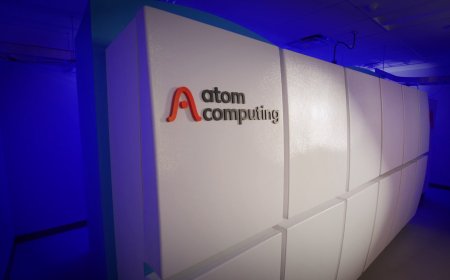
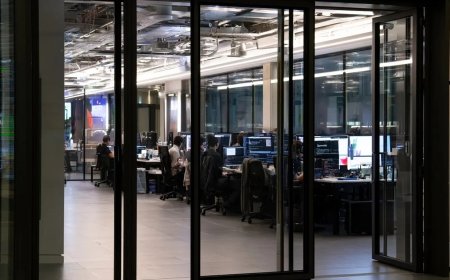
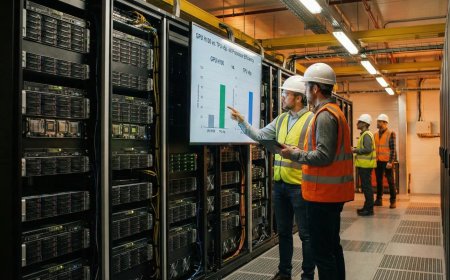
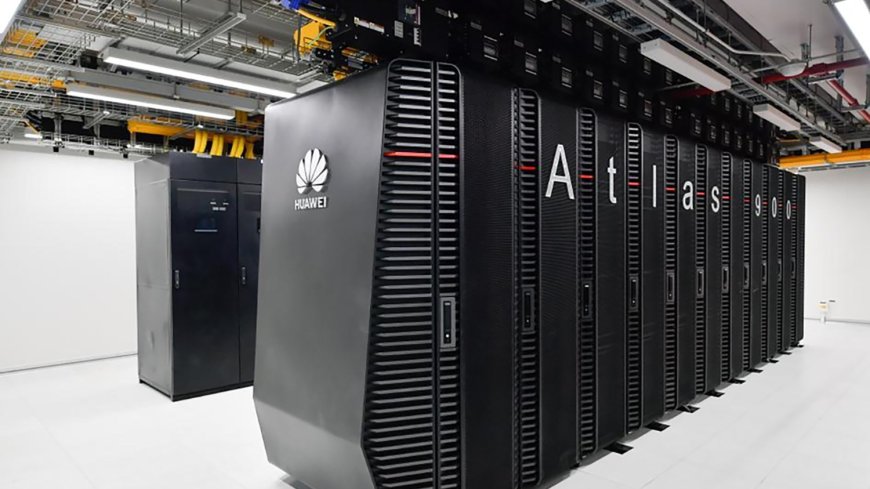
The published self-hosting guide describes a cluster of 194 Huawei Ascend accelerators from the Atlas A2 series: two handle image processing, 64 handle prompt ingestion and 128 handle response generation. There is no guidance for Nvidia GPUs. The photo above shows Huawei Atlas AI server hardware of the kind the guide targets.
Meituan says it trained the predecessor, LongCat-2.0, in late June entirely on a cluster of more than 50,000 Chinese AI chips. Before its official debut that model ran anonymously as Owl Alpha on OpenRouter. LongCat-2.5 continues that domestic-hardware route, and it arrives at a moment when Chinese open-weight models are narrowing the gap with top US systems. The Decoder notes that models such as Kimi K3.1 and GLM-5.3 have largely caught up with leading American models on common benchmarks.
How it scores, according to Meituan
All of the benchmark figures below are Meituan's own, reported by the company and not yet independently reproduced, so they should be read as a promising signal rather than a settled verdict. On Terminal Bench v2.1, which measures how well agents solve command-line tasks, LongCat-2.5 scores 88.4 points. Meituan lists Claude Opus 5 at 89.1, GPT-5.6 Sol at 88.8 and DeepSeek-V4.1-Flash at the top of the table with 90.6.
On DeepSWE, which tests how well models fix bugs in real code repositories, LongCat-2.5 jumps from 9.7 points for its predecessor to 64.6, placing it behind every other model in the table except Claude Opus 4.8. The harder Terminal Bench v4.0 puts LongCat-2.5 at 38.5 points, slightly above GPT-5.6 Sol's 37.3 but well below Opus 5's 53.9. On the web search benchmark BrowseComp it posts 91.9, the highest score in the table, though Meituan ran that test in its own environment.
For training, the team used real software tasks taken from GitHub pull requests, along with recreated agent failures. To make sure the model genuinely solved the tasks, the developers blocked internet access in the training environments, removed Git history and cached files, and had a language model check the solutions for tricks. The team also distilled the capabilities of several specialised teacher models for agent work, reasoning and dialogue into LongCat-2.5.
Why this release matters
Open-weight models optimised for Chinese chips from the start make that hardware more attractive outside China too, particularly for organisations that want to run a frontier-scale agent model on their own infrastructure without depending on Nvidia supply or US export controls. The combination matters: a model this large, free to use commercially, with a complete self-hosting path on non-American silicon.
That is also why the release lands in a charged moment for the chip industry. Nvidia's own turmoil has put the spotlight on how much of the world's AI runs on its hardware, and on the Chinese projects and companies working around US export controls. A frontier-scale agent model that never touched an Nvidia GPU, openly available under an MIT licence, is the most direct challenge yet to the assumption that cutting-edge AI can only be built on Nvidia silicon. Whether independent evaluations confirm Meituan's benchmark claims will decide how far that challenge goes.
Meituan is not stopping at agent models. Beyond multimodal systems, the company is also working on image generators, and it previously released LongCat-Image, an open-source text-to-image model that gets by with just 6 billion parameters and prioritises efficiency over sheer size.
Sources
- The Decoder — Meituan releases a 1.6-trillion-parameter agent model that never touched an Nvidia GPU (15 November 2026)
- Meituan LongCat-2.5 model card and self-hosting guide on Hugging Face and GitHub, via The Decoder
- Singularity Kiwi — Meituan's Food-Delivery Empire Just Shipped a Frontier-Scale Agent Model With No Nvidia GPUs Anywhere
- AF.net — Meituan Releases Open-Weight 1.6T MoE Model LongCat-2.5
Related reading: Chinese AI Models Carry a Blackwell Chip Fingerprint and China's 3.2 Billion Dollar Nvidia-Powered AI Projects at Risk After Huang Exit.
What's Your Reaction?
 Like
0
 Dislike
0
 Love
0
 Funny
0
 Angry
0
 Sad
0
 Wow
0