



















































Ex-Anthropic Researchers' Mirendil Lands $1 Billion to Automate AI Research
Mirendil, the AI lab founded by former Anthropic researchers, has raised a $1 billion Series A led by Kleiner Perkins and Clearlake Capital to build AI systems that carry out AI research, five months after its $200 million seed round.
Ex-Anthropic Researchers' Mirendil Lands $1 Billion to Automate AI Research
Mirendil, the artificial intelligence lab founded by two former Anthropic researchers, has raised $1 billion in a Series A funding round, betting that AI systems can take over much of the work AI researchers do today. The round was led by Kleiner Perkins and Clearlake Capital and was announced on Thursday, November 12, less than five months after the company emerged from stealth with a $200 million seed round.
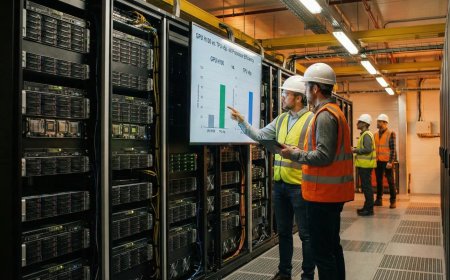
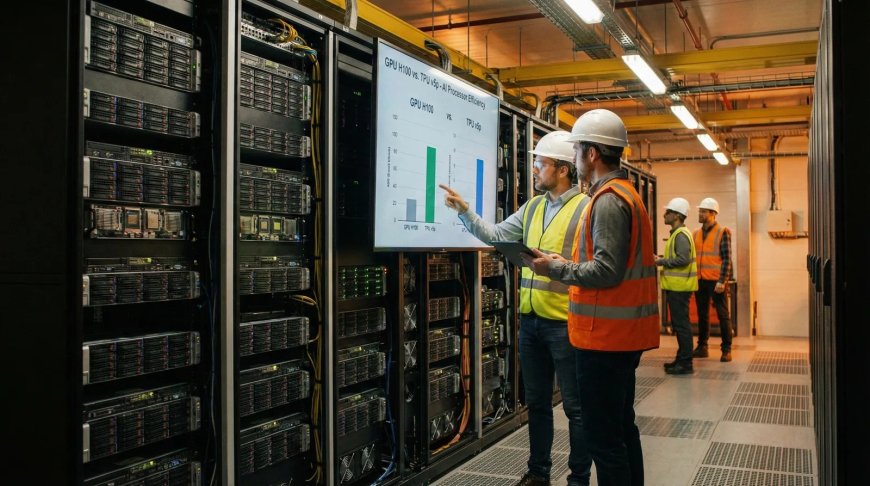
Photo: engineers reviewing AI processor performance in a data centre, the kind of computing infrastructure behind frontier AI research.
The new money makes Mirendil one of the best-funded of the new "neolabs" — small frontier labs started by veterans of OpenAI, Google DeepMind and Anthropic — and it arrives as investors race to fund the idea that AI can speed up its own development, a capability the largest labs have so far kept in-house.
Who is backing Mirendil
The announcement names Battery Ventures, Doerr Capital, Gil & Co, Google, M13, Pear VC and S32 among the other new and existing investors in the round. It does not say what Mirendil is now worth.
Bloomberg reported in September that the company was in talks to raise up to $1 billion at a valuation of around $5 billion, five times its seed valuation. No source has confirmed that the final terms match that earlier report, and the Series A announcement itself gives no valuation figure.
The seed round, disclosed when Mirendil launched on June 24, was led by Andreessen Horowitz and Kleiner Perkins and valued the company at about $1 billion, with Nvidia investing afterwards. Andreessen Horowitz is not named in the new announcement. Google is — three months after Mirendil signed a multi-year deal to run its training and research on Google Cloud, using the cloud provider's AI Hypercomputer, TPUs and Nvidia hardware.
The bet: AI that does AI research
Mirendil is run by chief executive Behnam Neyshabur and chief technology officer Harsh Mehta. Neyshabur previously co-led Google DeepMind's Blueshift team, which worked on reasoning and mathematics for Gemini, before leading a team at Anthropic. Mehta built the first version of Anthropic's internal AI research platform. The pair joined Anthropic in late 2024 and left about a year later to start Mirendil, and the company says its founding team of about 20 researchers and engineers came from Anthropic, xAI, Google DeepMind and OpenAI.
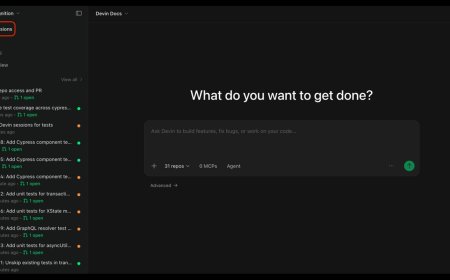
Neyshabur has described the vision as "AI for AI, and AI for science." The lab's argument is that a biology, chemistry or robotics lab should not have to become a frontier AI lab to build the models it needs. Its product, Lor, went into private beta on October 28: a cloud-based system that runs hundreds of agents at once, writing code, provisioning its own GPUs and running experiments for days, using models such as Claude Opus, Claude Fable, GPT-6 Sol and GPT-6 Astra alongside open models from Kimi, DeepSeek and GLM.
When Andreessen Horowitz backed the seed round, its partners summed up the idea in a phrase the firm has kept using: "Call it vibe research. If it works, it could change the way the AI ecosystem is structured, and support experts across many fields."
One researcher, one model, under $10 million
The new funding follows three weeks of results the company has published itself. In a research report published on October 21, Mirendil said a single researcher, working with AI agents, pretrained Mirendil-Base — a coding model in the 100-billion to 500-billion parameter range — from scratch in three and a half months, at an all-in cost of less than $10 million in compute, including the agents' token spending and data processing. The company says AI agents wrote more than 99% of the code behind the pretraining run, with one researcher directing the work.
Mirendil then post-trained the base model into Fern, its first model, which it says holds up to 10 million tokens of context — enough, in its words, for days of an agent's work. Larger models, in the 0.5-trillion to 2-trillion and 2-trillion to 10-trillion parameter ranges, were still training when the report was published.
What the numbers do not yet prove
None of those headline figures has been checked independently. There is no outside evaluation of Mirendil-Base or Fern, no public benchmark suite behind the company's description of its model as a competitive coding model, and the Series A announcement says nothing about safety checks or an access policy for agents that provision their own compute and run experiments.
The idea itself is also contested. Four groups suing the biggest AI labs this week want a court to stop the labs pursuing recursive self-improvement — AI systems improving themselves — one of five practices their lawsuit targets. Mirendil's whole pitch is a version of that practice, sold as a product rather than kept inside a single lab.
Why it matters
Investors are now paying directly for the idea that AI research can be automated, rather than only for the models that result from it. If Mirendil's approach works at scale, the cost and headcount of building frontier models could fall sharply, and smaller labs in science and engineering could train their own models instead of renting them. If it does not, $1 billion is a large bet on a promise whose evidence so far rests entirely on the company's own tests.
The raise also lands as Anthropic, the lab Neyshabur and Mehta left, prepares to list its shares on Nasdaq. Anthropic has been rolling out new ways for its assistant to work alongside people, including Claude Duet, which joins meetings and takes notes. Meanwhile, the funding boom around AI labs shows no sign of slowing: OpenAI reportedly raised $15 billion at a $1.25 trillion valuation in a round reported earlier this month.
For now, Mirendil's next test is practical: turning Lor from a private beta into a product other labs will pay for, and showing that results produced mostly by agents can stand up to outside scrutiny.
Sources
- MadRobot — Ex-Anthropic researchers' Mirendil raises $1B Series A
- TechTimes — AI Lab Mirendil Raises $1B Series A: Release Names No Valuation, Cites Only Company Tests
- AI Frontier Post — Mirendil raises $1B Series A to build AI that does AI research
- WOWTALE — Mirendil, a Frontier Lab Where Agents Do the AI Research, Raises $1B Series A
- AT Pulse — Mirendil Raises $1B Series A and Mercor Raises $750M at $20B Valuation (via Crunchbase News)
What's Your Reaction?
 Like
0
 Dislike
0
 Love
0
 Funny
0
 Angry
0
 Sad
0
 Wow
0