



















































Devin Apps Turns a Prompt Into a Private Web App Your Whole Team Can Use
Cognition has introduced Devin Apps, a new feature that lets teams describe an internal tool and have Devin build and host it as a private web app on Devin's own cloud computer. Each app gets a stable URL, stays behind Devin sign-in, and can draw on a team's code, integrations and data.
Devin Apps Turns a Prompt Into a Private Web App Your Whole Team Can Use
Cognition has given its AI software engineer a new job. Devin Apps, introduced on November 13, lets a team describe the internal tool it needs — a dashboard, an approval queue, a tracker — and have Devin build it and host it as a live web application on Devin's own cloud computer. The result is a working app with a stable link that teammates can open and use, without anyone setting up hosting or a deployment pipeline.
It is a natural extension of what Devin already does. Until now, Devin worked in sessions: you gave it a task, it wrote and tested code in its own cloud machine, and it came back with a pull request. Devin Apps keeps the app running after the session's work is done. The app lives on the same machine that built it, so it can reach the team's existing code, components, integrations and data sources as it runs.
Describe it, share a link, keep using it
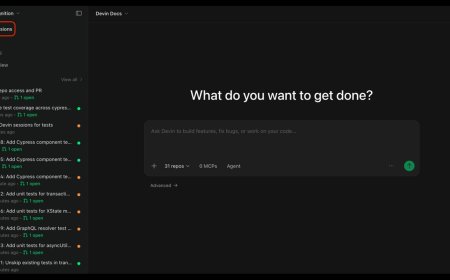
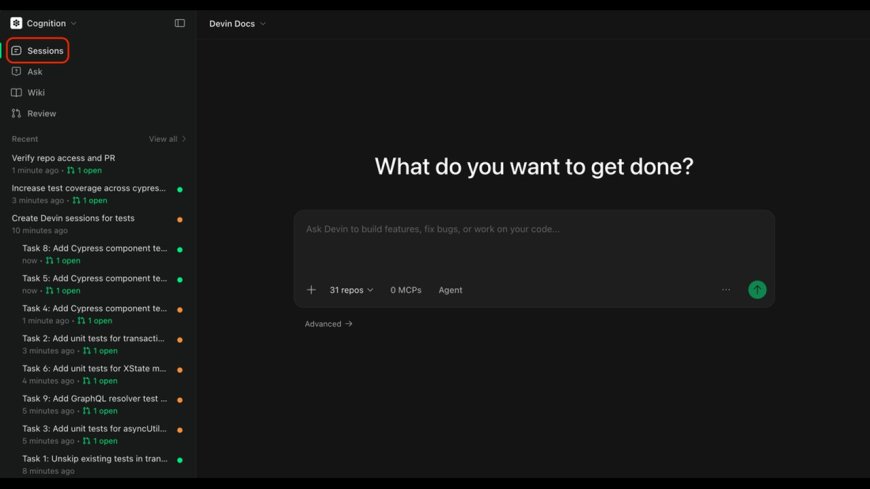
Creating an app starts in the Apps section of Devin's sidebar. You describe what the app should do, or pick one of the built-in prompt templates — a metrics dashboard, a project status page, a review queue — and send it. Devin opens a session, asks any questions it needs in its first reply, then builds the app and puts it online. The app appears under Apps right away, marked Building until the first version is live, and its URL stays the same through every later update.
You can also ask for an app from inside any Devin session, and if Devin has already shown you a browser preview of something it built, you can ask it to publish that preview as an app.
Sharing is deliberately closed. Every app lives at an address on the preview.devinapps.com domain, but opening one always requires signing in to Devin, and apps can never be made public. Access can be limited to named people, opened to the whole organisation, or extended across an enterprise, and organisation admins can pin the apps everyone needs at the top of the Apps page. Admins can also set the default sharing level for every app in their organisation.
One machine, asleep until someone opens the app
Each app runs on a single virtual machine, and Cognition is upfront about what that means. The machine goes to sleep five minutes after the last request and wakes up when someone opens the app, so the first load after a sleep can take a few seconds. Billing follows the same logic: you pay for the time the machine is awake, and an app nobody visits costs nothing while it sleeps.
That single-machine design also sets the limits. Devin Apps is built for internal tools and dashboards, not for high-traffic production services. Cognition's own documentation says as much: for services that need to scale, teams should deploy to their own infrastructure and give Devin access through it. Within that boundary, the apps are surprisingly capable. Any stack works as long as it serves HTTP on a port, databases such as SQLite or Postgres run on the same machine, and an app can call the Devin API itself — so a team could build a page that starts Devin sessions from a form, or a dashboard of the team's sessions.
Updates without a new link
Keeping an app current works the same way as building it. Open the app, click Edit in session, and describe the change; Devin ships a new version under the same URL. Every version is listed under Deployments with its status, description and commit, and if a new version fails to start, the previous one keeps serving. Automations can go further, waking Devin on a schedule to pull fresh data into a dashboard, or redeploying the app each time a branch it follows changes.
Devin builds the app the way it builds anything else: it develops against a dev server, checks its work in a browser preview, then serves a production build, committing the code before every deploy. If it can find a company's design system in its repositories, it uses those colours, fonts and components; if not, it falls back to a plain default style.
Why this launch matters
Devin Apps arrives in a busy stretch for Cognition. The San Francisco company closed a 2 billion US dollar Series E round in September 2026 at a 48 billion US dollar valuation, with annualised revenue reported above 1 billion US dollars, and it upgraded Devin Teams with SWE-2 sessions on November 12, a day before this launch. The direction of travel is clear: the coding agent is becoming the place where teams not only write software but run the small tools their work depends on.
It is also part of a wider shift. AI agents are moving from answering questions and writing code into doing everyday work on a team's behalf — OpenAI's ChatGPT Wallet, launched the same week, lets AI agents shop and check out for users. Devin Apps applies the same idea inside engineering teams: the gap between asking for a tool and having a working one keeps shrinking, and the remaining question is how much of a team's internal software ends up built and hosted by the agent itself.
Devin Apps is rolling out gradually to activated accounts, and Cognition has not disclosed pricing or subscription tiers for it yet.
Sources
- Cognition — Devin Apps announcement, November 13, 2026 (via Cognition on X / LinkedIn)
- Devin Docs — Devin Apps product guide (docs.devin.ai)
- Archynewsy — Cognition Rolls Out Devin Apps to Build and Host Private Web Apps, November 14, 2026
- StartupHub.ai — Devin Turns Sessions Into Private Team Apps, November 2026
- SXF Brief — AI News Nov 16, 2026: Devin Apps lets teams create and share authenticated web tools
- ChatGPT Wallet Lets AI Agents Shop and Check Out for You — Innopark IT
What's Your Reaction?
 Like
0
 Dislike
0
 Love
0
 Funny
0
 Angry
0
 Sad
0
 Wow
0