





















































Google's Gemini 4 Agent Teams Prove a 2013 Maths Conjecture and Rewrite Code Faster Than the Original
Google Research says teams of specialist Gemini 4 agents working inside its Antigravity coding environment have proved a maths conjecture open since 2013, produced machine-checked formalisations of landmark theorems including the Weil conjectures, and rewritten a video decoder in Rust that runs 20 to 30 percent faster than the original C++ code. The headline claims come with an important caveat: the largest formalisation has not been published, so it cannot yet be independently checked.
Google's Gemini 4 Agent Teams Prove a 2013 Maths Conjecture and Rewrite Code Faster Than the Original
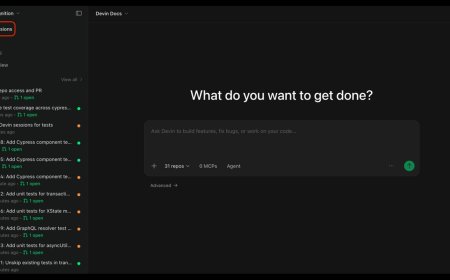
Google says its AI coding agents have moved beyond writing software and started doing mathematics. In a research post published on November 13, Google Research described how teams of specialist Gemini 4 agents working inside Antigravity, its agent-first development environment, helped settle a conjecture that had stood open since 2013, produced machine-checked formalisations of some of pure mathematics' most famous results, and rewrote production code in a safer language — then made it faster than the original.
The system is called /teamwork. Instead of one agent doing everything, it splits a hard problem across a team of agents with separate roles. Producers draft candidate solutions, critics look for flaws, and auditors check the result from a clean context, without being influenced by the reasoning that produced it. Before anything is accepted, verifier agents backed by objective checkers — the Lean 4 proof checker, unmodified software test suites, execution simulators, or hardware counters — verify which candidates actually work.
The work runs on the Gemini 4 family, which Google introduced earlier in November. Carbon is the heavy reasoner, recommended for the coordinator role and the hardest thinking; Hydrogen is the fast, cheap execution engine; and Argon sits in the middle, which Google describes as the ideal choice for most advanced engineering work. The results reported here were mostly produced with Argon.
A 2013 conjecture, settled and machine-checked
The headline result is the Courtade–Kumar conjecture, an information theory problem posed in 2013. It asks a deceptively simple question: when a random string of bits passes through a noisy channel, can it be compressed to a single bit while preserving more information than the simplest possible method — just copying one input bit? The conjecture says no.
Researchers from Google, the Chinese University of Hong Kong, the University of Southern California and Carnegie Mellon University proved it in full generality using /teamwork's Long Proof pattern, which splits a long argument across separate agents. The proof itself appeared as a preprint in September; what the November post adds is the machine-checked formalisation — the whole argument translated into Lean 4, a language that lets a computer kernel verify every logical step. Google puts that formalisation at 50 million lines of code.
That number deserves a closer look. An independent check of the public repository confirmed the 50 million lines are real, but found only about 239,000 of them are proof a person could actually read; the rest is generated certificate data that the Lean kernel checks mechanically. The audit trail is nevertheless strong: the repository records a clean rebuild with a byte-identical final output, an independent run of the verification kit, and acceptance by the Lean Foundation's external checker. The line count measures how hard the checker was worked, not how much mathematics was done — but the proof itself is real, public and machine-verified.
The Weil conjectures — and the caveat
The more startling claim comes next. Google says a framework called /teamwork-LEAP, built with Google Cloud AI and paired with Gemini 4 Argon, "fully autonomously produced an end-to-end, machine-checked formalization of the Weil conjectures" — the landmark results on counting solutions of polynomial equations over finite fields, proved by Pierre Deligne in 1974. The formalisation spans about 1.8 million lines of Lean, produced across 28,800 subagent invocations.
Here the verification story is thinner. Google's post links to Wikipedia pages for the Weil conjectures and Deligne, with no repository, no paper and no statement file, so the claim cannot yet be independently checked. A separate group, Axiom, published its own public formalisation of the Weil conjectures on November 6, a week before Google's post. Google says the same system also produced the first formalisation of a recent proof of Hilbert's tenth problem over general rings of integers — more than 919,000 lines of Lean — plus first formalisations of the Birkhoff conjecture, open since 1927, and the 3D Bochner–Riesz conjecture, open for more than 50 years. Until Google publishes its code, those claims rest on the company's word.
The same pattern runs through the rest of the mathematics in the post. Researchers posed open problems directly to Gemini 4 and to multi-agent harnesses, receiving end-to-end algorithms and proofs that the authors then verified, simplified and edited for publication — including near-optimal sample bounds for adaptive data analysis that close a gap open since 2014, and a new construction settling a 2014 open question in quantum computing.
Beyond maths: chemistry and code
The system is not only doing proofs. Determining a molecule's structure from experimental nuclear magnetic resonance data is one of chemistry's hardest puzzles — in HIV protease inhibitors, for example, one misplaced bond separates an inactive look-alike from a drug. By organising 30 specialised agents into a self-correcting loop with a physics-informed spectral simulator, Google says /teamwork achieved 95 percent top-1 exact match and 100 percent top-3 accuracy on complex benchmark molecules, nearly doubling single-agent performance.
The engineering results are more concrete, because code can be tested. Building on an initial 25 percent port of the Zircon microkernel, a two-week Argon campaign rewrote the remaining C++ code, adding about 800,000 lines of safe Rust that pass all kernel unit tests and boot on arm64 hardware. /teamwork also rewrote libgav1, Google's AV1 video decoder, from C++ into around 170,000 lines of Rust, achieving 100 percent bit-exact parity across a broad conformance test suite. At first the port was around four times slower than the original C++ code — but after the team gave /teamwork access to profiling tools and a mandate to maximise speed on sample video clips, the Rust port became 20 to 30 percent faster than the original C++ and hand-optimised assembly code, on both x86_64 and ARM.
For a stress test of autonomous optimisation, hill-climbing teams trained a 9x9 Go engine from scratch, starting from a basic AlphaZero implementation. In under eight days the engine gained roughly 2,600 Elo, reaching 1,885 Elo — placing it between KataGo at 16 and 32 visits per move — with a 2,300-times speedup in self-play along the way.
Inside Google's own infrastructure
Google says it has also applied /teamwork and its /boost coding pattern to production infrastructure problems. Fleet-wide memory optimisation work has identified saving opportunities surpassing initial estimates of 1 PiB, and an agentic scheduling workflow for Borg, Google's cluster manager, shipped two changes resulting in a 24 percent reduction in TPU workload preemption on some hardware types, while preserving service levels and cluster utilisation.
Open to researchers
Google is making /teamwork and /boost available in Antigravity now, and has opened applications giving 10,000 academic researchers six months of free access to its highest usage tier. The company also ran its Deep Review tool for authors ahead of the STOC 2027 computer science conference: authors of 578 submissions — over a third of all submissions — opted in to receive automated feedback on their drafts, and in an ongoing survey 90 percent of respondents rated the feedback mostly or almost all factual, while over 30 percent said it caught substantive proof bugs or mathematically significant typos.
The results, taken at face value, are the strongest evidence yet that multi-agent systems can do sustained scientific work. The honest reading is more careful: the Courtade–Kumar formalisation is public, audited and machine-verified; the chemistry and engineering results are backed by tests that anyone can rerun; but the biggest mathematical claim — the Weil conjectures — has no public code behind it yet, and Google's numbers describe its own account of its own experiments. The tools are now open to outside researchers, which means the next results may not have to be taken on trust.
Sources
What's Your Reaction?
 Like
0
 Dislike
0
 Love
0
 Funny
0
 Angry
0
 Sad
0
 Wow
0