



























































Huawei's Kirin 9050 Balong AI Modem Brings Quad SIM Triple Standby and Smarter Uplinks
Huawei has detailed the new Balong AI Modem inside its Kirin 9050 series chips, introducing a Fusion Communication Architecture, big claimed uplink gains, AI screening for roaming scam calls and the industry's first quad SIM triple standby setup.

Huawei's Kirin 9050 Balong AI Modem Brings Quad SIM Triple Standby and Smarter Uplinks
Huawei has revealed another piece of its Kirin 9050 series, this time the connectivity half of the chip. On November 15, the company detailed its new-generation Balong AI Modem, the baseband that sits inside the Kirin 9050 family, and the headline features are hard to miss: a new fusion communication architecture, faster uploads in crowded and weak-signal conditions, an AI system that screens scam calls while roaming abroad, and the industry's first quad SIM triple standby setup.
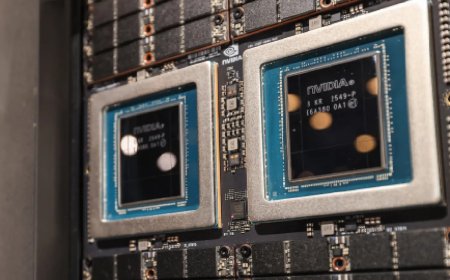
The modem is the latest in a slow drip of disclosures about the Kirin 9050, Huawei's first chip built on its LogicFolding technology. Earlier reveals covered the CPU, GPU and neural processor. Now the company is turning to how the chip talks to the network, and the claims, as ever with Huawei's chip announcements, are the company's own and have not been independently verified.
A fusion architecture built around AI
The new Balong AI Modem is built on what Huawei calls a Fusion Communication Architecture, made up of three parts working together. The first is a Modem AI communication architecture, which uses on-device intelligence to manage the connection. The second is a multi-system collaborative architecture, which coordinates across the phone's radio systems. The third is a space-ground integrated architecture, tying terrestrial cellular coverage together with satellite links, a combination Huawei has been building into its flagship phones for several years.
In practice, Huawei says the modem adds smart network selection, a metro mode tuned for underground and crowded transit, and faster reconnection when a phone drops off the network outdoors. Against a rival handset it labels only as "A phone 18 Pro Max", Huawei claims gaming stutter on trains falls by 48 percent, photo uploads at concerts take 46 percent less time, short-video stutter in the subway drops by 32 percent, and the wait to get back on the network outdoors is cut by 83 percent.
The numbers Huawei is claiming
The uplink figures are the most striking part of the disclosure. Huawei says the modem's cellular high-speed uplink is 43 percent faster than the same rival phone at peak, 83 percent faster in congested conditions, 49 percent faster on weak networks and 69 percent faster at high speed. Uploads have long been the weaker half of a phone's connection, so a modem that leans into uplink performance is aimed squarely at live streaming, video calls and cloud uploads from crowded places.
All of these figures come from Huawei's own testing, and the company has not published the test conditions behind them. They should be read as the manufacturer's claims, not as independently measured results, and the rival device is identified only by Huawei's anonymised label.
Quad SIM triple standby, an industry first
The feature Huawei is making the most of is the industry's first quad SIM triple standby. The phone can hold two physical SIM cards and two eSIM profiles, and any three of the four can be active at the same time. For travellers, business users and anyone juggling work and personal numbers across borders, that removes the usual compromise of choosing which lines stay live.
It is a natural extension of Huawei's dual-SIM history, but the three-active-lines arrangement is new. The company has not yet said which of its phones will ship with the feature switched on, though the modem is part of the Kirin 9050 series, so the first candidates are the devices already running that silicon.
AI screening for roaming scam calls
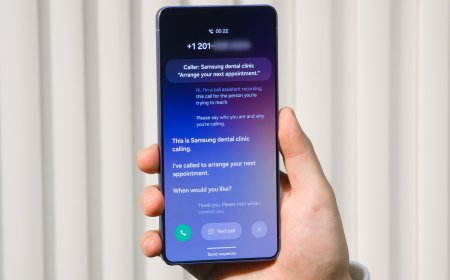
The modem also carries an AI-powered international roaming call detection feature. Huawei says it can spot fraudulent calls that arrive while a user is roaming abroad, with a claimed detection rate above 90 percent. Roaming scam calls, often routed through call-transfer tricks, are a growing problem for travellers, and putting the detection in the modem itself means it can act before the call reaches the user.
As with the performance figures, the 90 percent figure is Huawei's own claim. The company has not detailed how the detection works or which markets it will cover first.
Where the modem fits in the Kirin 9050 story
The Balong modem reveal is the fourth major block of the Kirin 9050 to be detailed. Huawei had already disclosed the Lingxi CPU, with nine cores and 16-thread parallel scheduling, the Maliang GPU with second-generation hardware ray tracing and 200-megapixel fusion photography, and the DaVinci NPU, the industry's first to run a 30-billion-parameter mixture-of-experts model on device. The chip's transistor density is claimed to be 53.5 percent higher than its predecessor.
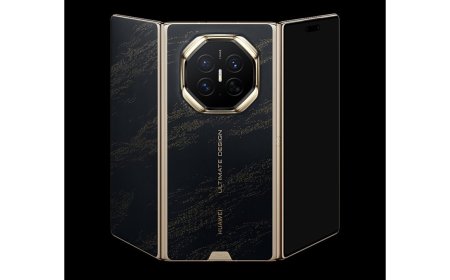
The Kirin 9050 series debuted on September 7 in the Mate XT 2 tri-fold phone, and later appeared in the Mate 90 series. At Huawei's Kirin media briefing in October, Xu Songyu, head of wireless terminal chip product management in Huawei's semiconductor business, described the Kirin 9050 series as the first logic-folded Tau chip and the start of a new ten-year journey for the company's semiconductor efforts, noting that mass production had been achieved with the support of China's semiconductor industry and calling for continued open cooperation between industry and academia.
The modem's arrival in the Mate 90 series is also relevant to Huawei's wider handset plans: the Mate X8, tipped for a November 24 launch, is expected to run the Kirin 9050 Pro. The Balong AI Modem's quad SIM and satellite features are likely to be part of that story too, though Huawei has not confirmed the Mate X8's modem specifications.
For now, the Balong AI Modem is a paper reveal rather than a product launch. The real test will come when Kirin 9050 phones with the new modem reach reviewers and the claimed uplink gains, quad SIM flexibility and roaming scam detection can be measured outside Huawei's own labs.
Sources
What's Your Reaction?
 Like
0
 Dislike
0
 Love
0
 Funny
0
 Angry
0
 Sad
0
 Wow
0