























































Megaspeed's $12 Billion Nvidia Chip Pipeline for China Exposed as US Tightens Export Rules
A Wall Street Journal investigation found Singapore-based Megaspeed arranged nearly $12 billion in orders for advanced Nvidia chips for Chinese companies between March 2024 and June 2025. The records behind the figure do not show how many chips were actually delivered, but the report has already pushed Washington toward tougher export controls — and on 16 November the US Commerce Department moved to close the remote-access loophole the arrangement exposed.
Megaspeed's $12 Billion Nvidia Chip Pipeline for China Exposed as US Tightens Export Rules
Singapore-based Megaspeed International arranged nearly $12 billion worth of orders for advanced Nvidia chips on behalf of Chinese companies between March 2024 and June 2025, according to records reviewed by The Wall Street Journal. The orders covered several hundred thousand processors — the most advanced artificial intelligence hardware the United States has tried to keep out of China — and the report has already sharpened the push in Washington for tougher export controls.
The figure comes with an important caveat, and the Journal was clear about it: the records show orders Megaspeed arranged, not confirmed deliveries. They do not establish how many of the chips actually reached Chinese customers, or whether any export rules were broken. What the reporting does establish is the scale of the pipeline — and the model behind it, which current rules have struggled to reach.
A cloud route around the chip ban
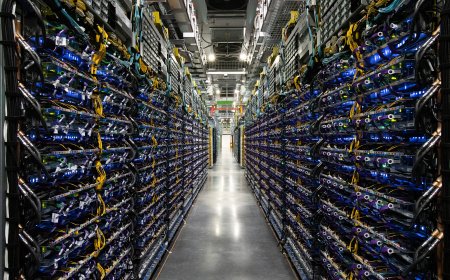
US export rules restrict shipping advanced AI chips to China. They have not stopped Chinese companies from renting the same chips in data centres abroad. According to the Journal, that is the route Megaspeed built: it bought at least $4.8 billion of AI equipment in under two years, installed it in Southeast Asian facilities — mostly in Malaysia — and rented out the computing power remotely to Chinese clients.
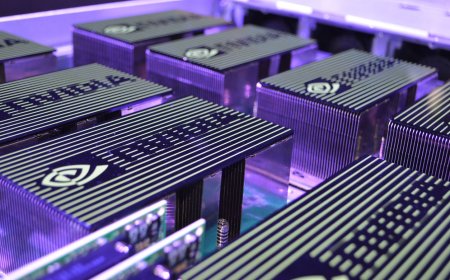
The orders included processors from Nvidia's Blackwell generation, the company's newest line of AI chips. Alibaba was identified as an anchor customer and helped Megaspeed obtain Nvidia Cloud Partner status in November 2023, according to people familiar with the arrangement. The reporting does not say Alibaba placed all the orders or received every processor.
Megaspeed operated through regional subsidiaries, including its Malaysian affiliate Speedmatrix Sdn Bhd. Malaysia's Ministry of Investment, Trade and Industry confirmed that Speedmatrix was a tenant at local data centres and imported its own servers and AI chips for its operations, but the ministry did not identify the customers using those processors. The available reporting does not establish that those customers used the specific processors Speedmatrix imported.
Customs records show the hardware was real
Separate customs records reviewed by Bloomberg put hard numbers behind the operation. Megaspeed and identified affiliates imported at least 136,000 Nvidia GPUs, valued at $4.6 billion, between 2023 and November 2025 — more than half of them Blackwell-generation chips. Malaysian records included at least 17,544 GB300 processors, part of Nvidia's Blackwell Ultra line, valued at about $787 million in November 2025 alone.
Nvidia said it stopped sales and shipments to Megaspeed in June 2025, although it later permitted parts and replacement components. A company spokesperson said on 13 November that Megaspeed, which had emerged as a major Nvidia customer between 2023 and 2025, remains barred from purchasing the company's chips.
Megaspeed has denied diverting Nvidia chips to China and says its business was lawful. In a statement dated 12 November, chairman and chief executive Tan Yong Pong said the company had cooperated with inspections by the Commerce Department's Bureau of Industry and Security, and that it had hired a US law firm to count its GPUs and check its compliance. No violation has been publicly established.
Washington moves to close the loophole
The report landed in Washington just as lawmakers were already moving to tighten the rules. House Speaker Mike Johnson said there is "a developing consensus in Congress" on limiting chip exports to China, Reuters reported, and four bills are now gaining support: the AI Overwatch Act, which would give Congress more power over exports of advanced AI chips; the Chip Security Act, which would require companies to track where those processors are located; the Match Act, which would press US allies to restrict sales and servicing of chipmaking equipment bound for China; and the Remote Access Security Act, which would give the Commerce Department tools to stop Chinese firms renting overseas data centres to reach Nvidia chips — the exact gap the Megaspeed model exposes.
Republicans want to attach new chip restrictions to the National Defense Authorization Act, the annual defence bill that must pass each year, according to a Senate aide quoted by Reuters. Congressional staff have also discussed a date and location for Jensen Huang to testify, and he is expected to appear before Thanksgiving. OpenAI has told lawmakers it supports the package.
The Commerce Department did not wait for Congress. On 16 November, the Bureau of Industry and Security announced licensing requirements for specified advanced computing items exported to, re-exported to or transferred within Indonesia, Malaysia, Singapore, Thailand and Brazil. The rules also address certain remote-access arrangements involving data centres worldwide, covering specified access by companies headquartered in China, Macau or other restricted destinations to advanced computing capacity at facilities with more than 12 million aggregate total processing performance — including indirect arrangements through other companies.
Investigations continue in Singapore and Malaysia
Malaysia's trade ministry is working with customs officials to determine whether chips imported by Speedmatrix were later re-exported. Imports for domestic use do not require a permit, but since July 2025, exports, re-exports, transhipments and transit of high-performance US AI chips from or through Malaysia have required a permit under the Strategic Trade Act 2010.
Singapore's investigation, opened in February 2025, concerns suspected false declarations involving server purchases. Authorities said the servers were exported through Singapore to Malaysia without entering Singapore's domestic market, and investigators are examining whether they were later routed elsewhere contrary to declarations made to Singapore officials. The probe into Megaspeed and six other individuals remains ongoing.
Singapore authorities held Alice Huang's passport for months while they investigated server purchases, and in February barred her from re-entering the country after police concluded she had given them inaccurate information. The Ministry of Home Affairs said she was not investigated for espionage. US authorities have examined whether she gathered information for China, which Beijing denies, and no charges against her have been reported.
Why this matters now
Megaspeed is the Singapore-based Nvidia partner at the centre of the scandal that ended Jensen Huang's tenure as Nvidia chief executive. Alice Huang, Megaspeed's former chief executive, is the businesswoman whose relationship with Huang preceded his resignation on 12 November. Reuters reported on 14 November that Huang told Nvidia's general counsel his dealings with her and Megaspeed were standard business — a claim at the heart of the board investigation now under way.
The $12 billion figure is therefore more than a historical footnote. It is the number that turned a corporate scandal into a policy fight: proof, in the eyes of lawmakers, that the existing export-control regime can be routed around by renting computing power instead of shipping hardware. Nvidia reports third-quarter results on 17 November, its first under interim chief executive Colette Kress, while its independent directors run a separate investigation into Huang's conduct — and with data centre sales making up the large majority of Nvidia's revenue, any new limit on who can buy or rent its chips matters to investors as much as to policymakers.
For now, the central question remains unanswered: how much of the nearly $12 billion in arranged orders ever reached Chinese hands. Until investigators or the companies involved say more, the figure marks a flashpoint, not proven diversion — but it has already changed the rules.
Related coverage
Read more on Innopark IT: Nvidia fallout throws spotlight on Southeast Asia's AI boom; Banned Nvidia AI chips found at Shanghai data centre; Jensen Huang misled Nvidia leaders over Alice Huang affair, Reuters reports; DOJ probes whether Alice Huang helped smuggle Super Micro servers to China.
Sources
- The Wall Street Journal — reporting on Megaspeed's $12 billion in arranged Nvidia chip orders for Chinese firms, March 2024 to June 2025 (via syndicated coverage)
- The Grey Terminal — "How Megaspeed Gave Chinese Firms Remote Access to Nvidia AI Chips" (customs records, BIS 16 November licensing rules, Malaysia and Singapore investigations)
- TalkEsport — "Lawmakers Push AI Chip Curbs After $12B Megaspeed Report" (congressional bills, Speaker Johnson, Megaspeed statement)
- News18 — "How China Is Bypassing US' AI Chip Blockade" (Nvidia statement on ending Megaspeed business, June 2025)
- The Wall Street Journal (live coverage) — "Nvidia Customer Megaspeed Hires Law Firm to Probe Compliance With Chip-Export Controls"
What's Your Reaction?
 Like
0
 Dislike
0
 Love
0
 Funny
0
 Angry
0
 Sad
0
 Wow
0