




















































Bedrock Energy Raises $24 Million to Bring AI-Guided Geothermal Drilling to More Buildings
Austin-based Bedrock Energy has raised $24 million to expand its fleet of AI-directed geothermal drilling rigs, aiming to make ground-source heating and cooling cheaper for commercial buildings and, increasingly, for data centres.
Bedrock Energy Raises $24 Million to Bring AI-Guided Geothermal Drilling to More Buildings
Austin-based startup Bedrock Energy has raised $24 million in new funding to expand its fleet of AI-directed geothermal drilling rigs, betting that smarter drilling can finally make ground-source heating and cooling affordable for large commercial buildings.
The round was announced on November 16, 2026, and was led by Clean Energy Ventures and Clearvision Ventures. Other participants included GVP Climate, Susquehanna Sustainable Investments, Catalytic Capital for Climate and Health by Temasek Trust, MUUS, Great Wave Ventures, Autodesk Foundation, Titanium Ventures, Energy Impact Partners, Wireframe Ventures, Elemental Impact and SFV Capital.
The new capital follows a $12 million Series A round in 2025 and an $8.5 million seed round in 2023, bringing Bedrock's total disclosed funding to $44.5 million.
Why drilling is the bottleneck
Geothermal heat pumps use the earth as a heat source in winter and a heat sink in summer, because temperatures below the surface stay steady all year round. The technology has existed for decades, yet only a small share of buildings in the United States use it — largely because drilling boreholes into the ground is expensive.
Bedrock says its modernised approach to shallow geothermal drilling, reaching depths of up to around 1,000 feet, sets it apart from conventional drillers. Most geothermal heat pump installers use rigs similar to those built for water wells, which the company describes as crude instruments for the job.
Instead, Bedrock borrows directional drilling techniques from the oil and gas industry and guides them with its own models of the subsurface. Sensors placed in the boreholes feed data back to refine those models, helping the company optimise drilling and placement so each system performs well and lasts. The company says its AI-directed rigs can cut drilling times by up to 80 percent, a claim that, if it holds up at scale, would significantly reduce installation costs.
Where the money goes
Bedrock has so far focused on commercial properties, where deep, precisely placed boreholes make the most of limited land. It has drilled boreholes at nine sites and has already taken payments from new customers whose drilling is scheduled over the next one or two years.
The company currently operates in its home state of Texas, as well as Utah, Colorado, New York and Alberta in Canada. The new funding will pay for more rigs and support expansion into New England, New Jersey, the upper Midwest and additional states in the West, co-founder and chief executive Joselyn Lai told TechCrunch.
At one Austin site, Penn Field, Bedrock drilled 11 holes about 800 feet deep to serve four tenants with 35 tons of heating and cooling, where a conventional design would have needed roughly 30 holes at 300 feet each, according to Dealroom's reporting on the round.
Data centres enter the picture
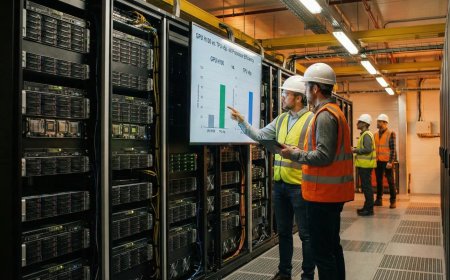
Alongside offices and commercial property, Bedrock has also been talking with data centre developers. Some are interested in geothermal systems for cooling server racks, but others are drawn to the technology's flat load profile: installing geothermal on neighbouring properties can free up significant capacity on the electricity grid.
Lai said one developer in Michigan told the company that freeing up a few megawatts could let a data centre start operating months, or even a year, earlier — and, in her words, a year of revenue for a data centre is very meaningful.
Once installed, a geothermal heat pump needs far less maintenance than a conventional heating and cooling system, Lai added, which makes it attractive as long-term infrastructure. The company is also moving toward a geothermal-as-a-service model, leasing thermal energy to large property owners rather than only selling installations.
Why it matters
Geothermal energy is drawing fresh attention as data centres and large buildings hunt for power that does not strain the grid. Bedrock's pitch is that the barrier was never the heat underground — it was the cost of reaching it. If AI-guided drilling can genuinely shorten that job by as much as the company claims, geothermal heat pumps could move from a niche choice to a standard option for commercial developers.
For now, the $24 million buys more rigs and a wider map. Whether the drilling-time savings hold up across dozens of new sites will decide how far the model travels.
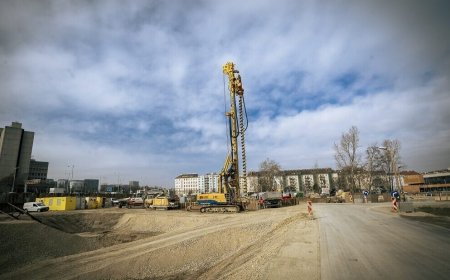
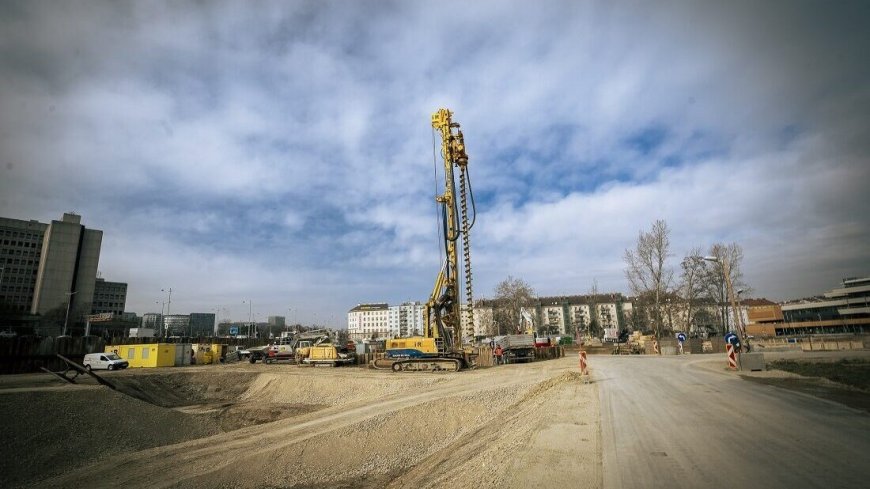
Photo: a geothermal drilling rig at work on an urban construction site.
Sources
What's Your Reaction?
 Like
0
 Dislike
0
 Love
0
 Funny
0
 Angry
0
 Sad
0
 Wow
0