
























































US Closes AI Chip Loophole: Remote Access to Advanced Chips Through Overseas Data Centres Now Needs a Licence
The US Commerce Department has issued an interim rule requiring licences for advanced AI chip exports to five countries and for overseas data centres that give Chinese and other restricted companies remote access to large-scale computing power, closing a loophole at the centre of the Nvidia scandal.
US Closes AI Chip Loophole: Remote Access to Advanced Chips Through Overseas Data Centres Now Needs a Licence
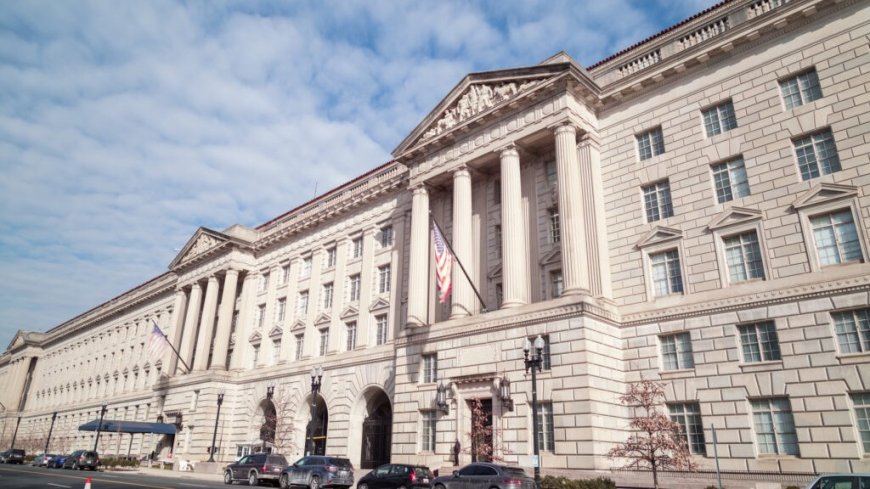
The United States has moved to shut one of the widest gaps in its AI chip export controls. The Commerce Department said on Monday, November 16, that it will require licences for advanced artificial intelligence chips sent to five countries, and for overseas data centres that let companies in China and other restricted nations use that computing power remotely.
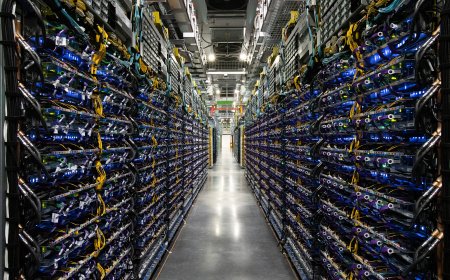
For years, Washington has barred the direct sale of America's most powerful AI chips to China. But Chinese companies have still been able to train large AI models by renting computing power from data centres in Southeast Asia and elsewhere, using the very chips they are not allowed to buy. The new interim final rule, issued by the Commerce Department's Bureau of Industry and Security and titled "Addressing Remote Access to Advanced Semiconductors," is designed to end that practice.
"The rule is designed to ensure that existing restrictions on access to sensitive American technology cannot be circumvented through remote computing arrangements involving data centers in third countries," the Commerce Department said in a statement.
What the new rule does
The rule has two main parts. First, companies will need a US export licence to send advanced AI chips and servers to Indonesia, Malaysia, Singapore, Thailand and Brazil. The Commerce Department named the five countries because they present what it called a higher-than-normal risk of the chips being diverted onward to China.
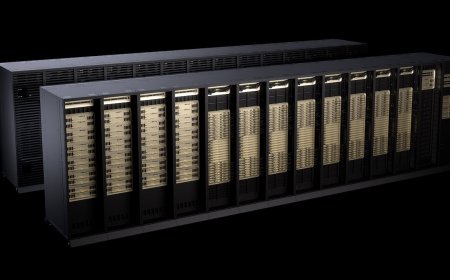
Second, and more far-reaching, data centres anywhere in the world will need a licence before they provide large-scale computing power to companies headquartered in China or other restricted destinations. The control applies to facilities or networks able to supply more than 12 million in total processing performance, a US export-control measure known as TPP. TechCrunch estimated that threshold at roughly the maximum output of about 750 Nvidia H100 or H200 chips. The rule also covers indirect access through brokers and other intermediaries.
The restricted destinations are the countries in the US export-control group known as D:5, which includes China, Russia, Iran and North Korea along with 18 other jurisdictions. Companies headquartered in the United States are exempt from the new licence requirement. Systems used by online retailers and social media companies for commercial recommendation systems are also excluded, with the department saying they do not pose the same national security threat.
Data centres already providing covered services will have 90 days from the rule's effective date to obtain a licence or face future export restrictions. Comments on the interim final rule are due in 60 days.
Why now: the Nvidia scandal and Megaspeed
The rule is the Trump administration's first policy response to the scandal surrounding former Nvidia chief executive Jensen Huang, who resigned on Thursday, November 12, after admitting to an affair with an executive at Megaspeed, a Singapore-based cloud company and Nvidia partner that rents out computing power at its data centres. Megaspeed has come under scrutiny over the possible illegal diversion of advanced Nvidia chips to China. In a statement on November 15, Megaspeed said it complies with all applicable laws and regulatory regimes, including US export control requirements.
The rule also follows reporting that the Commerce Department had turned a blind eye to the smuggling of advanced Nvidia AI chips into China and failed to curb Chinese access to overseas data centres. A former Commerce official, Kate Koren, told Reuters the rule would have a much bigger impact on China than adding a single company to the department's trade blacklist. "Nvidia and Jensen himself were key drivers of the argument for selling chips to China as a strategy," Koren said. "The revelations last week put that argument into question, and the pendulum is swinging in the other direction — towards tighter export controls."
The Commerce Department said the rule was written by the Department of the Treasury and the National Security Council, which also directed its release. Treasury Secretary Scott Bessent said on Friday that four government agencies had favoured putting Megaspeed on the trade blacklist, but the Commerce Department, which was in charge, had not. Commerce Secretary Howard Lutnick has faced intense criticism for his handling of chip export controls since the scandal broke, and senior White House officials have discussed whether he should be pushed out, Reuters reported last week.
Pressure on Lutnick as Trump heads to China
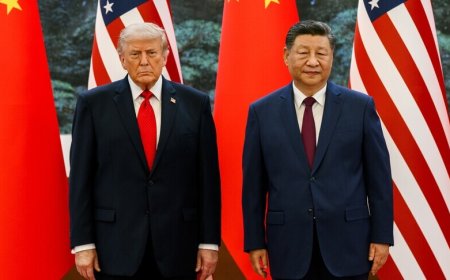
The rule was announced as President Donald Trump began a trip to Asia to meet Chinese President Xi Jinping in Shenzhen on Thursday, at the site of this week's APEC summit. Lutnick is travelling with the president. Speaking to reporters as he departed the White House, Trump said he has no plans to replace Lutnick and, asked whether he still had confidence in him, replied: "Yeah, I do." Trump also said he would not mind seeing Huang return as Nvidia chief executive.
The rule landed one day after Senator Maria Cantwell, the Democrat in line to chair the Senate Commerce Committee, sent Lutnick a letter demanding immediate action to stop advanced chips reaching companies with ties to China. "These companies are exploiting a loophole in U.S. export controls by using advanced American chips in foreign data centers even when those chips are restricted from the People's Republic of China," Cantwell wrote, adding that Lutnick's failure to implement sufficient export controls "has undermined America's national security."
What happens next
The rule also formally rescinds the Biden administration's AI Diffusion Rule of January 2025, which had set country-level limits on advanced chip exports. The Trump administration said in May that it would discard that rule, and the Commerce Department said in early 2025 that it would not enforce it — but no action was taken until Monday, a period during which billions of dollars' worth of restricted Nvidia chips flowed to data centres used by Chinese AI companies, according to Reuters.
Attention now turns to how strictly the new licences are granted, and to Thursday's meeting between Trump and Xi in Shenzhen, where technology controls are expected to feature. For Chinese AI companies that have relied on rented computing power abroad, the 90-day window is now the deadline to either secure a licence or find another way to train their models.
Sources
Reuters, "US to curb China's access to AI chips as Trump heads to Asia" (via KELO-FM), November 16, 2026; Nextgov/FCW, "Commerce Department moves to close AI chip loophole," November 16, 2026; TechCrunch, November 16, 2026; Fortune, November 16, 2026.
What's Your Reaction?
 Like
0
 Dislike
0
 Love
0
 Funny
0
 Angry
0
 Sad
0
 Wow
0