























































MIT Sues Microsoft Over Post-Quantum Cryptography Patent in Data Centre Hardware
The Massachusetts Institute of Technology has sued Microsoft in a Texas federal court, alleging that the Adams Bridge Accelerator hardware in Microsoft's data centres infringes an MIT cryptography patent built to withstand attacks from quantum computers. MIT is seeking unspecified damages, and Microsoft has not yet commented on the case.

MIT Sues Microsoft Over Post-Quantum Cryptography Patent in Data Centre Hardware
The Massachusetts Institute of Technology has sued Microsoft in a Texas federal court, alleging that hardware Microsoft uses in its data centres infringes an MIT patent covering cryptography designed to withstand attacks from quantum computers. The complaint, filed on Friday, November 13, 2026, puts the university and one of the world's largest cloud operators on opposite sides of a dispute over the security technology that protects the servers running modern computing.
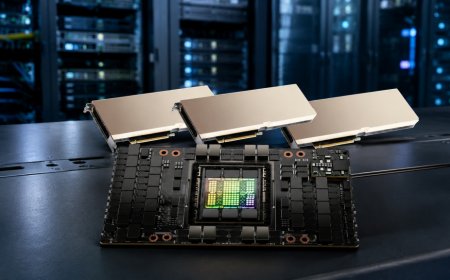
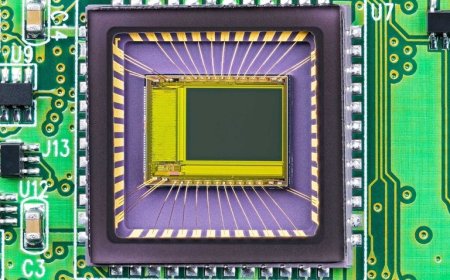
At the centre of the case is Microsoft's Adams Bridge Accelerator, a piece of hardware that accelerates post-quantum cryptography inside data centre systems. MIT says the accelerator works in the same way as its own patented innovations and is asking the court for an unspecified amount of monetary damages. Microsoft spokespeople did not immediately respond to a request for comment when the lawsuit was reported on Monday, November 16.
What MIT alleges
According to the complaint, MIT's patented technology is designed to fend off cybersecurity threats from quantum computers, machines that researchers expect will one day be powerful enough to break the encryption that currently protects everything from financial transactions to government communications. The university argues that Microsoft's Adams Bridge hardware copies the approach protected by its patent, and that the infringement is happening inside the data centres that power Microsoft's cloud business.
The case was filed in the US District Court for the Eastern District of Texas as Massachusetts Institute of Technology v. Microsoft Corp, No. 2:26-cv-01029. MIT is represented by Joshua Krumholz of Holland & Knight, with Jennifer L. Truelove of McKool Smith also acting for the university. No trial date has been set, and the court has not yet ruled on any part of the claim. An allegation in a complaint is not a finding of infringement, and Microsoft will have the opportunity to respond in court.
What Adams Bridge does
Adams Bridge is a hardware accelerator for post-quantum cryptography, the new generation of encryption built to survive the arrival of capable quantum computers. It runs ML-DSA and ML-KEM, two lattice-based algorithms that the US National Institute of Standards and Technology standardised for the quantum era, and it is designed to sit inside the Caliptra silicon root of trust, an open-source framework that checks firmware and device identity when data centre chips start up.
Microsoft developed the accelerator as open-source code under the CHIPS Alliance, and the design is aimed at real-world hardware security systems rather than research prototypes. That openness is part of what makes the dispute notable: the technology at issue is published and shared with the wider chip industry, yet MIT maintains that its use infringes the university's patent rights.
A second clash in the same court
The November lawsuit is MIT's second patent case against Microsoft in 2026. The university filed a separate suit in the same Texas court in May, covering chip-security patents used in Microsoft's Azure cloud platform. That earlier complaint, filed on May 15, asserted US Patent Nos. 7,818,569 and 7,681,103. The two cases are distinct, but together they show a widening legal confrontation between the university and the software giant over the security hardware inside Microsoft's cloud.
Why the dispute matters
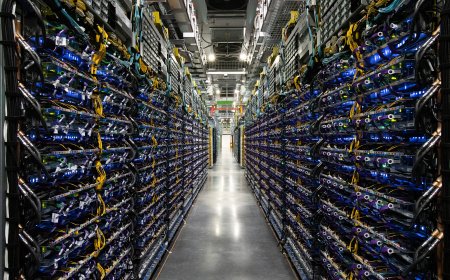
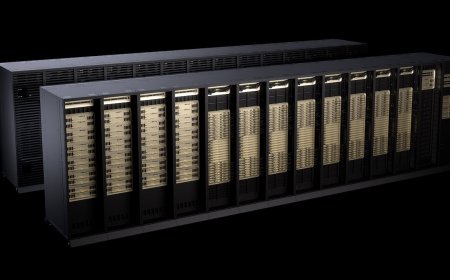
Post-quantum cryptography has moved from a research concern to a practical deadline for the technology industry. Governments and large companies are racing to replace vulnerable encryption before quantum computers mature, and the hardware that performs the new algorithms quickly and safely has become strategically important. Data centres are where that hardware lives, and a patent fight over the accelerators inside them could affect how quickly the industry adopts quantum-safe security.
For Microsoft, the case adds a legal complication to a cloud business that is already under scrutiny on several fronts. For MIT, it is a test of whether university research can be protected when it is built into the infrastructure of a global technology company. The outcome will be watched well beyond the courtroom in Texas, by chipmakers, cloud providers and anyone planning the shift to quantum-resistant encryption.
Sources
- Reuters — MIT sues Microsoft for patent infringement over data center technology (November 16, 2026): https://www.reuters.com/legal/litigation/mit-sues-microsoft-patent-infringement-over-data-center-technology-2026-11-16/
- IP fray — MIT sues Microsoft over "post-quantum" security tech for data centers (November 16, 2026): https://ipfray.com/mit-accuses-microsofts-post-quantum-security-tech-for-data-centers-of-infringing-single-cryptography-patent/
- mlq.ai — MIT sues Microsoft over a post-quantum encryption chip used in its data centers (November 17, 2026): https://mlq.ai/news/mit-sues-microsoft-over-a-post-quantum-encryption-chip-used-in-its-data-centers/
- IACR ePrint — Adams Bridge (V2.0) Accelerator: Bridging the Post-Quantum Transition: https://eprint.iacr.asia/2026/256.pdf
What's Your Reaction?
 Like
0
 Dislike
0
 Love
0
 Funny
0
 Angry
0
 Sad
0
 Wow
0