

















































Bharat Semi Raises $24 Million to Build AI Image Sensors That Process What They See
New Delhi chip startup Bharat Semi has raised $24 million in an all-equity seed round to develop programmable image sensors that combine capture, processing and AI on a single chip, with design wins from General Atomics and Kaynes Semicon and first commercial production targeted for 2027.
Bharat Semi Raises $24 Million to Build AI Image Sensors That Process What They See
New Delhi-based semiconductor startup Bharat Semi has raised $24 million in seed funding to develop image sensors that do more than capture a picture — they process it, and run AI on it, right on the chip. The round, reported by TechCrunch on November 15, is a notable vote of confidence in an Indian chip company that is still pre-revenue and has yet to ship a commercial product.
The startup says its sensors are aimed at customers in the United States and other global markets, and it already counts two early design wins: U.S. defense technology company General Atomics and India's Kaynes Semicon. Its first commercial production is targeted for 2027.
What Bharat Semi is building
Bharat Semi is developing programmable image sensors that combine image capture, processing and artificial intelligence capabilities on a single chip. In a conventional camera system, the sensor captures the image, an image signal processor cleans it up, and a separate system-on-chip runs the AI — three components, three costs, and data travelling between them. Bharat Semi's bet is that folding all three jobs into one chip makes cameras cheaper, simpler and faster.
Co-founder Vrinda Kapoor told TechCrunch the integrated approach could cut system costs by at least 70% compared with a conventional setup. That figure is the company's own expectation, not an independently measured result, and it will only be proven once real products reach customers.
"Our aim here is to move from sensors to sense-making solutions," Kapoor told TechCrunch.
The company is targeting smart homes, industrial automation, surveillance and aerospace. Kapoor pointed to air conditioners that could detect when a room is empty and adjust automatically, and drones that could process visual information on board — without the more expensive computing hardware that would otherwise be needed elsewhere in the system.
The funding round
The all-equity seed round was led by Info Edge Group, South Park Commons and Indus Bridge Ventures, with participation from Valour Capital, Micromax, Gaingels and individual investors. The company did not disclose a valuation.
Bharat Semi plans to use the money to expand its engineering team, complete product development and bring its sensors to market, Kapoor said.
Kapoor, a South Park Commons fellow who previously worked in healthcare technology, co-founded the company in late 2021 with Vinayak Dalmia, its managing director, who previously worked at McKinsey and in private equity. Its chief technology officer, Boyd Fowler, previously held the same role at image-sensor maker OmniVision.
The startup has about 75 employees across India and the United States, including 10 to 12 in its American operations, which cover engineering and business development in Santa Clara. It plans to increase its U.S. headcount to around 20 by mid-2027, Kapoor said, and has also begun hiring engineers in Europe.
"It's a story of can we build a global technology company out of India," Kapoor said.
Design wins — and what they are not yet
The design wins with General Atomics and Kaynes Semicon are the strongest early signal in the announcement, but they need to be read carefully. A design win means a customer has selected the technology for a development programme. It is not a volume order, and Bharat Semi remains pre-revenue: its sensors are still under development.
The first-generation sensors are already in prototyping. The second generation, which will carry more advanced AI capabilities, is expected to reach the prototype stage by mid-2027, with the startup planning to get those newer sensors into customers' hands by the end of 2027.
A separate fabrication plan
The new funding will not go towards a semiconductor fabrication facility. In 2024, Bharat Semi announced plans for a fabrication project in India involving a technology partnership with the U.S. Space Force. That initiative remains in development, Kapoor said, and the startup is working to identify domestic partners that would build and operate the facility.
The project is separate from the image-sensor business. Bharat Semi plans to remain fabless in its sensor business, outsourcing chip manufacturing while focusing on semiconductor design and software.
Why it matters
India has committed billions of dollars to building a domestic semiconductor industry, hoping to become an alternative manufacturing hub as U.S. companies look to diversify supply chains beyond China. The country, however, has yet to establish itself as a major chip manufacturing hub. The AI boom is meanwhile giving Indian startups such as Bharat Semi a chance to develop specialised chips for global markets — designing in India and selling worldwide, rather than waiting for factories to arrive first.
Whether that bet pays off will be decided by the hardware itself. The $24 million buys Bharat Semi time to finish its sensors and prove the cost claim in real products. The 2027 production target is the date to watch.
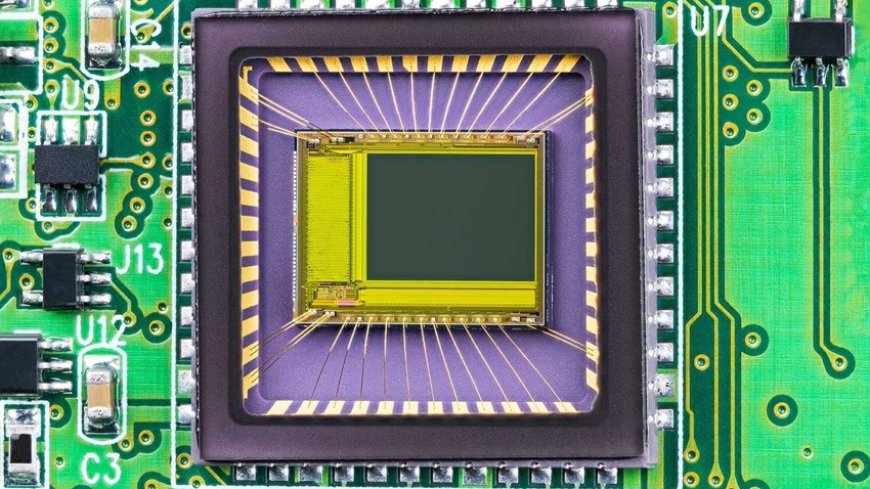
The featured image is a representative photograph of an image sensor chip; Bharat Semi's sensors are still in prototyping and no product photo of its chip has been published.
Sources
What's Your Reaction?
 Like
0
 Dislike
0
 Love
0
 Funny
0
 Angry
0
 Sad
0
 Wow
0