
































































Tesla to Build Cybercabs in Berlin: €3 Billion Giga Berlin Expansion Targets One Million Robotaxis a Year
Tesla will invest €3 billion (about $3.3 billion) in a new production building at its Gigafactory Berlin-Brandenburg in Grünheide, with Cybercab production planned to start in 2029. The hall is designed to build up to one million of the steering-wheel-free robotaxis a year, making the German plant Tesla's first Cybercab factory outside the United States.
Tesla to Build Cybercabs in Berlin: €3 Billion Giga Berlin Expansion Targets One Million Robotaxis a Year
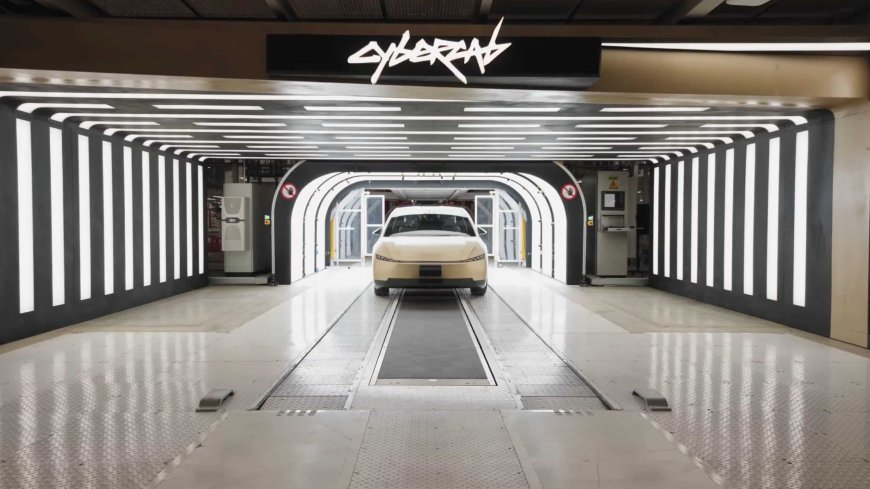
Tesla is taking its driverless Cybercab to Europe in a big way. The company confirmed on Monday, November 16, that it will invest around €3 billion (about $3.3 billion) in a new production building at its Gigafactory Berlin-Brandenburg in Grünheide, designed to build up to one million Cybercabs a year once fully ramped up. Production is planned to start in 2029.
The announcement, made by André Thierig, Tesla's senior director of manufacturing at the site, marks the Cybercab's first planned production home outside the United States — and the clearest sign yet that Tesla sees the two-seat robotaxi, not its conventional cars, as the centre of its future.
A factory built for a million robotaxis
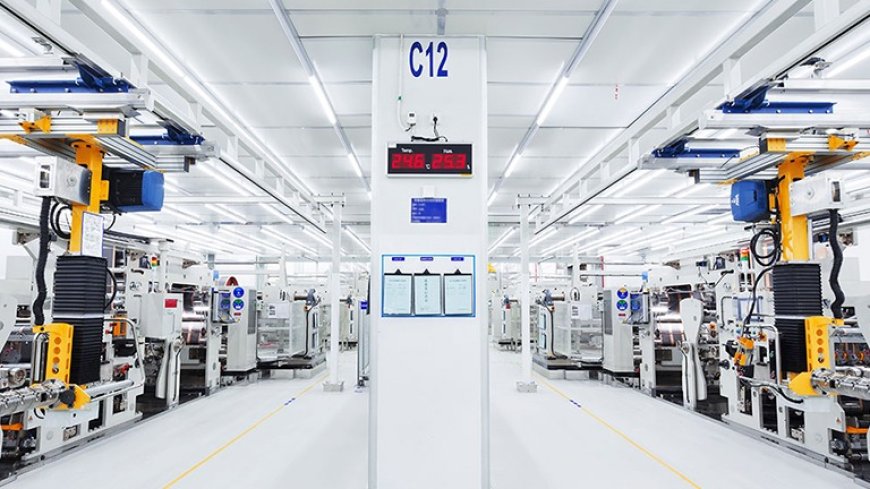
The €3 billion covers a new manufacturing hall north of the existing plant, along with ancillary buildings and a second wastewater treatment plant. Tesla said it will file the building permit application before the end of 2026, with construction scheduled to begin in the first half of 2027.
German newspaper Tagesspiegel reported that the new hall would cover about 500,000 square metres — roughly twice the size of the main hall where Tesla currently builds the Model Y. The Model Y will stay in production at Grünheide, with the Cybercab built alongside it. According to Reuters, the expansion could make the site Germany's largest car plant by capacity, overtaking Volkswagen's Wolfsburg headquarters.
Thierig described the investment as a first step, and told Tagesspiegel that Tesla's total investment at the site now stands at $10 billion. He added that the expanded facility would become the most technologically advanced of all Tesla's factories.
Two months after the first paid rides
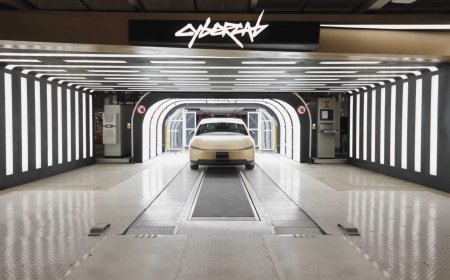
The Berlin commitment comes barely two months after the Cybercab began carrying the public in Austin, Texas, in September 2026. The vehicle, first revealed in 2024, has no steering wheel, no pedals and no other traditional driving controls. Tesla relies solely on cameras for its self-driving system, rather than adding sensors such as lidar, an approach that sets it apart from rivals like Waymo.
So far the rollout has been deliberately slow. Cybercabs have been restricted from driving late at night, though Tesla has been working to extend their operating hours, and the company says there have been no major incidents in the first two months of public service. In Texas, Tesla has about 1,307 robotaxis registered, most of them modified Model Y vehicles, with around 573 Cybercabs operating in Austin, according to TechCrunch.
That cautious start has not stopped Tesla from pouring resources into the programme. The company has already announced plans to end Cybertruck production in Austin next year, in part to free up space for Cybercab manufacturing at its Texas factory. Grünheide now becomes the second Cybercab production site, and the first in Europe.
Europe's rules are the real bottleneck
Building a million Cybercabs a year is one thing. Putting them on European roads is another. Under current EU type-approval rules, a carmaker may register only 1,500 driverless vehicles of one type per year across the whole European Union, and Tesla has not said where the Cybercabs built in Grünheide will go.
That regulatory ceiling means the plant's eventual output will depend heavily on how European rules for driverless cars develop over the next few years — a point Tesla itself has acknowledged, noting that the volume produced is expected to depend on regulation. In the United States, meanwhile, federal safety regulators opened an audit of how Tesla certified the Cybercab on the same day its paid rides began in September.
For now, the timeline is clear: a permit application this year, construction in the first half of 2027, and the first German-built Cybercabs rolling off the line in 2029. Whether a million a year follows will be decided as much in Brussels as in Grünheide.
Why it matters
The expansion is a statement of intent at a moment when Tesla's German rivals are cutting back. Reuters noted that Tesla is pressing ahead with the investment even as local automakers struggle with high costs and weak demand. For Tesla, the bet is that the Cybercab can become a mass-market product — and that building it at scale in Europe, close to the customers it hopes to serve, will matter more than the regulatory hurdles still standing in its way.
Related coverage: Tesla recently opened Cybercab orders by invitation, priced at $29,990 with a $299 monthly subscription, and is winding down Cybertruck production in Texas to make room for Cybercab manufacturing.
Sources
- Reuters — Tesla announces $3.3 billion expansion of Germany plant
- TechCrunch — Tesla goes all-in on the Cybercab with upcoming €3B Berlin gigafactory expansion
- Electrek — Tesla confirms €3B Cybercab factory at Giga Berlin for up to 1M a year
- EVXL — Tesla Bets €3 Billion on Berlin Cybercabs; EU Allows 1,500 a Year
What's Your Reaction?
 Like
0
 Dislike
0
 Love
0
 Funny
0
 Angry
0
 Sad
0
 Wow
0