
































































Science Corporation Raises $400 Million to Bring Its Vision-Restoring PRIMA Chip to the US
Science Corporation, the brain-computer interface startup founded by former Neuralink president Max Hodak, has raised $400 million in a Series D round at a $3.5 billion valuation. The funding will bring its vision-restoring PRIMA retinal chip to patients in the United States and advance work on a bio-hybrid brain implant that connects directly to the brain.
Science Corporation Raises $400 Million to Bring Its Vision-Restoring PRIMA Chip to the US
Science Corporation, the brain-computer interface startup founded by former Neuralink president Max Hodak, has raised $400 million in a new funding round that values the company at $3.5 billion. The money will fund the push to bring its first product — a vision-restoring retinal chip called PRIMA — to patients in the United States, and to advance the company's longer-term ambition of an implant that connects directly to the human brain.
The company announced the Series D round in a blog post on November 17, 2026. A person familiar with the deal told TechCrunch that investors placed the company's value at $3.5 billion.
Who backed the round
The round was led by Khosla Ventures. The Ackman Oxman Institute, Tenet Healthcare, 885 Capital, Y Combinator and PLC Neurotech also took part. Hodak founded Science Corporation in 2021 after leaving Neuralink, where he had served as president, and the company has steadily built a reputation as one of the most closely watched startups working at the intersection of neuroscience and computing.
How PRIMA restores sight
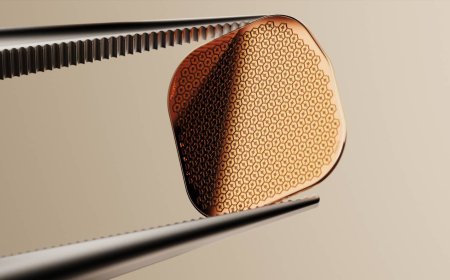
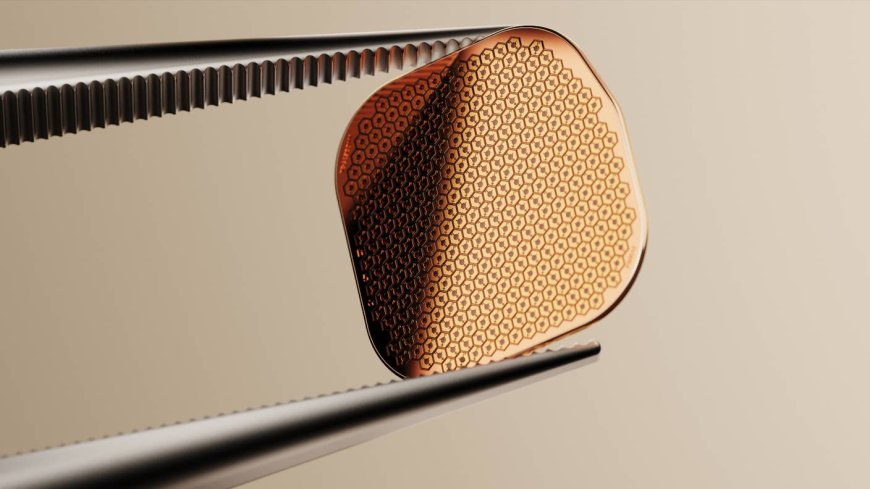
PRIMA is a tiny photovoltaic chip implanted under the retina, paired with a pair of glasses that project near-infrared light onto it. The chip converts that light into electrical signals the brain can interpret, restoring partial central vision to people with advanced age-related macular degeneration, known as AMD — one of the most common causes of vision loss among older adults.
The device is made up of 378 pixels, each fitted with a tiny electrode. It does not restore full sight, but for patients who have lost their central vision, even partial restoration can mean reading, recognising faces and navigating the world independently again.
Already in use in Europe
PRIMA received its CE mark in July 2026 and has launched commercially in Europe. The first commercial implants have been carried out in Germany, with dozens more procedures scheduled, and rollouts are under way in Italy, France and the United Kingdom. Science is also offering the device to patients willing to pay out of pocket at a specialist unit at Moorfields Private Eye Hospital in London, though it has not disclosed what patients would have to pay.
The company is testing PRIMA for other causes of blindness as well. Hodak announced onstage at TechCrunch Disrupt that the device is now being trialled for patients with Stargardt's disease, an inherited condition that causes progressive vision loss. In the future, Science also plans to make it available as a treatment for retinitis pigmentosa.
The road into the United States
Bringing PRIMA to American patients is the new funding's most immediate priority. Science is seeking clearance through the Food and Drug Administration's Humanitarian Device Exemption pathway, which allows experimental medical technology to be used for rare conditions. The company has convinced the FDA that advanced macular degeneration in both eyes is uncommon enough to qualify for that route.
Hodak told Bloomberg he expects PRIMA to be commercially available to American patients in the first half of next year. The humanitarian pathway can speed approval, but eligibility does not automatically grant market access — Science must still satisfy the FDA's requirements for the device and its proposed use.
Beyond the eye: a brain implant built from living neurons
The funding also advances Science's founding ambition, which goes well beyond vision. The company is developing a bio-hybrid sensor built from cultured neurons combined with silicon, designed to connect directly to the human brain.
That device has completed animal testing, and Science is designing its first human trials with Murat Günel, a neurosurgery professor at Yale. The company hopes to begin those trials within the next 16 months. Günel has said the approach could eventually offer treatments for Parkinson's disease and other brain injuries and illnesses. Science has picked the first disease it hopes to treat with the experimental device but has not disclosed it.
Why this round matters
The $3.5 billion valuation puts Science Corporation among the most valuable private brain-computer interface companies, and it arrives at a moment when the field is moving from laboratory demonstrations toward real patients. PRIMA is already being implanted commercially in Europe, which sets it apart from rivals whose devices remain in trials — and the new capital gives Science the resources to pursue the harder prize: a device that interfaces with the brain itself.
Whether the bio-hybrid implant follows the same path will depend on the human trials now being designed. For now, the company's most concrete milestone is closer: bringing a chip that helps blind people see again to patients in the United States.
Sources
What's Your Reaction?
 Like
0
 Dislike
0
 Love
0
 Funny
0
 Angry
0
 Sad
0
 Wow
0