































































US Closes the AI Chip Cloud Loophole: New Rule Blocks China's Remote Access Through Overseas Data Centres
The US Commerce Department has issued a new interim final rule that requires licences for advanced AI chips shipped to data centres renting large amounts of computing power to Chinese firms, and adds licensing requirements for Singapore, Malaysia, Indonesia, Thailand and Brazil.
US Closes the AI Chip Cloud Loophole: New Rule Blocks China's Remote Access Through Overseas Data Centres
Washington has moved to shut one of the last open routes by which Chinese companies could tap into America's most powerful artificial intelligence chips. On Monday, November 16, the US Commerce Department's Bureau of Industry and Security (BIS) released an interim final rule that reaches beyond the physical shipment of chips and into the data centres that rent out their computing power.
The rule, titled "Addressing Remote Access to Advanced Semiconductors", was written by and at the direction of the Department of the Treasury and the National Security Council, according to BIS. Its aim is to make sure existing restrictions on sensitive American technology "cannot be circumvented through remote computing arrangements involving data centres in third countries".
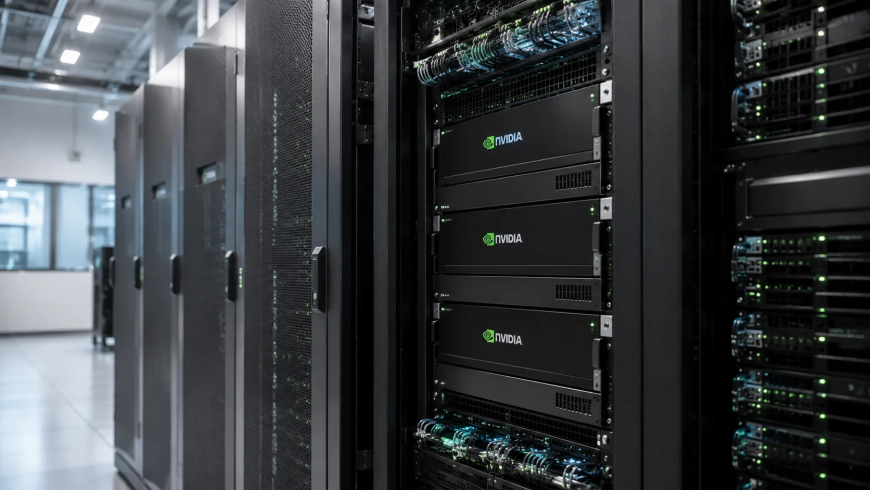
For years, US export controls focused mainly on where chips were shipped. That left a gap: Chinese firms that could not buy Nvidia's top data centre chips outright could simply rent the computing power those chips provide from data centres in other countries. Until now, that was legal. The new rule closes that gap.
What the new rule does
Under the rule, a licence is required to export, re-export or transfer certain advanced American AI chips and servers — generally those classified under ECCNs 3A090 and 4A090 — to a data centre anywhere in the world if the supplier knows the facility provides, or will provide, more than 12 million aggregate total processing performance (TPP) of computing power to or for a company headquartered in China, Macau or another Country Group D:5 destination.
The threshold is measured across linked sites, so splitting capacity between connected facilities does not escape it. The rule also looks through the direct customer: it covers arrangements where a customer outside the restricted countries trains models for, participates in training for, or provides models to a restricted-country company, as well as affiliates whose ultimate parent is headquartered there.
Data centres that are already providing that level of compute to Chinese firms will have 90 days from the rule's effective date to obtain a licence. There is one carve-out: computing power used only for commercial recommender systems, the kind online shops and social networks use to rank products and posts, is exempt.
Five countries face new licensing requirements
Separately, the rule adds licensing requirements for shipments of advanced AI chips to five countries the Commerce Department says present a higher-than-normal risk of diversion: Singapore, Malaysia, Indonesia, Thailand and Brazil.
Companies headquartered in the United States, or whose ultimate parent is headquartered there, are exempt from that country licensing requirement, provided they meet monthly reporting obligations. That covers American cloud hyperscalers such as Amazon Web Services, Google and Microsoft operating in those countries.
The rule also formally rescinds the Biden administration's AI Diffusion Rule from January 2025, including its three-tier country system and the Data Center Validated End-User programme, replacing that framework with the new remote-access and country-specific controls.
The rule takes effect when it is published in the Federal Register, which is scheduled for November 19, 2026. Public comments are open for 60 days after publication.
Why Washington acted now
The United States has long sought to limit China's access to its most advanced semiconductors, citing national security concerns and the potential use of AI technology for military and intelligence purposes. But until now, controls largely tracked the physical movement of hardware, leaving remote access unregulated.
Instead of importing restricted processors into China, firms could rent computing capacity from data centres abroad — an arrangement that let Chinese companies use American technology without importing the hardware. Liza Tobin, a former China director for the National Security Council in the first Trump and Biden administrations, told PBS that a "shadow trade" had developed in which Chinese AI developers accessed US chips remotely in countries like Malaysia, Indonesia and Singapore.
"So that's essentially a grey area. It was technically legal, and there's been growing pressure from national security professionals and from Congress to close this loophole," said Tobin, now a managing director at geopolitical risk advisory firm Garnaut Global.
The announcement also follows growing scrutiny of Singapore-based cloud company Megaspeed, which has been linked to allegations involving the possible diversion of advanced Nvidia chips to China. The Megaspeed case has already drawn a separate US inquiry and a push by Treasury Secretary Scott Bessent to add the company to the entity list. Read more: Bessent blames Commerce for Megaspeed entity-list delay
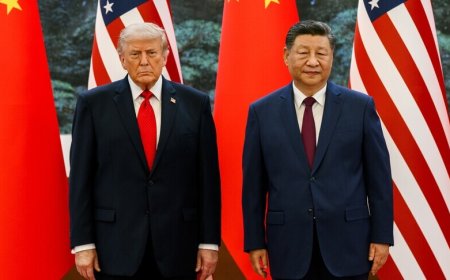
The timing is also political. The rule landed days before US President Donald Trump is due to meet Chinese President Xi Jinping on the sidelines of the Asia-Pacific Economic Cooperation (APEC) summit in Shenzhen later this week.
What it means for Southeast Asia
Four of the five newly licensed countries are in Southeast Asia, a region that has become one of the world's fastest-growing destinations for data centre investment, fuelled by demand for cloud computing and AI services. Singapore has long been a regional hub for technology companies and digital infrastructure, while Malaysia — particularly Johor — has attracted major investments in new facilities. Indonesia and Thailand have also been courting international technology companies as they build their digital economies.
That boom is now colliding with the new controls. Companies importing advanced American AI chips or operating data centres in the affected countries face greater regulatory scrutiny and compliance costs. They will have to conduct more extensive checks on their customers, establish who ultimately controls the businesses using their computing infrastructure, and obtain additional approvals from US authorities.
Singapore Management University Associate Professor of Law Liu Han-Wei told CNA the new rules extend the focus beyond where chips are shipped to "who ends up using the computing power".
"In effect, data centre operators will be expected to know who their customers are, including who ultimately owns or controls them, and to provide enough information for their suppliers to verify compliance. Knowing your customer becomes a condition of access to the hardware," Liu said.
Malaysia's construction players with heavy exposure to data centre builds could be affected by a potential slowdown in the rollout of future projects, the New Straits Times reported, with facilities relying on Chinese AI customers facing longer licensing and customer-verification processes, while projects established by US hyperscalers are expected to be better positioned.
The new rule also links licensing decisions to the effectiveness of each country's own export controls, Liu noted — a signal that governments in the region will face expectations to tighten their own enforcement, even though the obligations formally fall on companies. And because some of the restrictions are not tied to where a data centre is located, more countries could be added later.
The fallout from the Nvidia turmoil has already put the region's AI boom under a spotlight. Read more: Nvidia fallout throws spotlight on Southeast Asia's AI boom
China pushes back
China has condemned the move. At a press conference on November 17, foreign ministry spokesperson Guo Jiakun criticised the new controls, and China's commerce ministry said in a statement on Tuesday that it firmly opposed the rule and would take countermeasures if the US insisted on imposing it.
Experts cautioned that it is too early to judge how much the rule will slow China's AI development, since much depends on how it is enforced and how licences are granted. But they also warned it could accelerate Beijing's push for self-reliance.
"The US can make China's technological progress more expensive and difficult. But denying access to American chips is not the same as denying China the ability to innovate," said Associate Professor Eduardo Araral from the National University of Singapore's Lee Kuan Yew School of Public Policy. "In the long run, these restrictions could even strengthen China's determination to build an AI ecosystem that is less dependent on American technology."
For Southeast Asia, Araral warned the region is increasingly caught in the middle of the US-China technology rivalry. "But ASEAN countries should resist being pushed into a binary choice between the US and China. Their economic interests are better served by keeping their options open," he said.
What happens next
The rule takes effect on Federal Register publication, scheduled for November 19, with a 60-day window for public comments and a 90-day grace period for existing data centre operators to secure licences. How strictly BIS enforces the new remote-access threshold — and how it treats licence applications from the five newly covered countries — will determine whether the rule chokes off the cloud loophole or simply pushes Chinese demand toward other routes.
Either way, the era in which renting an American AI chip from a data centre abroad sat outside US export controls is over.
Sources
- Channel News Asia — "CNA Explains: Why is the US targeting Southeast Asia in its bid to curb China's access to AI chips?" (November 17, 2026)
- Reuters — "China says it will take countermeasures if US imposes new chip curbs" (November 17, 2026)
- Reuters Breakingviews — "Chip curbs threaten US-China trade truce" (November 18, 2026)
- Katten — "Commerce Department Releases New Export Rules for Advanced AI Chips and Data Centers" (November 2026)
What's Your Reaction?
 Like
0
 Dislike
0
 Love
0
 Funny
0
 Angry
0
 Sad
0
 Wow
0