

















































Corma Hits $1 Billion Valuation With $125 Million Series A, Three Months After Its Seed Round
Corma, the AI lab building foundation models for defensive cybersecurity, has raised $125 million in Series A funding at a $1 billion valuation, led by NEA — just three months after its $60 million seed round, taking total funding to $185 million.
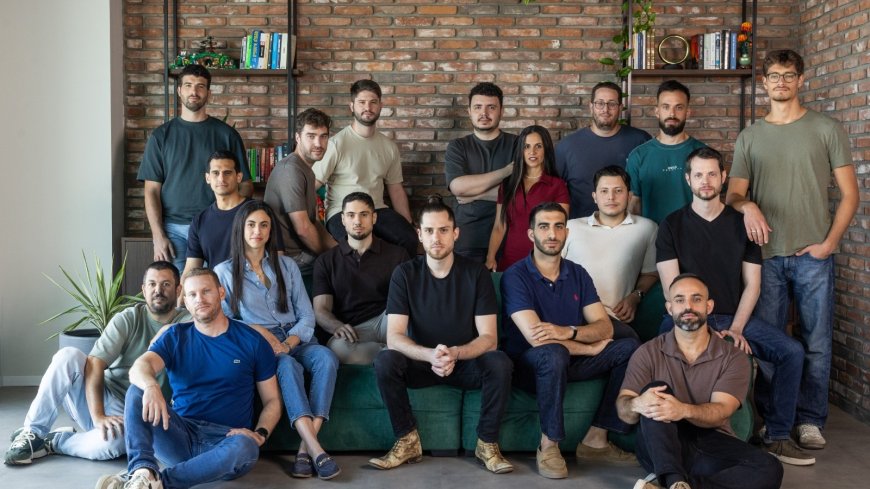
Corma Hits $1 Billion Valuation With $125 Million Series A, Three Months After Its Seed Round
Israeli-founded cybersecurity startup Corma has raised $125 million in a Series A funding round at a $1 billion valuation, becoming a unicorn just three months after it emerged from stealth. The round was led by venture capital firm NEA, with existing investors Sequoia Capital, Khosla Ventures and Coatue all taking part again.
The company announced the funding on Monday, November 16, 2026. The new money takes Corma's total funding to $185 million, including the $60 million seed round it announced in August, which was led by Sequoia.
A three-month sprint from stealth to unicorn
Corma was founded in 2025 by Alon Pluda, its chief executive, a graduate of the Israeli military's Psagot program and an alumnus of Unit 8200, the signals intelligence unit. The company, headquartered in Tel Aviv and San Francisco, employs around 25 people.
It came out of stealth in August 2026 with a warning: while artificial intelligence was getting rapidly better at attacking computer systems, the defensive side of cybersecurity was barely moving. The months since have, in the company's telling, proved the point. In October, a wave of critical vulnerabilities and breaches across some of the world's most widely used software — dubbed "Black October" — sent security teams scrambling, with a critical flaw found in the PHP programming language on October 21, another in the Node.js runtime, and a security incident disclosed by LiteLLM, a popular open-source tool for routing requests to multiple AI providers.
That backdrop has driven demand. Corma says interest from the world's largest organisations has surged across the Fortune 100, Fortune 500 and Fortune Global 500 since August, with enterprises handing more of their security work to its autonomous AI workforce. The company says it has increased its server capacity 24 times to keep up.
"Since we came out of stealth, demand from the world's largest organizations has been overwhelming, and one of our hardest problems has been securing capacity fast enough to keep up with the demand," Pluda said in the announcement.
What Corma is building
Corma describes itself as a frontier AI lab training foundation models specifically for defensive cybersecurity. Rather than layering a product on top of models from other companies, it builds its models from scratch and deploys them as an autonomous AI workforce that works inside a customer's existing security tools, alongside the human team.
The argument behind the approach is that defense demands a different kind of intelligence from attack. Coding models are trained to reason about code, and vulnerabilities are, in a sense, another kind of bug — so as models get better at writing software, they also get better at finding ways to break it. Defensive work, by contrast, means digging through huge volumes of security data such as audit logs, security events and network flows, correlating weak signals across systems and over long periods, and staying consistent across thousands of decisions in a row. Corma says coding models were never optimised for any of that.
The company's team combines frontier AI researchers, including people from Google DeepMind, with cybersecurity specialists from Israel's 8200 Unit. It plans to use the new funding to buy more computing infrastructure and to keep improving its models.
"Corma is building the intelligence layer that defensive security needs," said Aaron Jacobson, a partner at NEA. "As AI gives attackers an advantage, Corma's combination of frontier AI research and deep cybersecurity expertise has the potential to help organizations defend against these threats at scale."
Investors are betting on defense
Corma is not the only company using AI to play defense. Anthropic, OpenAI and Microsoft are all working on defensive AI, and other startups are entering the field, including Armadin, the new venture from former Mandiant chief executive Kevin Mandia. But Corma says it stands apart by being a frontier research lab focused entirely on protection.
The speed of the valuation jump is striking even by the standards of a hot market. A $1 billion price tag three months after a product launch says more about investor appetite for defensive AI than about proven results: the company has not published revenue, customer numbers or losses. Still, the bet NEA and its fellow investors are making is clear — that as AI-powered attacks keep escalating, the companies best placed to defend against them will be the ones whose models were built for defense from the start.
The funding also continues a busy stretch for AI startups raising large rounds. LangChain, the AI agent startup, raised $300 million in a Series C round at a $3 billion valuation earlier in November, led by CapitalG.
Sources
- Business Wire — Corma Raises $125M Series A at $1B Valuation
- TechCrunch — Cybersecurity AI startup Corma reaches $1B valuation in about 3 months
- Calcalist / CTech — Cyber startup Corma goes from stealth to unicorn in just three months with $125 million Series A
- SiliconANGLE — Corma raises $125M to train cybersecurity-optimized foundation models
What's Your Reaction?
 Like
0
 Dislike
0
 Love
0
 Funny
0
 Angry
0
 Sad
0
 Wow
0