







































































Baidu's Robin Li Warns AI Bubble Fears Could Come True Without Real Profits
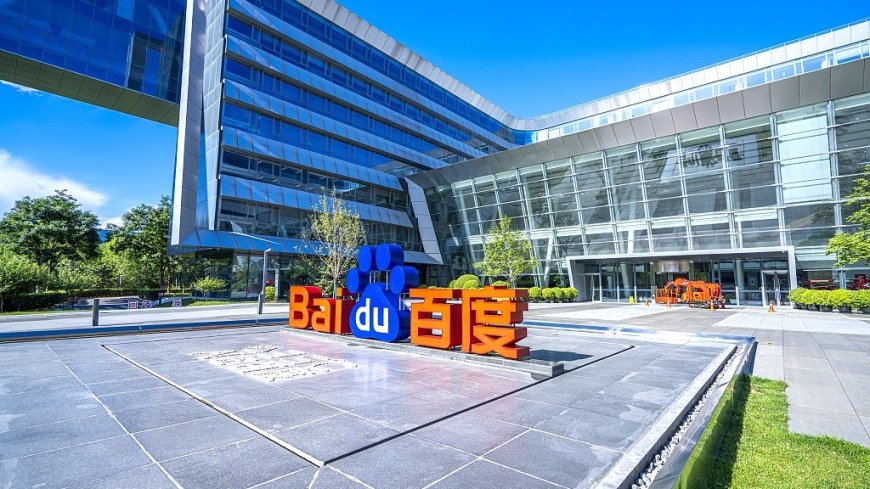
Baidu chairman and CEO Robin Li warned at the APEC CEO Summit in Shenzhen that fears of an AI bubble could become reality if heavy investment in the technology fails to deliver higher revenues and profits for businesses, arguing that value must ultimately be captured in AI applications, not in chips and models.
Baidu's Robin Li Warns AI Bubble Fears Could Come True Without Real Profits
Baidu chairman and chief executive Robin Li has warned that fears of an artificial intelligence bubble could turn into reality if the huge sums pouring into the technology fail to deliver higher revenues and profits for businesses. Speaking at the Asia-Pacific Economic Cooperation (APEC) CEO Summit in Shenzhen on Tuesday, 17 November, Li said that despite heavy spending on AI, most companies have yet to see significant improvements in their revenues or profitability.
"If we fail to address this, the concern that AI might be a bubble could well become a reality," Li said, according to Reuters. His warning carries weight because it comes from the head of one of China's largest technology companies, and because it was delivered at a moment when investors are already questioning whether the AI boom can justify its valuations.
The warning from Shenzhen
Li's message was blunt: the industry has spent heavily on computing power and infrastructure, but the results at the top of the stack — the applications that businesses and consumers actually use — have fallen short of expectations. Asked whether companies are seeing higher revenues or increased profits after adopting AI, he answered plainly that for most, the answer is no.
The remarks came a day after Baidu reported its third-quarter results, which underlined the point. Revenue fell 1 percent from a year earlier to 30.8 billion yuan, the company's sixth straight quarterly revenue decline. AI cloud infrastructure revenue surged 94 percent to 8.2 billion yuan, but that growth was not enough to offset a 22 percent fall in online marketing revenue, Baidu's long-standing advertising business.
Four layers, one missing link
Li broke the AI industry into four layers: chips, cloud infrastructure, large models and applications. Competition is fiercest at the foundation level, he said, where companies are racing to build faster chips and more powerful models. But the economic value, he argued, ultimately has to be captured at the top — in the applications layer.
"The most pressing task is to identify and develop the right, high-value applications for AI models," Li said during a panel on regional AI development. That, rather than another round of model benchmarks, is where he believes the industry's future will be decided.
Li also argued that technology alone is not enough. Companies need to rethink how they organise their work if they want to turn AI capabilities into business gains — a point he has framed as the "three principles of the intelligent organisation". Even the most powerful large language models, he said, will struggle to translate into real profit unless businesses change their structures to match what the technology can do. He added that domain-specific AI agents — tools built for a particular industry or task — are more likely to generate measurable economic benefits than general-purpose models.
Xiaomi's Lei Jun strikes a similar note
Li was not the only Chinese tech chief sounding the alarm in Shenzhen. Xiaomi founder and chief executive Lei Jun, speaking on a separate panel at the same summit, voiced similar concerns about the gap between investment and returns.
"The investment in AI has been extremely huge, yet the scenarios where the technology can actually be implemented are very limited," Lei said, adding that very few companies had succeeded in closing the "commercial loop" needed to turn the technology into profits.
The two warnings, delivered on the same day at the same event, point to a shared anxiety among China's biggest technology companies: that the race to build AI is running far ahead of the ability to make money from it.
Token Exchange and an optimistic note
Li did not present the picture as hopeless. Baidu has launched a "Token Exchange" that connects AI token providers directly with enterprise and individual customers, aiming to ease computing shortages. Baidu says the exchange, about a month after launch, had onboarded more than 100 model resources and was handling an average of more than 50 million calls and 700 billion tokens a day.
And Li remains optimistic about the technology itself, describing AI as an "inevitable trend". His argument is not that AI will fail, but that the industry's spending must start showing up in company results — or the sceptics will be proved right.
Why it matters
The warning lands at a sensitive moment for AI markets. Shares in AI-related companies have sold off sharply in recent weeks as investors question valuations, and the mood has been shaken further by the resignation of Nvidia chief executive Jensen Huang. Anthropic, meanwhile, is preparing to price its initial public offering in the coming days, a listing that will test how much appetite remains for AI growth stories.
Li's framing gives investors a concrete way to judge the sector: not by how large the models get or how much is spent on chips, but by whether applications start generating the revenue and profit that justify the investment. If they do not, he warned, the bubble debate will stop being a debate.
Sources
- Reuters — Baidu CEO says AI investment must deliver profits to avoid bubble
- South China Morning Post — Baidu, Xiaomi CEOs warn of growing gap between AI hype and returns
- The Times of India — AI investments must deliver profits to avoid bubble, Baidu CEO warns
- Digital Today — Baidu, Xiaomi CEOs warn of AI bubble amid heavy investment
What's Your Reaction?
 Like
0
 Dislike
0
 Love
0
 Funny
0
 Angry
0
 Sad
0
 Wow
0