





































































Police Interview Transcripts and Body-Cam Footage Left Open Online in Tigerfish Cloud Storage Exposure
San Francisco transcription firm Tigerfish left police interview transcripts, body-camera footage, raw customer recordings and client invoices exposed on a public Amazon cloud storage bucket. Security researcher Anurag Sen found the files in October 2026 and the company locked the bucket down only after TechCrunch intervened. No evidence of misuse has been reported, but it is not known how long the data was accessible or whether anyone else saw it.

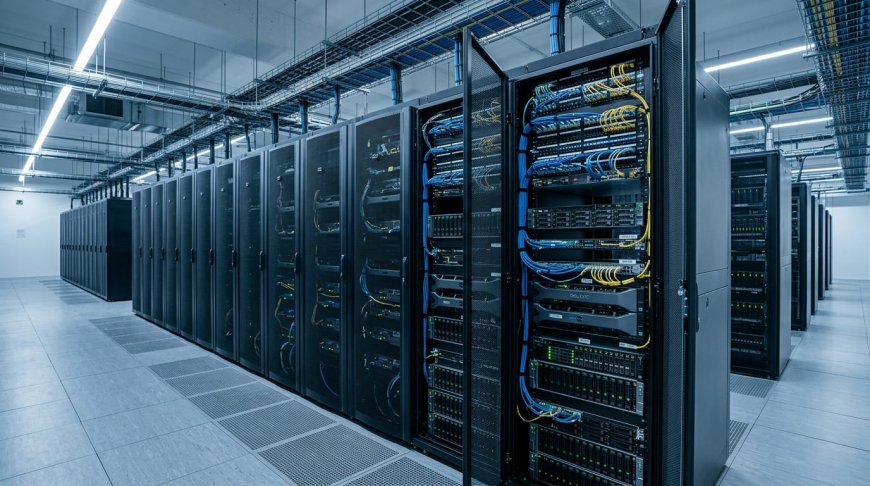
Police Interview Transcripts and Body-Cam Footage Left Open Online in Tigerfish Cloud Storage Exposure
A transcription company that works for police departments, prosecutors' offices, government departments and Silicon Valley technology firms has fixed a security lapse that left a large amount of sensitive customer data sitting open on the public internet. The exposed material included transcripts of police interviews, body-camera footage, and the raw audio and video recordings customers had sent in for transcription — along with invoices naming the company's clients.
The lapse, at San Francisco-based Tigerfish, was reported by TechCrunch on November 20, 2026. It is a reminder that some of the most consequential data exposures do not come from sophisticated hacking. They come from a storage bucket that was never locked in the first place.
What was left exposed
According to TechCrunch, the files sat on an Amazon-hosted S3 cloud server that was openly listed and reachable through an easy-to-guess web address. No password was needed to open them. Anyone who found the address could browse the contents.
The data included transcriptions of police interviews, body-cam footage, and customers' raw audio and video material — the source files behind the transcriptions. It also included invoices from Tigerfish's customers, which include police departments and prosecutors' offices, effectively confirming who the company serves.
What the reporting does not say is just as important. It does not say how long the bucket was publicly accessible, how many files or customers were affected, or whether anyone other than the researcher who found it ever opened the data. There is no reported evidence that the material was misused, and none should be assumed.
How the exposure was found
The files were discovered in October 2026 by Anurag Sen, a good-faith security researcher who spends his days hunting for sensitive datasets left exposed online. Sen alerted Tigerfish directly — but heard nothing back. He then passed the details to TechCrunch, which verified the source of the leak and the data before contacting the company itself.
Soon after TechCrunch made contact, Tigerfish secured the bucket. Adam Goldberg, the company's president, told TechCrunch in an email: "We've blocked all public access to the bucket you identified, including directory listings and individual files. We've also verified that all of our other S3 buckets are blocked to public access."
Goldberg added that the company is "continuing to review and strengthen our storage security more broadly." Tigerfish said Sen's original email warning about the exposure had been caught in its spam filter — the reason it went unanswered for weeks.
It is unclear whether Tigerfish has notified the customers whose material was exposed. The company did not respond to a follow-up email from TechCrunch.
A researcher who has seen this pattern before
Sen, 30, is a familiar name in this field. Over the past decade he has searched for exposed datasets with the aim of warning the companies and organisations involved, describing his work as that of an "unpaid air-traffic controller" for the internet. Working from his home in Indonesia, he has previously uncovered sensitive US military emails spilling from a compartmentalised Department of Defense cloud server, databases exposing large volumes of customer records, a country's national licence-plate surveillance system, and public systems inadvertently broadcasting streams of SMS login codes.
His point, in this case as in others, is that the failures are usually mundane. Despite the current focus on how artificial intelligence is accelerating the discovery of vulnerabilities, Sen said many of the leaks he finds come down to basic human error — an engineer spinning up a test cloud database on a Friday, switching off authentication to test an API, and forgetting to close the door before the weekend.
"Everyone often fears shadowy hackers," Sen said. "But the real crisis is leaving sensitive systems and databases wide open to the public internet without a password."
Why this keeps happening
Cloud storage misconfiguration is one of the oldest and most persistent causes of data exposure, and the Tigerfish case shows why it has not gone away. A single bucket set to public — whether by mistake during testing or by a configuration that was never reviewed — can expose everything inside it to anyone with a web browser.
Amazon has in recent years made it harder to make S3 buckets public without passing through clear, multi-step warnings. Newer development platforms such as Lovable and Supabase have made similar changes to stop users making the same mistake. But those guardrails only help if they are not bypassed, and they do nothing for storage that was configured long ago and never checked again.
The same problem is surfacing in new places. The rapid growth of vibe-coding and AI-generated development is putting insecure, unchecked code onto the web faster than ever, and Sen's findings suggest the human errors behind the exposures have not changed — only the speed at which they can be made.
For Tigerfish's customers, the incident raises an uncomfortable question. Transcription firms handle some of the most sensitive material in the justice system: interviews, evidence, and recordings that were never meant to leave a controlled environment. The company says the bucket is now closed and its other storage has been checked. What it has not said is whether the people whose interviews and footage were exposed have been told.
The exposure follows other recent incidents in which a single vendor's lapse rippled out to many customers. Earlier this month, a breach at AI provider Fireworks AI exposed Notion AI chat transcripts and, separately, driver's licence information belonging to Uber drivers — a reminder that a company's security posture is only as strong as the suppliers it trusts with its data. Readers can find our coverage of those incidents here: Notion AI chat transcripts exposed in Fireworks AI breach and Uber drivers' licence data stolen in Fireworks AI breach.
Sources
- TechCrunch — "A transcription firm used by police, prosecutors, and tech giants exposed customer data online" (November 20, 2026), by Zack Whittaker
What's Your Reaction?
 Like
0
 Dislike
0
 Love
0
 Funny
0
 Angry
0
 Sad
0
 Wow
0