



























































UK Tribunal Orders Government to Admit Secret Apple Encryption Backdoor Order
The UK's Investigatory Powers Tribunal has ruled the Home Office must confirm it served Apple with a secret technical capability notice demanding access to encrypted iCloud data, rejecting the government's claim that admitting the order exists would damage national security.

UK Tribunal Orders Government to Admit Secret Apple Encryption Backdoor Order
The British government can no longer pretend its secret demand for access to Apple's encrypted customer data does not exist. On Thursday, November 19, the UK's Investigatory Powers Tribunal ruled that the Home Office must confirm it served Apple with a technical capability notice, a secret order demanding the company give authorities access to encrypted iCloud data. The decision is a rare public rebuke for a government that had spent nearly two years insisting that even acknowledging the order would damage national security.
The three judges — Lady Carmichael, Mr Justice Chamberlain and Mr Justice Johnson — rejected that argument outright. They found that the government had itself authorised briefings to journalists about the notice, and that so much had already leaked into the public domain that confirming the order's existence would do little, if any, damage. As the tribunal put it, anyone with even a passing interest in the dispute already knows that Apple received such a notice.
A secret order that was never really secret
The dispute began in January 2025, when the Home Office issued its first technical capability notice under the Investigatory Powers Act 2016. The order demanded that Apple build a way for UK authorities to retrieve the content of any Apple user's encrypted cloud backups, anywhere in the world. Details of the demand leaked to the media, drawing criticism from White House officials and US lawmakers who argued the order would put Americans' privacy at risk.
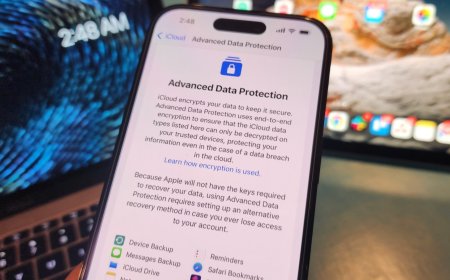
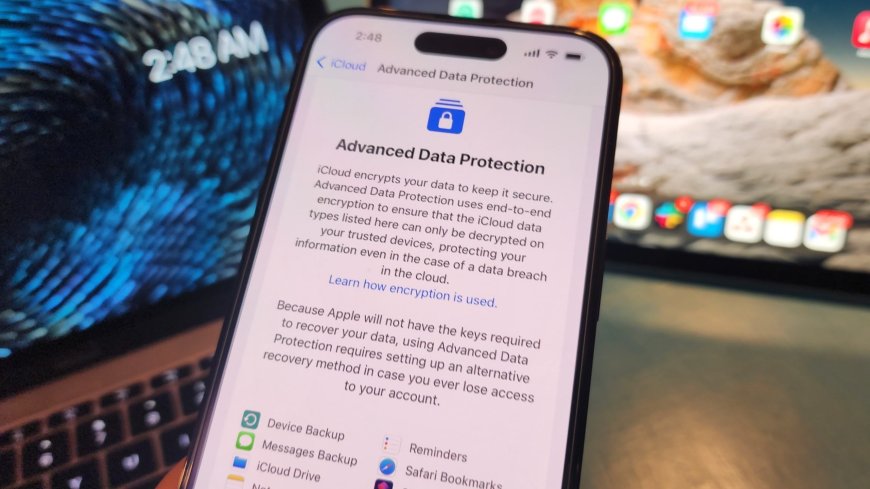
Apple refused to comply. Rather than weaken its encryption, the company blocked users in the UK from switching on Advanced Data Protection, the optional iCloud feature that applies end-to-end encryption to most cloud data, including backups, photos and notes. With the feature on, that data can only be decrypted on a user's trusted devices — not even Apple holds the keys. Apple has repeatedly said it has never built a backdoor or master key into any of its products or services, and never will.
After months of negotiations with the Trump administration, the UK narrowed its demand. In July 2025, it issued a second notice that applied only to the data of British nationals. The following month, Tulsi Gabbard, then the US director of national intelligence, said the UK had agreed to drop its demand for a backdoor into American citizens' encrypted data. Apple challenged the second order as well, but until now it was legally barred from disclosing that either notice existed.
What the ruling changes — and what it does not
The tribunal's judgment covers only the existence of the notice, not its contents. The precise terms of the order remain secret, and the judges said the question of how much of the notice itself can be made public would be dealt with at later hearings. A final hearing on the substance of the case is anticipated next year, with the parties working towards a full hearing in the first half of 2027.
What changes immediately is the openness of the legal fight. Two of Apple's arguments can now be heard entirely in public, and the challenge brought by rights group Liberty International — which acted on behalf of two individuals and called the ruling the first known time the government has been compelled to confirm the existence of a secret technical order — can proceed in open court. Apple told TechCrunch it welcomes the decision to make public the fact that the Home Office issued the notice.
The Home Office, for its part, said the right to privacy was crucial but should not come at the expense of public safety. Its position throughout has been that the notice simply requires Apple to maintain the ability to hand over data when presented with a lawful warrant — a framing Apple and privacy campaigners dispute, since end-to-end encryption means there is nothing for the company to hand over unless it builds in access.
Why this matters beyond Apple
The case has become the most closely watched test of how far a government can go in demanding access to encrypted data, and other technology companies have been watching closely. The tribunal's reasoning — that the government cannot claim secrecy for something it has already briefed journalists about — sets an awkward precedent for the Home Office's policy of neither confirming nor denying such notices in future cases.
For UK iPhone users, the practical picture has not changed yet. Advanced Data Protection remains unavailable to new users in Britain, and the legality of the underlying demand will only be decided at the substantive hearing next year. But for the first time, that fight will happen in public, with the government forced to defend an order it spent almost two years insisting did not exist.
Related: Apple is also closing its long-running support forum this week — read our report on Apple Support Community closing on November 20, 2026.
Sources
What's Your Reaction?
 Like
0
 Dislike
0
 Love
0
 Funny
0
 Angry
0
 Sad
0
 Wow
0