




































































Paris Hilton and AOC Urge House to Pass DEFIANCE Act Before Deepfake Bill Runs Out of Time
Paris Hilton joined Representatives Alexandria Ocasio-Cortez and Laurel Lee at the U.S. Capitol on November 17 to press the House to pass the DEFIANCE Act, a bipartisan bill that would let victims of nonconsensual sexually explicit AI deepfakes sue the people who create and spread them. The Senate passed the bill unanimously in January, but it has waited ten months for a House vote — and if it is not passed before the current Congress ends, it will have to start over.
Paris Hilton and AOC Urge House to Pass DEFIANCE Act Before Deepfake Bill Runs Out of Time
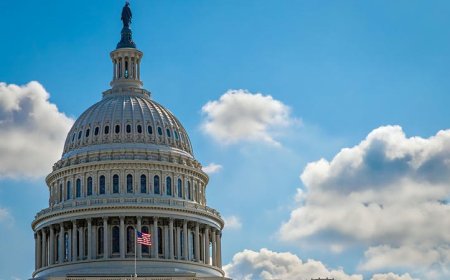
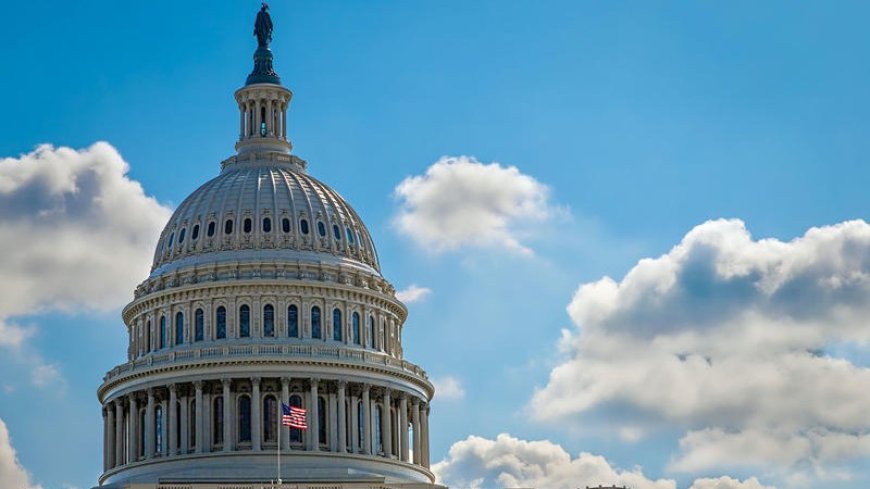
Paris Hilton returned to Capitol Hill on Tuesday, November 17, standing beside Representatives Alexandria Ocasio-Cortez and Laurel Lee to demand something Congress has so far failed to deliver: a House vote on the DEFIANCE Act, the bipartisan bill that would give victims of sexually explicit AI deepfakes the right to sue the people who make and spread them.
The Senate passed the bill unanimously in January. Ten months later, it has not had a single vote in the House. With the current Congress set to end on January 3, 2027, Hilton and the bill's sponsors used a press conference at the Capitol's House Triangle to warn that the window is closing — and that if the bill dies, survivors will have to start the fight all over again.
"The Senate understood the urgency and passed this legislation unanimously in January. Now the House must act too," Hilton said. "Why wait another day? If they don't pass this bill before the end of the year, all of our progress will be lost and we will have to start all over again."
What the DEFIANCE Act would do
The Disrupt Explicit Forged Images and Non-Consensual Edits Act would create a federal civil claim for people targeted by nonconsensual, sexually explicit digital forgeries — the AI-generated images commonly known as deepfakes. Survivors could take to court anyone who knowingly produces, distributes, solicits, receives, or possesses such an image with the intent to distribute it.
The bill sets liquidated damages of $150,000, rising to $250,000 when the deepfake is connected to actual or attempted sexual assault, stalking or harassment. Survivors could instead seek their actual damages, including any profits made from the images, and courts could order the images deleted or destroyed. Survivors who win would also recover their attorney's fees. Claims could be brought within ten years of discovering the violation, or of turning 18, whichever comes later — a rule written with child victims in mind, since a minor may not learn about a fake image for years.
The bill would amend the Violence Against Women Act, giving victims a single federal baseline. Today, protection depends on where a victim lives: only a handful of states have deepfake-specific civil laws, and federal law has nothing aimed directly at AI-generated intimate images.
A bill with rare bipartisan support — and no House vote
The DEFIANCE Act's history explains the frustration on display Tuesday. A first version passed the Senate by unanimous consent in July 2024, but the House never took it up before that Congress ended. Sponsors reintroduced it on May 21, 2025, and Senator Dick Durbin steered it through the Senate again on January 13, 2026, with no senator objecting.
The matching House bill, H.R. 3562, is led by Lee, a Florida Republican, and Ocasio-Cortez, a New York Democrat. It was referred to the House Judiciary Committee in May 2025 and has not moved since. The Senate version, S. 1837, is waiting at the House desk. According to the bill's sponsors, the House version now has 74 cosponsors — 38 Democrats and 36 Republicans.
Ocasio-Cortez put the cost of the delay bluntly. "Every single day that the DEFIANCE Act does not pass is a day that more children, women, and people are victimized with no recourse and that there is no accountability for abusers and predators," she said.
Lee, her Republican co-lead, made the same point from the other side of the aisle. "For too long, our laws have lagged behind this technology, leaving victims without clear legal tools when their likeness is stolen and weaponized," Lee said. "The DEFIANCE Act closes that gap. It is about restoring dignity, restoring accountability, and restoring justice."
Hilton's case — and her numbers
Hilton is an unusual advocate for this issue because she has lived an early version of it. When she was 19, an ex-boyfriend released an intimate video of her without her consent. She told reporters on Tuesday that more than 100,000 sexually explicit deepfakes of her now exist online, and that the technology has made the problem worse: software that once took skill and time can now produce a convincing fake in seconds.
She also brought figures about Congress itself. Her team counted the 156 women serving in the 119th Congress and found that 83 of them have sexual deepfakes online — more than half. Hilton put the total number of people victimized by explicit deepfakes at 50 million, a figure she offered without citing a source.
"Survivors of technology-based sexual violence should never have to carry the burden of fighting for justice alone," Hilton said. "I know how devastating it is to have your image exploited without your consent, and how much courage it takes to speak out."
This was not her first visit. Hilton appeared with Ocasio-Cortez and Lee at a press conference on January 22, just days after the Senate vote. On Tuesday she also met privately with House Speaker Mike Johnson, and she named Majority Leader Steve Scalise and Judiciary Chairman Jim Jordan in her appeal, asking whether they would let the abuse continue for their colleagues, daughters, wives and sisters. Johnson's office did not answer when asked why the bill has stalled.
Earlier in the day, Representative Kat Cammack of Florida, who chairs the Republican Women's Caucus, hosted Hilton and members of both parties' women's caucuses at the Capitol to build support for the bill. Survivors Elliston Berry and Elizabeth Cline, and Joseph Tucker Daniels, the father of an impacted individual, also spoke at the press conference.
How it differs from the TAKE IT DOWN Act
Congress has already passed one law in this area. The TAKE IT DOWN Act, championed by First Lady Melania Trump, became law on May 19, 2025. It made it a federal crime to publish intimate images of a person without consent, whether real or fake, and requires platforms to remove such images within 48 hours of a victim's request.
The DEFIANCE Act is the civil counterpart. Where the earlier law works through prosecutors and takedown demands, this one works through the victim: even when no prosecutor takes a case, a survivor could still seek money and accountability in court. Supporters describe the two laws as covering different gaps, not competing with each other.
The urgency has only grown since the Senate vote. In late December 2025 and January 2026, a crisis erupted around Elon Musk's Grok chatbot, built into the X platform, which generated sexualised images of real people without their consent — a flashpoint that helped push the Senate to act in January.
What happens next
There are a few ways the bill could still become law. Johnson could bring the Senate bill straight to the floor, since it is already waiting at the House desk. Jordan's committee could take up the House version. Or leaders could attach it to another measure moving through Congress.
Ocasio-Cortez said advocates have spoken with the White House and feel "very optimistic" about the administration's openness to the bill — a signal that matters, since a Speaker is far more likely to schedule a vote the president wants to sign. For now, though, the bill's fate rests with House leaders who have not scheduled a vote in ten months.
"I will come back to these halls as many times as it takes until the DEFIANCE Act is signed," Hilton said. "Because the abuse hasn't stopped, and neither will I."
Sources
- Representative Alexandria Ocasio-Cortez — ICYMI: Ocasio-Cortez, Lee, Paris Hilton Call for Immediate House Passage of DEFIANCE Act in the Lame-Duck Session
- RAINN — Survivors, Lawmakers, & Paris Hilton Rally for House Vote on DEFIANCE Act
- The Statesman — The DEFIANCE Act explained: What Paris Hilton wants US Congress to do about sexually explicit deepfakes
- New York Post — Paris Hilton and AOC team up in Capitol crusade to stop AI porn nightmare that targets many female lawmakers
- NPR — Paris Hilton returns to Capitol Hill to push for DEFIANCE Act passage
What's Your Reaction?
 Like
0
 Dislike
0
 Love
0
 Funny
0
 Angry
0
 Sad
0
 Wow
0