






















































Google launches Gemini 4 Neon: frontier-level coding power at Flash speed, priced from $3 per million tokens
Google has launched Gemini 4 Neon, the fourth model in its Gemini 4 family in seven weeks. Positioned between the heavyweight Carbon and the fast, everyday Hydrogen, Neon pairs frontier-level reasoning with lower cost per task — ranking third overall on the Artificial Analysis Intelligence Index and first on its Coding Agent Index — and is rolling out now through the Gemini API, Google AI Studio, Antigravity and the Gemini app for paid subscribers.
Google launches Gemini 4 Neon: frontier-level coding power at Flash speed, priced from $3 per million tokens
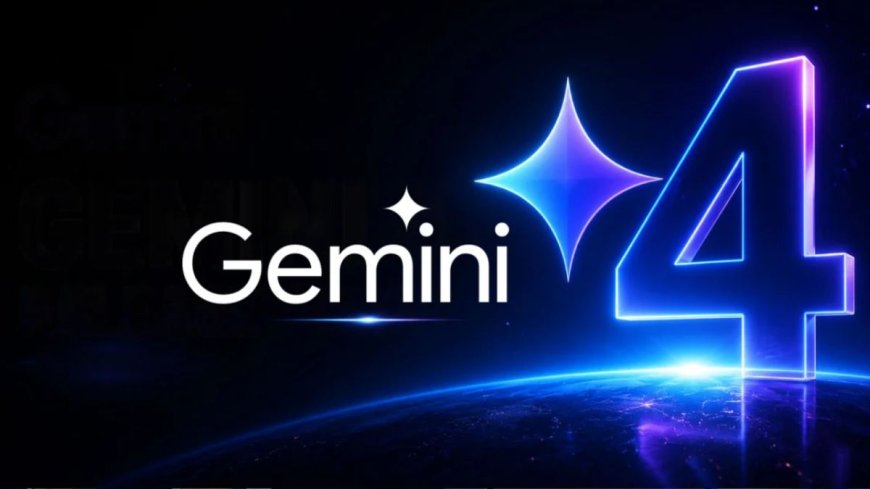
Google has added a fourth model to its Gemini 4 family in the space of seven weeks. Gemini 4 Neon, announced on November 18, 2026, is built for the kind of work that needs serious reasoning but cannot wait for the company's biggest models: complex software engineering, analytical work and scientific research, done quickly and at a lower cost per task.
Neon sits between the two models Google launched just before it. Carbon, released in late October, tackles the hardest, long-horizon projects, while Hydrogen, which arrived on November 12, handles fast everyday execution. Neon is the middle ground — frontier-level intelligence for complex, high-frequency workflows, as Google describes it — and it effectively replaces Argon, the first Gemini 4 model, in the lineup.
Strong scores on independent benchmarks
On the Artificial Analysis Intelligence Index, Neon scores 61 at its highest thinking level, placing it third overall, just behind larger and slower models. It does even better where developers will notice most: it ranks first on the Artificial Analysis Coding Agent Index with a score of 58.6, and records 65.2 percent on Terminal-Bench 4.1 and 46.2 percent on FrontierCode 2.0 at its default high thinking setting.
The model also ranks second on the Vals Index at 70.9 percent, first on both the Legal Research Bench and the Tax Agent Bench, and first on Zapier's AutomationBench at 56.3 percent and Andon Labs' Vending-Bench 2, a long-horizon simulation of running a business, where it scored $16,843. On Arena's new Agent Arena Index it debuted second globally with a score of 1336 across more than 4,200 real-world agent sessions.
On scientific and mathematical reasoning, Neon is best in class on Terminal-Bench Science at 70.5 percent, RiemannBench at 84.0 percent and HLE-Diamond at 71.3 percent, according to Google's announcement.
Built for long coding sessions
Neon is engineered for long-running agent workflows, and Google says it holds its performance through complex, tool-heavy tasks from start to finish. In Google Antigravity, it can act as a fast, high-judgment orchestrator directing parallel Hydrogen subagents, cutting down on redundant file reads, sharing progress as it works and handling context compaction reliably in long sessions.
For production-ready code, the model handles multi-file debugging and refactoring across repositories with targeted, surgical edits. On SWE-sweep, it leads on the mini-SWE harness at 12.8 percent and more than triples to 39.0 percent inside Google Antigravity.
Pricing and the December 1 change
Neon is priced at $3 per million input tokens — $0.15 per million for cached input, a 95 percent discount — and $15 per million output tokens, with a 1 million-token context window and four thinking levels that let teams dial intelligence and token spend to what each workload needs.
At its default high thinking level, Google says Neon pairs a high intelligence score with a 32 percent lower cost per task than Carbon. The pricing picture changes on December 1: Argon and Carbon's introductory rates of $2 per million input tokens and $10 per million output tokens end on November 30, after which they rise to $4 and $20. Neon's rates stay at $3 and $15, making it 25 percent cheaper per token than both from that date.
Where Neon is available
Gemini 4 Neon began rolling out on November 18 through the paid tier of the Gemini API in Google AI Studio and Android Studio, in Gemini for business, in Google Antigravity for paid Google AI Pro and Ultra subscribers, and in the Gemini app for Pro and Ultra subscribers, who can select it from the model drop-down. It is not available on the free tier.
The model accepts text, image, audio and video input, and can work across spreadsheets, PDFs, charts, audio and video inside its 1 million-token context window. In the Gemini app, Google says Neon writes more clearly, reads uploads more precisely and pulls details from Google apps such as Gmail and Docs.
Cyber defense and safety
Neon also comes in a cybersecurity variant, which Google is rolling out to trusted defenders over the coming days as part of its Fairwind Program. The model produces more secure code than Carbon across easy, medium and hard challenges on AutoBaxBench, reaching state of the art on the hard tier at 76 percent, and scores 51.26 percent on WebExploitBench v1.2 at half the cost of competing large models.
On the code hardening lifecycle, Neon reaches 90.5 percent on SEC-bench Pro for finding vulnerabilities, frontier-level performance on ExploitGym for validating which vulnerabilities are exploitable while using half the tokens of Carbon, and 70.7 percent on CWE-bench v2 for patching, a 3.4 percent uplift over Carbon.
Google says Neon records its lowest fabrication rate yet in internal Antigravity testing, matched Carbon with 0.0 percent cheating on Terminal-Bench 4.0, and achieved a 0.09 percent misaligned action rate on its agentic safety suite with a 99.2 percent pass rate on its agent honesty evaluation. On Gray Swan's indirect prompt injection benchmark, it resisted every attack at its highest thinking level.
A rapid-fire release schedule
Neon is the fourth Gemini 4 model Google has shipped in seven weeks. Argon arrived on September 30 for complex, long-running tasks, Carbon followed on October 28 and became widely available on November 10, and Hydrogen launched on November 12 as the fast, low-cost option for everyday programming and AI agents. With Neon, Google now describes the division of tasks only in terms of Carbon, Neon and Hydrogen, though Argon remains available through the Gemini API.
Readers can compare the earlier releases in our coverage of Gemini 4 Hydrogen and Gemini 4 Carbon.
Sources
What's Your Reaction?
 Like
0
 Dislike
0
 Love
0
 Funny
0
 Angry
0
 Sad
0
 Wow
0