




























































Nadella Says Microsoft's 60,000 Buyouts Were About Choice, Not Replacing Staff With AI
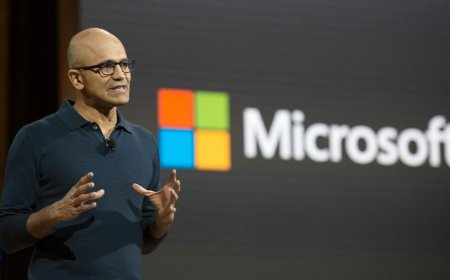
Microsoft chief executive Satya Nadella has explained why the company offered voluntary buyouts to around 60,000 employees in October, telling the New York Times DealBook Summit the offer was designed to give staff a choice as Microsoft reorganises around artificial intelligence, not to replace them with it.

Nadella Says Microsoft's 60,000 Buyouts Were About Choice, Not Replacing Staff With AI
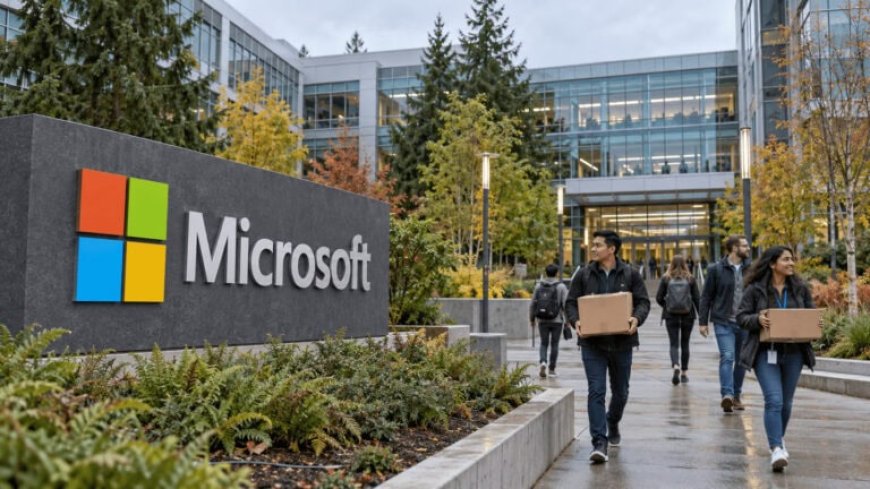
Microsoft chief executive Satya Nadella has given his clearest explanation yet for why the company offered voluntary buyouts to around 60,000 employees in October, saying the move was about giving people a choice as Microsoft rebuilds itself around artificial intelligence — not about replacing them with it.
Speaking to Andrew Ross Sorkin at the New York Times DealBook Summit on Wednesday, November 18, Nadella said the buyout offer was designed "to make sure that at least everyone felt like they had agency in making choices" during a transformation that will change almost every job at the company.
The offer, confirmed by Microsoft on October 26, covered eligible employees at vice president level and below on selected teams in the United States, Canada, India and the United Kingdom, including staff in Xbox, Windows, Copilot and Finance. Those who accept have until December 9 to decide and leave on December 31, with at least eight weeks of base pay. The 60,000 figure represents roughly 27 percent of Microsoft's global workforce — the number offered the option, not the number who will leave.
Reorganising work around AI, not replacing people
Nadella was careful to draw a line between reorganisation and replacement. Microsoft is not, he insisted, swapping its workforce for AI systems, least of all its software engineers. Instead, the company is reorganising itself so that everyone uses AI to do their work — and their jobs shift toward directing that AI.
He traced how thinking inside the company has swung on software engineering in particular. "Let's take software engineering. We went from, 'Well, we don't buy that AI can ever do software.' To suddenly, 'Wow, it can do all software, and why do we need software engineers?' To now rediscovering that software engineering is very much alive and, in fact, is going to thrive, except the way the team is organized and the work that a software engineer does has now got a new operating point," he said.
His example was the team behind Cowork, the AI agent built into Microsoft 365 apps. That team, Nadella said, consists of just 11 developers who have mastered using AI to do their jobs. "They build a software factory that builds the product. They don't build the product."
That, in his telling, is the model for what comes next: every employee becomes, in his phrase, a manager of agents rather than a person directly doing the work. "That level of direction is what, by the way, is going to happen in all jobs," he said.
An incumbent's problem
Nadella was frank that the shift is harder for a company like Microsoft than for a startup. At 51 years old, Microsoft did not grow up as an AI-first company, he said, and the question is "how quickly can an incumbent transform the work, the workflow, and the work artifact, and with all the wage support that goes with it?" It would, he added, "take a bit more time than anyone expects" — and some people would decide they had other choices to make.
He returned to the same theme last week on Gergely Orosz's The Pragmatic Engineer podcast, where he said Microsoft had "created enormous anxiety in people sort of feeling that they don't have control of their own destiny because the way we have talked about this AI revolution." Talk of the singularity and predictions that AI will take all jobs, he said, leaves even people who want to change feeling anxious — and the answer is to "walk the hard walk of really making the structural changes, getting people slotted, giving them opportunity."
In other words, the buyout was the message: get on board with the AI-first programme, which will radically change the job, or take the money and get on with your life elsewhere. It was, notably, framed as an alternative to another large round of layoffs, not a prelude to one.
What it means for the wider industry
Microsoft's approach is being watched closely across the technology sector, where almost every large employer is facing the same question about how AI changes staffing. A voluntary offer — even one extended to more than a quarter of the workforce — is a very different signal from a forced reduction, and Nadella's public defence of it at DealBook suggests Microsoft expects other companies to face the same choice.
Whether the programme succeeds on its own terms will depend on what happens after December 9, when the company learns how many of the 60,000 actually take the offer — and whether the people who stay are the ones Microsoft most needs to keep. For now, Nadella's message to his employees is that the future of work at Microsoft is managing AI, and that those who do not want that future have been given a paid way out.
Related reading: Microsoft 365 outage over as Outlook and Teams fully recover
Sources
What's Your Reaction?
 Like
0
 Dislike
0
 Love
0
 Funny
0
 Angry
0
 Sad
0
 Wow
0