







































South Korea's Chip Boom Is Leaving Its Own Investors Behind as the KOSPI Rout Hits Spending
South Korea's semiconductor exports are booming on global AI demand, but the KOSPI has fallen more than 40% from its June record high, wiping out retail investors' gains and squeezing household spending — even as Samsung and SK Hynix prepare record bonuses for their staff.

South Korea's Chip Boom Is Leaving Its Own Investors Behind as the KOSPI Rout Hits Spending
South Korea's export engine is roaring. Memory chips from Samsung Electronics and SK Hynix are feeding the global artificial intelligence wave, and the country is on track to join the United States, China and Germany in reaching $1 trillion in exports this year. Yet for the millions of ordinary South Koreans who own shares, the boom has been brutally hard to cash in on.
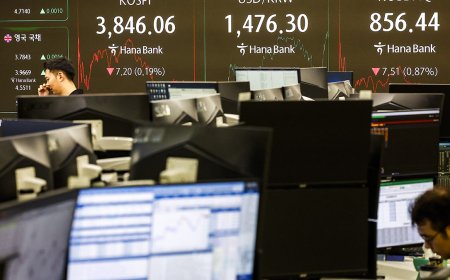
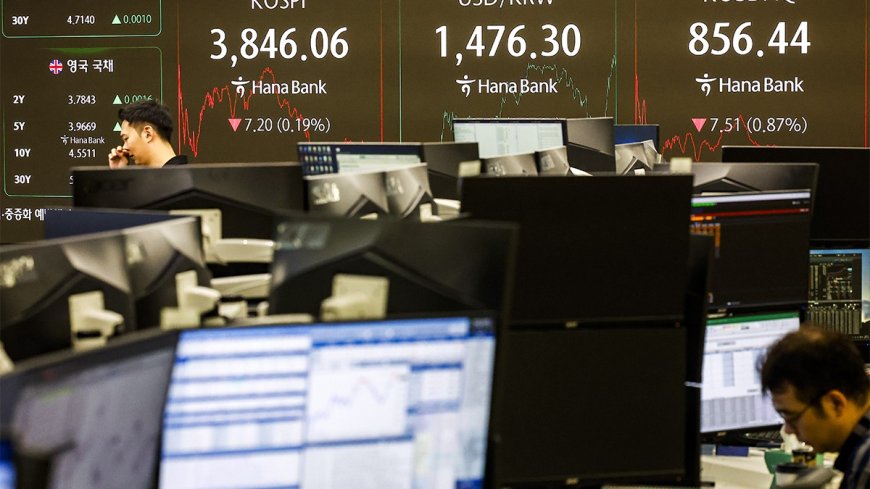
The benchmark KOSPI index has fallen more than 40% from its record high in June, and it has lost 12% this month alone. The slide fell below 5,000 on Tuesday, its lowest level since early February, pulled down by AI-related shares after the Democratic Party's win in the US midterm elections raised the prospect of tighter scrutiny of AI development and data centre construction.
That whiplash is now showing up in household budgets. About a quarter of South Korea's 52 million people invest in the stock market, according to Korea Securities Depository data, and analysts say the decline has had an outsized impact on spending precisely because so many households are exposed.
A two-speed economy
The contrast is stark. Exporters such as SK Hynix and Samsung Electronics are set to lavish record bonuses on employees as the AI chip boom fills their order books. At the same time, investors like 34-year-old Kwon Soon-kuk have watched their gains vanish as stocks plunge on every fresh doubt about the huge cost of AI and the long lead time to profitability.
Kwon, who works at a consumer goods firm, said he had invested heavily while commentators talked up the transformative impact of AI. Instead of profiting, repeated market routs left him cutting spending at restaurants and on clothes, and cancelling a Christmas trip to Tokyo.
"I don't think there will be a Santa rally this year with so many investors leaving markets after they got hurt," Kwon told Reuters.
Consumption contracted in the third quarter for the first time in nearly two years, with officials and analysts blaming a July stock drop. Citi economist Kim Jin-wook warned that downside risks to private consumption "appear quite likely in the fourth quarter", adding that with the recent KOSPI decline, Korean households' year-to-date equity capital gains would be nearly wiped out.
The retreat is visible in trading accounts too. Retail investor deposits in stock trading accounts — a gauge of market appetite — hit a record 136.8 trillion won in late June, up from 87.8 trillion won at the end of last year, before falling back to 86.9 trillion won by Monday, according to data from the Korea Financial Investment Association.
Few jobs in the chip sector
Part of the problem is structural. While chip firms enjoy the bulk of the AI windfall, the capital-intensive sector creates relatively few jobs. About 174,000 people worked in the sector in the first quarter, making up 4% of the manufacturing sector, or 0.8% of the total workforce, according to government data.
Consumer sentiment in Asia's fourth-largest economy has also suffered from rising interest rates and housing costs, as well as higher prices brought about by war in the Middle East. But analysts say the stock market decline has hit harder than those pressures because of how many retail investors there are.
Finance worker Lee Min-jung, 44, lost 65%, or some 10 million won, in his investment in leveraged exchange-traded funds tied to chip shares. He said high market volatility and interest rates made this downturn difficult to navigate, and he has given up plans to buy himself and his wife winter coats worth 6 million won.
"This winter is going to be colder," Lee said.
Seoul's answer: a 162 trillion won fund
President Lee Jae Myung plans to create a 162.3 trillion won ($121 billion) Future Response Fund to funnel excess tax revenue from the chip boom toward growth industries, young people, regional development and education. He also called the stock market undervalued last week and vowed to continue reform to improve corporate governance and protect shareholder rights.
Finance Minister Lee Hyoung-il said last month that the government plans to increase support for sectors with the potential to create more jobs, such as the services sector. "We need second and third runners to lead economic growth with semiconductors," he said.
The International Monetary Fund, after its annual consultation with the government on Tuesday, said sustaining recent gains from the AI upcycle would require addressing longstanding structural headwinds, including rapid population ageing, widening regional disparities and uneven productivity growth across firms and workers.
For investors like Kwon, the recovery test is simple. He said he would feel comfortable reviving his spending plans if the KOSPI recovered and found support at 6,000. "It's not like I want to make profit right away, but I need to see the end of the downtrend that has been there for several months now," he said.
Related reading: AI stocks slide again as Nvidia turmoil rattles the sector
Sources
What's Your Reaction?
 Like
0
 Dislike
0
 Love
0
 Funny
0
 Angry
0
 Sad
0
 Wow
0