
































































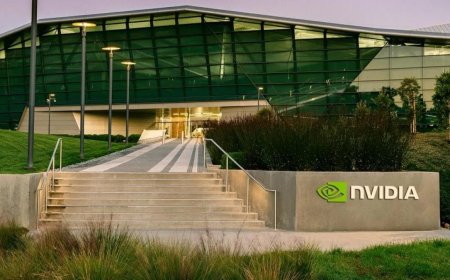
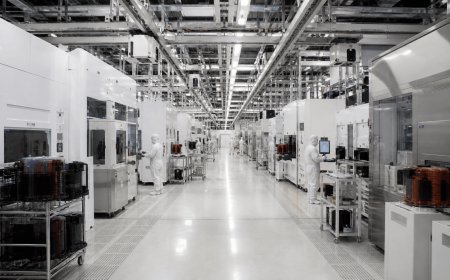

Nvidia Locks In More Factory Capacity With Samsung, TSMC, Foxconn and Amkor as AI Demand Outruns Supply
Nvidia has expanded its manufacturing commitments with six supply-chain partners — including Samsung Electro-Mechanics, TSMC, Foxconn, Kinsus, SPIL and Amkor — adding substrate and advanced packaging capacity to keep up with surging demand for its AI computing platforms, as volume shipments of its Vera Rubin systems begin.
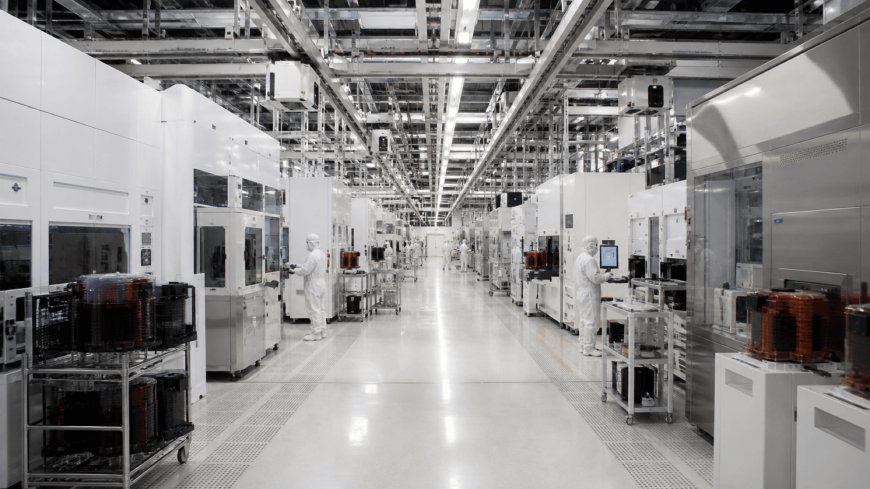
Nvidia Locks In More Factory Capacity With Samsung, TSMC, Foxconn and Amkor as AI Demand Outruns Supply
Nvidia is moving to secure far more factory capacity for the AI boom. The chipmaker said on 17 November 2026 that it has expanded its commitments with six supply-chain partners, adding substrate and advanced packaging capacity so it can keep building the accelerated computing platforms that data-centre customers are ordering faster than suppliers can deliver them.
The announcement, made alongside Nvidia's fiscal third-quarter earnings, covers Amkor Technology, Foxconn, Kinsus Interconnect Technology, Samsung Electro-Mechanics, Siliconware Precision Industries (SPIL) and TSMC. Together, the deals span substrates, advanced packaging, wafer production and contract manufacturing — every stage of the chain that turns a chip design into a finished AI system.
"Our supply chain is a strategic advantage," said Debora Shoquist, Nvidia's executive vice president of operations. "Our work with these partners builds on our manufacturing foundation for long-term growth, expanding capacity across components, advanced packaging and system production to deliver the accelerated computing platforms our customers need."
New substrate deals with Kinsus and Samsung Electro-Mechanics
The tightest bottleneck in AI hardware today is not the silicon itself but the package substrates that connect high-performance chips to the rest of a system. Nvidia is tackling that directly with new substrate agreements.
Under a new multiyear agreement, Taiwan's Kinsus plans to expand its advanced ABF package substrate manufacturing capacity dedicated to Nvidia by more than 3.5 times current levels at its Youth campus in Taoyuan. Production is expected to begin in the second half of 2027, with the additional capacity targeted for the third quarter of 2028.
Nvidia and Samsung Electro-Mechanics have also amended their existing substrate supply agreement to improve operations at the Korean company's factories, supporting higher production of Nvidia's accelerated computing platforms. The amendment builds on a multiyear collaboration announced in October covering substrate manufacturing in Sejong and Busan, South Korea, for Nvidia's compute and high-speed networking products.
As part of the expanded relationship, Samsung Electro-Mechanics will supply more advanced package substrates for Nvidia's next-generation GPUs, and the two companies are widening the partnership beyond substrates to multilayer ceramic capacitors (MLCCs), components that help deliver stable power to AI processors.
Nvidia is also providing additional funding to support Samsung Electro-Mechanics' factory expansion. The Korean company broke ground last month on a package substrate facility for AI servers at its Sejong campus, committing about 4.03 trillion won (around $3.02 billion) to the project, with mass production targeted for September 2028. It plans to have a full-scale mass-production system in place starting in 2029.
"By combining our world-class substrate fine-processing technology and high-reliability MLCC technology, we will perfectly fulfil our role as a total solution provider so that Nvidia's AI platform can be supplied to the global market on time, with the highest performance and quality," said Duck-Hyun Chang, chief executive of Samsung Electro-Mechanics.
Advanced packaging expansion with SPIL and Amkor
Nvidia is also scaling up advanced packaging, the step where finished chips are assembled into the high-bandwidth packages used in AI servers.
The company is supporting Amkor's expansion of advanced packaging capacity in Arizona and South Korea through multiyear agreements announced in July and October 2026, totalling nearly $3 billion. The agreements include prepayments to help Amkor scale manufacturing capacity for Nvidia's long-term production needs.
Nvidia and SPIL, a unit of Taiwan's ASE Technology, are expanding advanced packaging operations in Taiwan under a multiyear agreement backed by multibillion-dollar funding from Nvidia. The project will increase contracted advanced packaging capacity dedicated to Nvidia by mid-2029, with new production lines offering turnkey support spanning bumping, interposer wafer fabrication, assembly and testing.
"Our agreements with Nvidia support investments in Arizona and South Korea that will serve multiple generations of AI platforms," said Kevin Engel, Amkor's president and chief executive. "That long-term planning allows us to advance our packaging technologies and add manufacturing capacity as Nvidia's production needs grow."
Vera Rubin volume shipments have begun
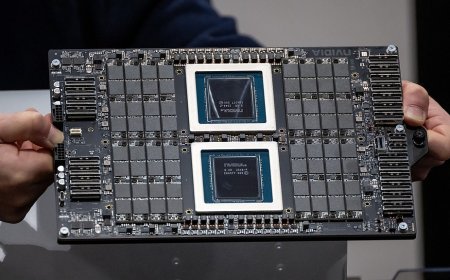
The capacity push comes as Nvidia's next-generation hardware moves into volume production. The third quarter marked the first volume shipment of Nvidia's Vera Rubin NVL72 systems and Vera CPUs for agentic AI, built using TSMC's 5-nanometre and 3-nanometre processes and its CoWoS advanced packaging technology.
Foxconn, meanwhile, is deepening its collaboration with Nvidia across next-generation GPU and networking platforms, drawing on its production network across Asia, North America and Europe to support the ramp-up of AI infrastructure.
"Foxconn continues to deepen its collaboration with Nvidia across next-generation GPU and networking platforms," said Young Liu, chairman of Foxconn. "By leveraging its integrated global production network spanning Asia, North America, and Europe, Foxconn is well-positioned to support the volume ramp-up of next-generation AI infrastructure."
Why Nvidia is locking in capacity now
The deals build on manufacturing commitments Nvidia announced in October with Amkor, Ibiden, King Yuan Electronics, Samsung Electro-Mechanics, SPIL and Unimicron. Those plans included an aggregate 2.5-times increase in substrate capacity over three years, expanded advanced packaging, a doubling of semiconductor testing capacity from 2026 to 2027 and a 15-times increase in SPIL's optical-engine capacity by mid-2027.
Demand is the driver. Speaking on Nvidia's third-quarter earnings call on 17 November, interim chief executive Colette Kress — who stepped in after Jensen Huang's resignation — said the company is "working closely with partners to rapidly expand production capacity for key components, including wafers, substrates and advanced packaging." Nvidia reported third-quarter revenue of $115.8 billion, more than double a year earlier, and its purchase commitments rose to $390 billion in the quarter, a sign of how much hardware it has already ordered to meet future demand.
With cloud customers' order backlogs still growing and new AI systems moving into volume production, the race is no longer just about designing faster chips. It is about who can secure the factories, substrates and packaging lines to build them — and Nvidia is spending billions to make sure its supply chain is not the constraint.
Sources
- NVIDIA Expands Commitments With Supply Chain Partners to Support AI Infrastructure Buildout — NVIDIA / GlobeNewswire, 17 November 2026
- Samsung Electro-Mechanics, Nvidia to expand cooperation on AI chip components — Yonhap News Agency, 18 November 2026
- Nvidia Boosts Manufacturing Partnerships to Meet Soaring AI Demand — ETTelecom, 18 November 2026
- Nvidia to provide additional funding for Samsung Electro-Mechanics capacity expansion — Korea Herald, 18 November 2026
What's Your Reaction?
 Like
0
 Dislike
0
 Love
0
 Funny
0
 Angry
0
 Sad
0
 Wow
0