






























































China's Military Is Chasing Nvidia's Top AI Chips for Weapons, US Commission Warns
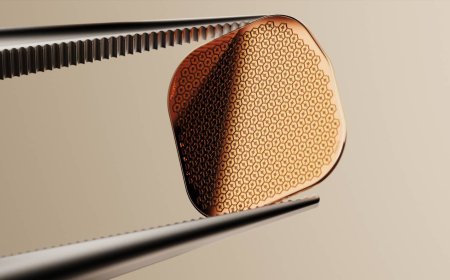
China's military is actively seeking Nvidia's most advanced chips to power AI-enabled weapons, a US congressional commission said in its annual report on November 18, warning that Beijing is working around export controls because its own processors still trail Nvidia and AMD.

China's Military Is Chasing Nvidia's Top AI Chips for Weapons, US Commission Warns
China's military is actively seeking Nvidia's most advanced chips to build AI-enabled weapons, a US congressional commission said in its annual report released on Wednesday, November 18, warning that Beijing is working to sidestep American export controls to secure the technology.
The US-China Economic and Security Review Commission said China was seeking to circumvent the controls to obtain the advanced semiconductors behind its push for "intelligentized warfare" — the People's Liberation Army's term for weaving artificial intelligence into weapons, command and control, kill chains and logistics.
"China is seeking to evade US export controls to gain the most advanced semiconductors that underpin its intelligentization drive," the report said.
The domestic chip gap
The report's central finding is that China still cannot match American silicon on its own. Domestic AI chips, including Huawei's Ascend series and Cambricon's Siyuan series, still trail more advanced products from Nvidia and Advanced Micro Devices, according to the commission.
"The resulting gap in compute is substantial, largely due to US export controls on advanced chips," the report said — a gap that leaves the Chinese military dependent on foreign hardware for its modernisation push.
China has not yet closed the hardest chokepoints in chipmaking, the report added, and probably will not for some time, with export controls credited for keeping the gap open.
How the chips reach China anyway
According to the panel, Chinese entities have been reaching Nvidia hardware indirectly by tapping data centres in third countries, including Malaysia — a workaround that Washington moved to close this week.
On Tuesday, November 17, the Commerce Department's Bureau of Industry and Security issued a rule aimed at the remote-access route, a day before the commission's report was published. The rule followed criticism from Treasury Secretary Scott Bessent and members of Congress that Commerce had not done enough to stop Nvidia's top chips being diverted to China.
Separately, Washington said on Monday it would further restrict China's access to advanced chips from companies including Nvidia.
A week of scrutiny for Nvidia's China business
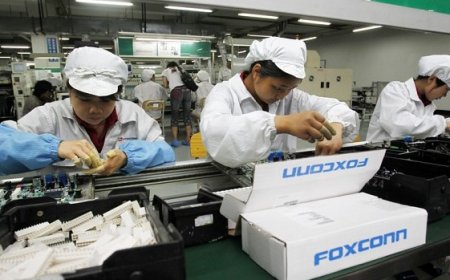
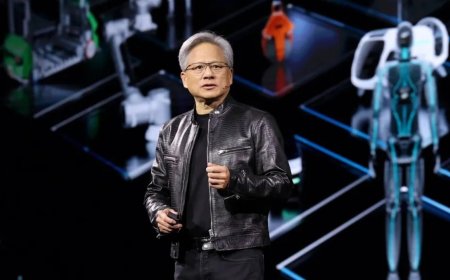
The findings add to the scrutiny of Nvidia's China business following the departure of former chief executive Jensen Huang. Nvidia has maintained that US export restrictions have effectively shut it out of China's AI data-centre market, though a Reuters review found more than 3 billion dollars in Chinese computing projects using its restricted chips.
Earlier this week, Reuters also reported that Chinese entities were adopting increasingly sophisticated methods to use output from leading American AI models to train domestic rivals. And the Trump administration is considering requiring US companies to publicly disclose their use of Chinese AI models, an effort to discourage reliance on the technology without imposing new restrictions, Reuters reported exclusively on Wednesday.
The commission, created by Congress in 2000 to assess the national security consequences of the US-China trade and economic relationship, is advisory — its findings do not carry the force of law, but its annual reports have historically shaped legislation on Capitol Hill.
For the background on how Nvidia's restricted chips ended up powering Chinese computing projects, read our earlier report: China's 3.2 billion dollar Nvidia-powered AI projects at risk after Huang exit. For the latest on the fallout inside Nvidia itself, see Jensen Huang misled Nvidia leaders over Alice Huang affair.
Sources
What's Your Reaction?
 Like
0
 Dislike
0
 Love
0
 Funny
0
 Angry
0
 Sad
0
 Wow
0