






























































Malaysia Tells Data Centres to Follow New US AI Chip Rules as Washington Tightens Controls
Malaysia's Trade Minister Johari Abdul Ghani has told the country's data centre operators to comply with new US restrictions on advanced AI chips, saying the rules will give investors clear direction — while Kuala Lumpur seeks clarification from Washington and prepares to brief all 117 approved data centre projects on compliance.

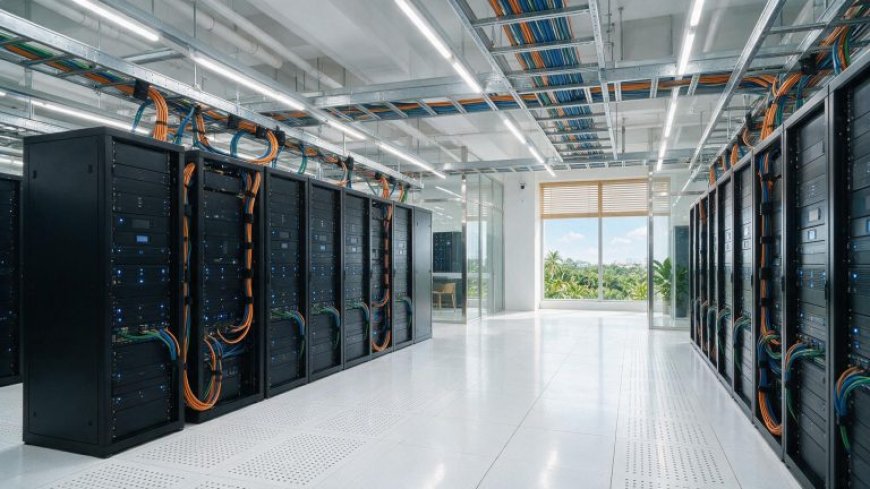
Malaysia Tells Data Centres to Follow New US AI Chip Rules as Washington Tightens Controls
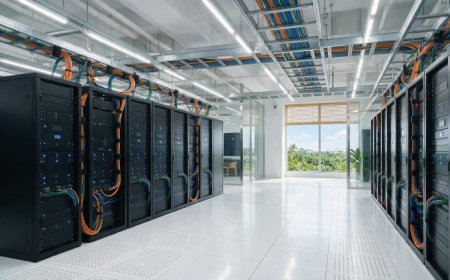
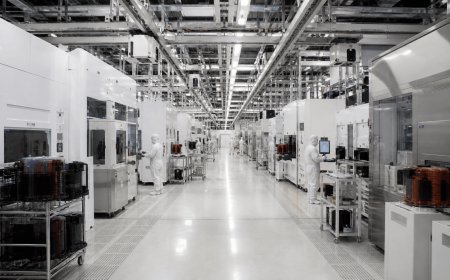
Malaysia has told its data centre operators to comply with new United States restrictions on advanced artificial intelligence chips, as Washington moves to close the routes through which powerful American semiconductors can reach China via third countries.
Trade Minister Johari Abdul Ghani said on Wednesday that operators in Malaysia should follow the US rules on chips, which he described as strategic assets, after Washington announced fresh curbs on shipments of high-performance semiconductors earlier in the week.
"Malaysia remains open to investment, and the new US rules and regulation will give investors and partners clear direction when operating in Malaysia," Johari told Reuters.
What Malaysia told its data centre operators
Johari said he was unclear how the new rules would affect the financing requirements of individual firms, but the message to the industry was straightforward: comply. Malaysia will inform all 117 approved data centre projects in the country to ensure compliance once the requirements are communicated, he said, according to a report from state news agency Bernama.
In separate remarks to Malaysian media, Johari said Malaysia would seek clarification from US authorities on the restrictions, particularly on licensing and on the provision of data centre services to third parties. He also said firms whose transactions involve customers from non-US countries could face more extensive due diligence and know-your-customer checks by US authorities.
The new US rules behind the warning
The warning follows an interim final rule issued on November 16 by the US Commerce Department's Bureau of Industry and Security, aimed at stopping companies in China and other restricted countries from renting large amounts of US-based AI compute from data centres in third countries.
Under the rule, companies in Singapore, Thailand, Malaysia, Indonesia and Brazil will need US export licences for advanced chips, after Washington identified the five countries as presenting a higher-than-normal risk of the chips being diverted to unauthorised destinations. The rule also covers overseas data centres that remotely supply large volumes of computing power to companies headquartered in restricted countries, including China. A licence is triggered when a data centre provides more than 12 million aggregate total processing performance of compute to such a company.
The regulation is scheduled to take effect as early as November 19, with existing data centre operators given 90 days to obtain licences. It also rescinds the Biden-era AI Diffusion Rule, including its country tiers and data centre validated end-user programme.
No evidence of re-exports so far, minister says
Johari said Malaysia had yet to receive evidence that data centre tenants in Malaysia had traded or re-exported chips in violation of US rules. "If they re-export, we want to know who, and they have to come up with the manifests they submitted. Only then can we proceed. We cannot simply accuse," he said, according to Bernama.
Malaysia is separately investigating the local unit of Singapore-based cloud computing firm Megaspeed, which is facing a US probe into whether it was used to circumvent export controls on AI chips. Megaspeed, a customer of AI chipmaker Nvidia, has denied the allegations, saying it takes its US compliance obligations extremely seriously.
Why it matters for Malaysia's AI boom
Malaysia has emerged as a regional data centre hub, attracting nearly $100 billion in investments since 2021. Analysts warn that tighter scrutiny of AI chip deployment could slow growth in the sector, though Malaysia's central bank said on Wednesday that data centre investments were expected to remain strong until 2030, based on estimates of ongoing and planned projects.
The stakes are high for Kuala Lumpur: the country has positioned itself as one of Southeast Asia's main destinations for AI infrastructure, and how smoothly operators adapt to the new licensing regime will shape whether that investment keeps flowing. Johari's message suggests the government wants the industry to treat compliance as the price of keeping the boom going — and to get ahead of the rules rather than test them.
Related coverage: Nvidia fallout puts Southeast Asia's AI boom in the spotlight and US probes whether Alice Huang helped smuggle Super Micro AI servers to China.
Sources
- Reuters — "Malaysia says data centres must comply with US AI chip rules", November 18, 2026
- Nikkei Asia — "US issues new chip rule as China's AI companies fear Nvidia scandal fallout", November 17, 2026
- TechCrunch — "US tightens AI chip export controls to deter Chinese companies from accessing compute remotely", November 16, 2026
- Channel News Asia — "CNA Explains: Why is the US targeting Southeast Asia in its bid to curb China's access to AI chips?", November 17, 2026
What's Your Reaction?
 Like
0
 Dislike
0
 Love
0
 Funny
0
 Angry
0
 Sad
0
 Wow
0