












































Apple Nears Rare Long-Term Samsung Memory Deal as Chip Shortage Reshapes Its Buying Power
Apple is close to signing a four-to-five-year DRAM supply agreement with Samsung, starting in the first half of 2027, in a sharp break from its usual short-term purchasing. The reported deal would guarantee minimum memory volumes for iPhones and Macs while leaving prices tied to market conditions, as the AI-driven memory shortage pushes component costs higher.
Apple Nears Rare Long-Term Samsung Memory Deal as Chip Shortage Reshapes Its Buying Power
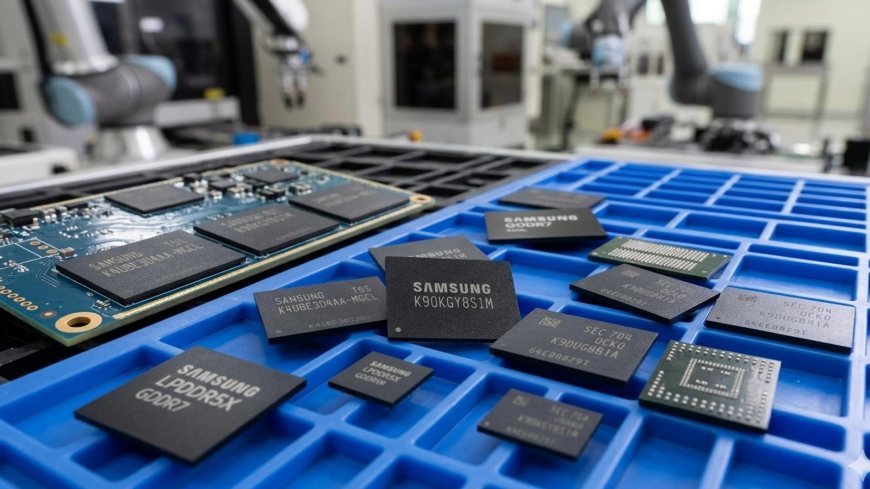
Apple is close to signing a long-term agreement with Samsung to secure supplies of DRAM chips, a deal that would run for four to five years from the first half of 2027 and mark a sharp break with the way the iPhone maker has bought memory for years. The report, from South Korea's Maeil Business Newspaper on November 17, says the two companies are finalising a contract that guarantees Apple a minimum volume of memory while leaving final prices to be set by market conditions. Neither Apple nor Samsung has publicly confirmed the agreement, so for now it remains a report rather than a done deal.
The significance is not just the length of the contract. Apple has long preferred short-term deals and used its scale to press suppliers on price. A four- or five-year commitment, with a guaranteed minimum order and pricing left open to the market, is the kind of contract Apple has rarely signed — and it shows how far the balance of power in the memory market has shifted.
A rare long-term commitment
According to Maeil Business Newspaper, the long-term agreement under discussion would take effect in the first half of 2027 and remain in place for four to five years, which would see Samsung supplying DRAM to Apple until 2031 or 2032. The contract would set a floor on the volume of DRAM Apple commits to buy, but prices would be finalised later, based on prevailing market conditions. In other words, Apple would be buying certainty of supply, not certainty of price.
The paper also reports that Apple is the only major Big Tech company that has not yet signed a long-term agreement with Samsung Electronics — a gap this deal would close. Apple has already moved in the same direction with its other main memory supplier: it recently signed a long-term agreement with SK Hynix on terms described as favourable to the supplier. TrendForce also reports that Apple has signed a long-term NAND flash supply agreement, with Japan's Kioxia seen as the likely partner.
Why Apple is changing tack
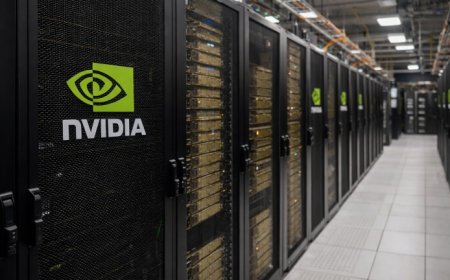
The driving force is a worsening global memory shortage, fuelled in large part by the buildout of AI data centres. Memory makers are diverting production capacity to the high-bandwidth memory used in AI servers, leaving less supply for the DRAM and NAND flash that go into phones, laptops and other consumer devices. SK Hynix, the world's second-largest memory maker, expects the shortage to continue through at least 2030, and says it has already signed long-term agreements with 14 major customers covering more than half of its production capacity for 2027 and 2028.
Apple has not been immune. By February 2026, Apple was reportedly paying double its previous amount for DRAM, under a deal with Samsung covering some or all of 2026. Apple's 2026 annual report flagged industry-wide supply constraints and rising costs for memory and other components. The company has also explored alternative suppliers, including Chinese memory maker CXMT, although technical restrictions and limited capacity complicate that option, according to the Mac Observer.
The cost pressure behind the deal
The numbers show why Apple is acting now. TrendForce calculates that memory's share of iPhone Pro material costs climbed from roughly 10 percent a year earlier to 34 percent in the third quarter of 2026, and it expects that share to exceed 40 percent in the first half of 2027 — a forecast, not a level already reached. That surge is part of a broader memory boom: DRAM revenue jumped 369 percent in the third quarter of 2026, according to Counterpoint Research, as AI demand sent prices sharply higher.
For Apple, the Samsung deal would lock in the memory it needs for future iPhones, iPads and Macs. But because pricing stays tied to the market, it would offer no protection against further increases in memory costs. If prices keep rising, Apple will either absorb the higher costs or pass them on — a question that matters for the price of every iPhone and Mac that follows.
What is still not agreed
The most important caveat is that the deal is not signed. The final agreement, including its pricing structure, has yet to be announced, and neither company has commented publicly. Until Apple or Samsung confirms it, the terms — including the exact length, the minimum volumes and how prices will be set — should be treated as reported, not settled.
Even so, the direction of travel is clear. The memory market has turned from a buyer's market into a seller's market, and even Apple, the world's largest buyer of consumer electronics components, is now signing the kind of long, supplier-friendly contracts it once avoided. If the Samsung agreement closes on the reported terms, it will be one of the clearest signs yet of how the AI boom is rewriting the economics of the devices in everyone's pockets.
For background on the memory market behind this deal, see our earlier report on DRAM revenue soaring 369 percent as AI demand drives prices higher.
Sources
- Maeil Business Newspaper, November 17, 2026 (via MacRumors and AppleInsider) — Apple close to long-term DRAM supply agreement with Samsung
- MacRumors, November 17, 2026 — Apple Close to Rare Long-Term Memory Deal With Samsung
- AppleInsider, November 17, 2026 — Samsung secures rare long-term memory order from Apple
- TrendForce, November 18, 2026 — Samsung, Apple Reportedly Finalizing 4–5-Year DRAM LTA with Minimum Supply Commitment Starting in 1H27
- Mac Observer, November 17, 2026 — Apple Memory Suppliers Warn Prices Could Stay High Until 2030
What's Your Reaction?
 Like
0
 Dislike
0
 Love
0
 Funny
0
 Angry
0
 Sad
0
 Wow
0