



































































Palo Alto Networks to Acquire Applied Compute for $4.5 Billion and Move From Guarding AI to Building It
Palo Alto Networks has agreed to acquire Applied Compute, a fast-growing platform for post-training and running open-weight AI models, in a $4.5 billion all-stock deal announced on November 18, 2026. The acquisition, expected to close in fiscal Q3 2027, takes the cybersecurity giant from protecting enterprise AI to building and serving the models themselves.

Palo Alto Networks to Acquire Applied Compute for $4.5 Billion and Move From Guarding AI to Building It
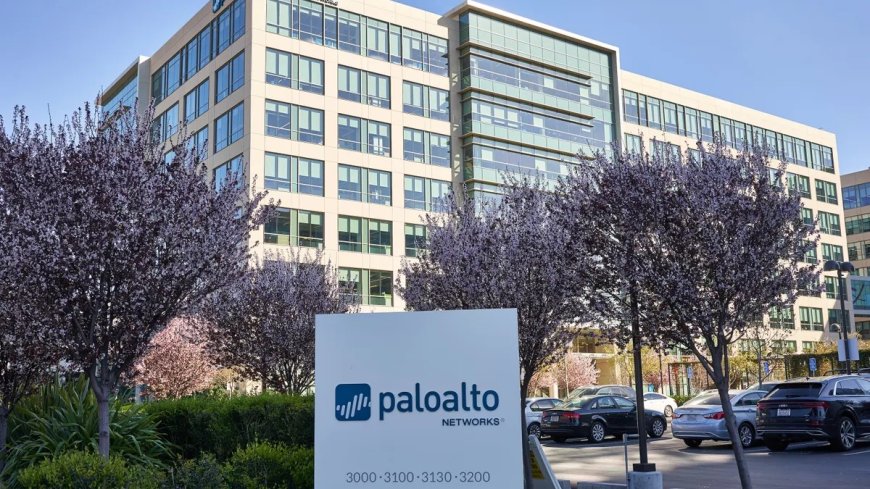
Palo Alto Networks has agreed to buy Applied Compute, a young company that helps enterprises adapt and run open-weight AI models, in an all-stock deal valued at $4.5 billion. The cybersecurity giant announced the definitive agreement on November 18, 2026, alongside its fiscal first-quarter results, in a move that takes it well beyond its familiar territory of firewalls and threat detection and into the business of building the AI models it has spent years learning to secure.
Under the agreement, Palo Alto Networks will acquire all of Applied Compute's outstanding stock, warrants and other equity rights, paying in its own shares at a reference price of $337.16, based on its 15-trading-day volume-weighted average price through November 17. The deal is subject to customary closing conditions, including regulatory clearance, and the company expects it to close in its fiscal third quarter of 2027, which runs from February to April.
What Palo Alto Networks is buying
Applied Compute is barely a year and a half old, but it has grown at a pace few startups manage. Founded in San Francisco in 2025 by three former OpenAI researchers — Yash Patil, Rhythm Garg and Linden Li — the company runs a platform for the post-training and inference of open-weight AI models: the stage where a general-purpose model is adapted to a company's own data and then served in production.
That work has found paying customers quickly. Microsoft, DoorDash and the legal AI company Harvey are among its clients, and Applied Compute said in early November that it had passed a $100 million annualised revenue run rate less than 18 months after founding. The same announcement disclosed $350 million in new funding at a $3.25 billion valuation, led by angel investor Elad Gil with Nvidia, Shopify Ventures and HubSpot Ventures participating. Its inference service was serving more than 1 trillion tokens a day, and customers had run more than 1,700 training runs on its Agent Cloud since July 2026.
Applied Compute will keep serving its existing customers after the deal closes, and its research team will join Palo Alto Networks. Co-founder and chief executive Yash Patil is set to become Palo Alto Networks' Co-Chief AI Officer, helping build AI models across the company's product portfolio.
Why a security company wants to build models
For Palo Alto Networks, the logic is straightforward: it believes the models enterprises actually use will increasingly be open-weight models adapted to their own data, and a security company cannot properly protect what it had no hand in building. Chairman and chief executive Nikesh Arora put it plainly on the company's earnings call: "Every enterprise is going to run a mix of open and closed models, and every one of those models needs to be secured."
Arora argued that deterministic security controls cannot anticipate everything an AI agent will do, so enterprises building AI applications "will have to train a supervisory AI model at the same time." His point, repeated on the call, was blunt: "I cannot go in and intercept and understand somebody else's application." Open-weight models have grown from under 5 percent of token traffic to more than 60 percent over the past year, Arora said, without citing the source of the figure.
The ambition is not modest. Arora told analysts the training and inference business "could be bigger than what we do today," and the company plans to build its own compute capacity to support it, aiming for more than 100 megawatts over the next three to five years. Chief financial officer Dipak Golechha said the spending "will mostly go to GPUs and servers," alongside capacity rented from cloud partners.
A strong quarter behind the deal
The acquisition was announced on the back of a strong set of results. Fiscal first-quarter 2027 revenue rose 39 percent year over year to $3.44 billion, Next-Generation Security annualised recurring revenue climbed 66 percent to $9.73 billion, and remaining performance obligations grew 35 percent to $21.0 billion. Palo Alto Networks also raised its fiscal 2027 revenue outlook to between $14.52 billion and $14.57 billion, and said the Applied Compute deal is expected to add more than $1 billion to its Next-Generation Security business by fiscal 2029.
The deal follows Palo Alto Networks' $25 billion purchase of CyberArk, which added identity security to its platform. With Applied Compute, the company would now own the models themselves as well — a supplier already at the centre of many customers' firewalls, security operations and identity controls would extend further into the stack. AI infrastructure spending keeps climbing across the sector, with Nebius alone planning $40 billion or more of capital expenditure in 2027, so Palo Alto Networks is far from the only company betting heavily on the build-out.
What still has to go right
Not everyone is convinced the combination will work as advertised. Sanchit Vir Gogia, chief analyst at Greyhound Research, noted that most failures in AI applications happen at runtime — through prompts, tools and permissions — whoever trained the model, and cautioned that a supervisor trained by the same hands as the system it supervises is "a colleague, not a check." He also flagged that Palo Alto Networks has yet to name a region, operator or date for its sovereign hosting offer, and that putting both the model and its protection with one vendor concentrates risk if anything goes wrong.
Those questions will be tested in the months before the deal closes. For now, the announcement marks a clear shift in strategy: the company that built its name guarding other people's networks now wants to build the AI that runs on them.
Sources
- CSO Online — Palo Alto Networks bets $4.5B on enterprise AI with Applied Compute acquisition
- Unite.AI — Palo Alto Networks Reaches $4.5B Agreement for Applied Compute
- The Economic Times — Palo Alto Networks to acquire AI startup Applied Compute in $4.5 billion all-stock deal
- Futurum Group — Palo Alto Networks Buys Applied Compute to Build, Not Just Guard, AI
- The Register — Palo Alto Networks opens wallet for open-weight training biz
- Inc. — Palo Alto Networks' $4.5B Applied Compute Deal and AI Strategy
What's Your Reaction?
 Like
0
 Dislike
0
 Love
0
 Funny
0
 Angry
0
 Sad
0
 Wow
0