







































































OpenAI Says Its AI Models Found a Year's Worth of AMD GPU Design Gains in Under Five Months
OpenAI says its frontier models rewrote parts of AMD's flagship GPU design and delivered up to 14 percent better power, performance and area, with some of the model-written changes already included in a design AMD sent for manufacturing.
OpenAI Says Its AI Models Found a Year's Worth of AMD GPU Design Gains in Under Five Months
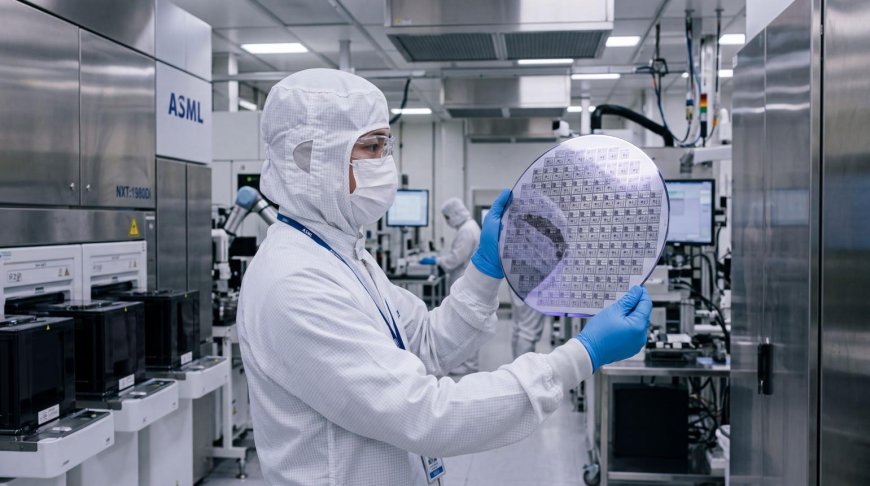
OpenAI says its AI models are now doing real chip design work, not just writing code about it. In a technical post published on 18 November, the company reported that its models rewrote parts of AMD's flagship GPU design and delivered up to 14 percent better power, performance and area, measured against baselines AMD's own engineers had already spent years optimising. OpenAI calls that roughly a year of design progress achieved in less than five months.
The claim matters because it is no longer a lab demo. According to OpenAI, AMD has already included some of the model-written changes in a recent design it sent for manufacturing, and added others to its production design files for use in future versions. The company also says AMD verified single-digit percentage gains in power, performance and area across key blocks of its upcoming next-generation flagship CPU, using designs written by the model.
How the models changed the circuits
The work sits at the register-transfer level, the stage where engineers write the code that describes what a chip's circuits do before those circuits are laid out physically. OpenAI's models rewrote that code, written in SystemVerilog, block by block, looking for ways to do the same job in less silicon, in fewer clock cycles, or with less power.
Every rewrite had to pass a check. The model used Synopsys design software to verify that each changed block still behaved exactly like the original, and to measure the trade-offs in power, performance and area, the trio chip teams shorten to PPA. Only rewrites that passed verification counted toward the reported figures.
One point the numbers do not settle is what the 14 percent actually consists of. OpenAI does not say whether the best result came mostly from a power win, a speed win or an area win, and it does not name the GPU product or the blocks where the gains were found. The figure is best read as the strongest PPA improvement on selected flagship GPU intellectual property, as OpenAI describes it, not as a claim that a finished AMD graphics card runs 14 percent faster. AMD has not published its own statement or its own figures for the work, so the numbers here are OpenAI's account of a collaboration.
The work grew out of OpenAI's own chip
The AMD project grew out of Jalapeño, the first custom inference chip OpenAI designed to run its own models in its data centres. OpenAI began using GPT-o3-mini to help design Jalapeño in early 2025, and the team estimates that model-proposed changes cut standard-cell area by about 13 percent in the vector unit and by 10 percent in the matrix unit.
The post gives concrete examples. A redesign of a matrix-unit multiplier used about 15 percent less cell area in synthesis while cutting latency from two clock cycles to one. A separate adder redesign cut cell area by about 15 percent while keeping its two-cycle latency. Further improvements to dot-product logic and pipeline organisation added more savings across the block, and OpenAI says the optimisations were proven in silicon during Jalapeño's bring-up, the point where a design stops being a file and starts being a part you can power on. Its August 2026 silicon results had already reported that AI assistance helped Jalapeño move from initial design to tapeout in nine months.
Five model generations tested on open cores
To measure how chip-design ability has changed across model generations, OpenAI tested five models, GPT-6.2 Astra, GPT-6 Astra, GPT-6.1 Sol, GPT-5.6 Sol and GPT-5.5, on two open-source 32-bit RISC-V cores, PicoRV32 and the Ibex core used in OpenTitan's security chip. The evaluation ran 9,881 scored runs across the tasks, cores and token budgets.
At a comparable budget of about 112,000 tokens per run, GPT-6.2 Astra recorded the highest average score on both cores when optimising existing RTL, and GPT-6.1 Sol also outscored GPT-5.6 Sol on both. In the second task, designing a core from written requirements, GPT-6.2 Astra recorded a mean normalised score above 0.7 on PicoRV32 and about 0.75 on Ibex. All five models scored higher when designing from written requirements than when optimising existing RTL.
OpenAI states its own caveat on that result. A model designing from a written specification can simply leave out features present in the original cores, such as performance counters and extra instructions, that did little to improve throughput on the test workloads. Those omissions could explain part of the score advantage. Requiring the missing features, setting a tighter circuit-area limit and checking timing after physical synthesis would make the test closer to production chip design, the company says. The GPT-6.2 Astra model at the centre of these tests was launched by OpenAI on 18 November, alongside GPT-6.2 Sol.
GPT-Synopsys aims to connect models to trusted tools
The thread running through the post is verification. A model that can rewrite circuits is only useful if its work can be checked with the same tools engineers trust, and that is the job of GPT-Synopsys, the model OpenAI is training with Synopsys to use electronic design automation tools the way expert chip designers do.
The work builds on a multi-year agreement announced on 30 September 2026, covering joint development, go-to-market collaboration and revenue sharing. Synopsys said engineers would be able to delegate objectives from PPA optimisation to timing and verification closure, with agents running tools, interpreting results, implementing changes and iterating toward verified outcomes for engineer review. Synopsys also said customer design data would not be used to train GPT-Synopsys, and would be encrypted at rest and in transit, with configurable retention, audit and permission controls.
The timing fits a wider race. Google's Gemini 4 family, launched in mid-November, is also aimed at agentic engineering work, and every major chipmaker is now testing how far models can be trusted inside the design flow. OpenAI's answer, at least on its own account, is that the models have moved from assisting engineers to producing changes that ship in real silicon, with human review and established verification tools as the guardrails.
Sources
- OpenAI, "Advancing chip design with OpenAI models," 18 November 2026 (as reported by Unite.AI)
- Unite.AI, "OpenAI Reports Model-Driven Gains in AMD Flagship Chip Designs," 19 November 2026
- i10x.ai, "OpenAI Chip Design: 14% PPA Gains on AMD's GPU," 19 November 2026
- Synopsys, "OpenAI and Synopsys Announce GPT-Synopsys," press release, 30 September 2026
What's Your Reaction?
 Like
0
 Dislike
0
 Love
0
 Funny
0
 Angry
0
 Sad
0
 Wow
0