




























































Nvidia's $65.5 Billion Startup Portfolio Faces an Uncertain Future After Huang's Exit
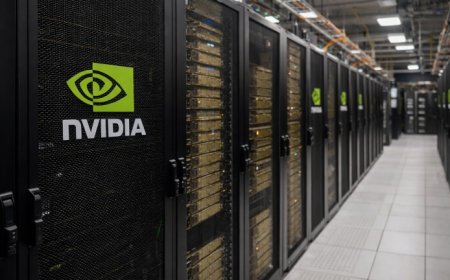
Nvidia has revealed that its stakes in private startups are now worth $65.5 billion, nearly triple the $22 billion reported in January, after a year of aggressive dealmaking under Jensen Huang. But with Huang gone and interim chief executive Colette Kress signalling a more disciplined approach, venture capitalists are bracing for a sharp pullback in the chipmaker's startup investing.
Nvidia's $65.5 Billion Startup Portfolio Faces an Uncertain Future After Huang's Exit
Nvidia has built one of the largest corporate venture portfolios in technology, and it is now worth far more than anyone outside the company expected. On its earnings call on Tuesday, 17 November, the chipmaker disclosed that its stakes in private companies are valued at $65.5 billion, up from $22 billion reported in January. The question now hanging over the venture capital world is whether that spending spree survives the man who drove it.
Jensen Huang, the founder who turned Nvidia into the engine of the artificial intelligence boom, resigned as chief executive on 12 November. His successor has not yet been named, and interim chief executive Colette Kress used the same earnings call to signal a more cautious course. For the startups that have come to rely on Nvidia's cheques, and for the investors who compete with them, that shift could reshape dealmaking across the AI industry.
A portfolio that nearly tripled in nine months
The $65.5 billion figure covers Nvidia's equity in private companies, and the increase reflects two forces at once: fresh investments and sharp markups in the value of companies it already backed. Nvidia said it invested $16 billion into equities in the past quarter alone, and $58 billion over the first nine months of its fiscal year. That total includes shares in public as well as private companies, but it shows the scale of the bets Nvidia placed during the year.
The pace is all the more striking next to the year before. In November 2025, the company reported spending $5 billion buying equity in the first nine months of that fiscal year. This year's $58 billion is more than eleven times that amount.
Nvidia set out its investing philosophy in late 2023, saying the goal of its corporate investing was to expand the AI ecosystem by backing startups it considered to be "game changers and market makers." Over the nearly three years that followed, the chipmaker has invested in nearly 350 startups, according to PitchBook.
The portfolio reads like a map of the AI boom. It includes Anthropic and OpenAI, the two most prominent AI labs; newer research labs such as Thinking Machines and Reflection; neocloud providers including Lambda, Nscale and Crusoe; and companies working on AI infrastructure, robotics and applications.
Beyond equity: $118 billion in guarantees
Nvidia's financial entanglement with the AI industry goes well beyond shareholdings. The company has also become a major financier of the data centre build-out, reporting $118 billion in guarantees. Of that, $105 billion is the backstop it supplied for OpenAI's $500 billion data centre project in Ohio.
Those commitments were funded by allocating a meaningful share of Nvidia's excess cash flows, which have swollen as AI chip sales surged. The earnings call at which the figures were disclosed was itself a record one: Nvidia reported $115.8 billion in quarterly revenue for its third fiscal quarter, with guidance of $130 billion for the current quarter. It was the company's first earnings release under Kress.
Read more: Nvidia posts record $115.8 billion quarter and guides to $130 billion as Vera Rubin ships
Kress signals discipline — and a return of cash to shareholders
On the earnings call, Kress said Nvidia would continue providing financing assistance to strong customers. But she added that, as the market matures and additional sources of capital become available, the company would be "rigorously evaluating future investments, commitments, and guarantees."
She also told investors that Nvidia intends to "return all excess free cash flow net of strategic uses to shareholders during this last quarter and going forward." How much of that cash flow counts as a strategic use — and how strategic startups will be under her leadership and that of a future permanent chief executive — remains to be seen.
Huang's rapid dealmaking had reportedly been a source of concern for Kress, who as chief financial officer was seen as the more fiscally conservative of the two. Investors have told TechCrunch they expect her to take a more conservative approach to startup investing: becoming more selective with new investments and writing smaller cheques into the companies already in the portfolio.
What it means for the venture capital market
Nvidia's investing has mattered to the wider startup market in ways that go beyond the money itself. An Nvidia investment has often served as a signal to other investors, and its backing has helped young AI companies secure the computing power that is now their scarcest resource.
A pullback would therefore be felt well beyond the companies Nvidia has already backed. Venture capitalists are bracing for a meaningful reduction in the capital flowing from Santa Clara, at a time when many AI startups are raising large rounds to fund computing and talent.
None of this means Nvidia is walking away from startup investing. Kress has not announced a halt, and the company still describes its portfolio companies as strategic. But the era in which Nvidia's chequebook grew almost without limit appears to be over. The $65.5 billion portfolio is a monument to Huang's dealmaking; what happens to it next will be decided by the people who follow him.
Sources
What's Your Reaction?
 Like
0
 Dislike
0
 Love
0
 Funny
0
 Angry
0
 Sad
0
 Wow
0