




































































OpenAI Gives NATO Its Daybreak Cyber Defence AI as Allies Race to Patch Flaws Faster
OpenAI announced on 17 November 2026 that NATO's core institutions will get access to its most advanced cybersecurity models through its Daybreak programme, with usage already reaching up to 300 billion tokens a month. European cyber agencies using the same tools have already found and fixed real vulnerabilities, from EU institution software to MikroTik routers.
OpenAI Gives NATO Its Daybreak Cyber Defence AI as Allies Race to Patch Flaws Faster
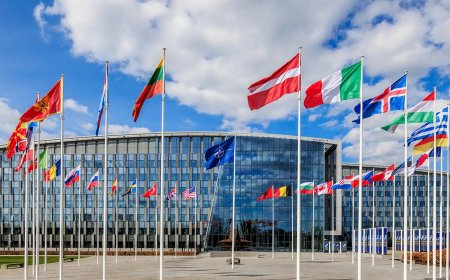
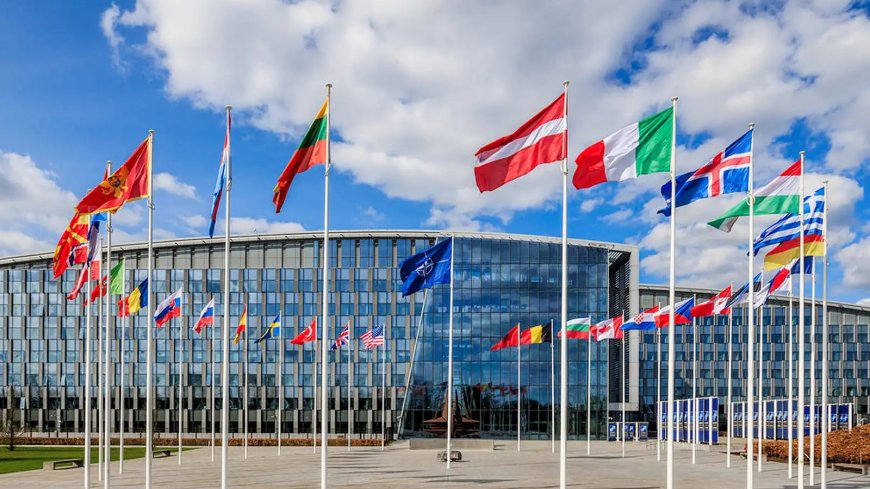
NATO's cyber defenders are now working with OpenAI's most advanced security models. The company announced on 17 November 2026 that it is giving the alliance's core institutions access to its Daybreak cybersecurity programme, in a deal unveiled at NATO Edge, the alliance's largest annual technology conference, in Izmir, Turkey.
The arrangement is already running at serious scale. OpenAI said NATO has used up to 300 billion raw input and output tokens a month through its work with the NATO Communications and Information Agency, the NCIA, which runs the alliance's communications and information systems. That figure is OpenAI's own — NATO has published no usage numbers of its own — but it signals that this is a working deployment, not a pilot.
What NATO gets from Daybreak
Daybreak is OpenAI's programme for putting its most capable cybersecurity models into the hands of vetted defenders for authorised security work. The tools are used for four connected jobs: reviewing software for weaknesses, investigating suspicious activity, checking whether a suspected vulnerability is genuine, and developing and testing fixes.
OpenAI launched Daybreak in May 2026 for accredited institutions and the US government. The NATO deal is its first big international expansion. Anthropic runs a similar programme, Project Glasswing, which it launched in April.
The company says it is "fully committed" to NATO's principles on responsible adoption of artificial intelligence. That matters, because the deal lands in the middle of a heated debate about how far AI should go in warfare — and this partnership is deliberately defensive. It gives NATO access to models, not weapons, and nothing in the announcement describes an unrestricted release of model weights or offensive tools.
European agencies are already finding real flaws
The NATO announcement is not the first time Daybreak has been put to work in Europe. OpenAI says it has already given its cyber models to defenders across the continent, and several of them have concrete results to show.
The EU's cybersecurity agency, ENISA, used the models to identify four vulnerabilities in software used across EU institutions. Fixes have been published for all four. A joint November report from ENISA and CERT-EU went further, describing a review of 27 software projects using frontier models — including OpenAI models accessed through Daybreak — and the Codex security plug-in. Of the 88 potential issues assessed by software maintainers, 95% were confirmed as genuine.
In Poland, CERT Polska used OpenAI models to help identify six vulnerabilities in MikroTik RouterOS, the software that runs the company's widely used routers. Researchers directed the work, tested the findings on real systems and verified their impact, with the AI accelerating the analysis. MikroTik released fixes, which CERT Polska confirmed blocked the attacks it had observed.
Ukraine's Ministry of Digital Transformation is also using Daybreak to strengthen the cyber defence of civilian infrastructure, helping Ukrainian teams find software vulnerabilities and develop fixes more quickly while the country's essential services face persistent cyber attacks. Access also extends to France's national cyber agency, ANSSI, and national cyber agencies in Germany and Poland.
Tested in NATO's biggest cyber exercise
The partnership builds on work already done in the field. OpenAI supported NATO's 2026 Crossed Swords exercise, run by the NATO Cooperative Cyber Defence Centre of Excellence in Tallinn in early November. The exercise added a new training stream in which participants built, deployed and evaluated AI agents for cyber operations, using Daybreak in the technical environment alongside on-premises AI, with human oversight kept central.
The exercise is part of a wider shift in how NATO thinks about cyber defence. Russia has stepped up cyber attacks on NATO allies, and security experts have warned for years that AI will let attackers — including Russian criminal groups — find more vulnerabilities and write more effective malware, faster. The argument from OpenAI and Anthropic alike is that the best defence is to use the same technology first: find the flaws and fix them before attackers can exploit them.
Collapsing the patch window
That is the goal OpenAI's head of national security and policy, Sasha Baker, set out in Izmir. The aim, she said, is to shrink the time between discovering a vulnerability and patching it "from months to weeks to hours to minutes".
"The people defending our democracies should have the most advanced technology on their side," Baker said. "NATO's cyber defenders protect networks that are essential to the security of the Alliance. Through Daybreak, we're putting more capable tools in their hands to help them find and fix vulnerabilities before attackers can exploit them."
NCIA general manager Dylan Browne called AI-powered cyber defence "a generational leap in cyber security", saying the models "accelerate vulnerability discovery, detect emerging threats at machine speed and enable defenders to stay ahead of adversaries". He added that as NATO scales up its use of the models, the alliance will build a better understanding of token consumption, usage patterns and the economics of AI models — insight that will help it optimise costs, evaluate competing solutions and make informed procurement decisions.
What is still not clear
Several details remain undisclosed. OpenAI has not said which specific models NATO is using, how they are deployed, what the arrangement costs, or how long it runs. The 300-billion-token figure covers both input and output, so it includes everything NATO's teams fed into the models and everything the models generated in return.
The honest caveats are in the agencies' own reporting. The ENISA and CERT-EU review found the models flagged real bugs quickly, but they also tended to overrate the severity of their findings, and checking them took expert time that ENISA says is scarce. AI can accelerate the hunt for vulnerabilities, but humans still have to verify every finding.
Even so, the direction is clear. A frontier AI lab is now, on the record, part of NATO's working cyber-defence toolkit — and European agencies are already using the same tools to fix real software flaws. The same week also underlined why the defensive side of AI matters: AI systems themselves have become targets, as shown by the recent breach that exposed Notion AI chat transcripts. OpenAI says it will keep working with governments and national cyber agencies to turn frontier AI capability into stronger, safer systems.
Sources
What's Your Reaction?
 Like
0
 Dislike
0
 Love
0
 Funny
0
 Angry
0
 Sad
0
 Wow
0