





























































Nvidia Holds Back Its Quarterly SEC Filing as the Huang Investigation Deepens
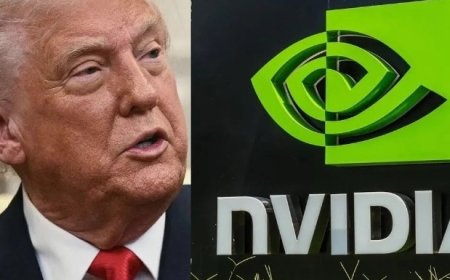
Nvidia has broken with its usual practice and will not file its quarterly 10-Q report with the SEC alongside its earnings, interim CEO Colette Kress told investors on Tuesday. The company later told UBS the delay is tied to its ongoing investigation into former CEO Jensen Huang and whether new risk disclosures are needed, as the SEC reportedly probes whether Nvidia's disclosures misled investors.

Nvidia Holds Back Its Quarterly SEC Filing as the Huang Investigation Deepens
Nvidia has delayed the filing of its quarterly report with the US Securities and Exchange Commission, breaking a routine the company has followed for years — and the explanation it gave afterwards has only deepened the questions hanging over the chipmaker.
On the company's quarterly earnings call on Tuesday, November 17, interim chief executive Colette Kress told investors the detailed quarterly report, known as a Form 10-Q, would not arrive with the results as usual. "We plan to file our 10-Q in the coming weeks," she said, offering no reason for the delay on the call.
That is a sharp departure from Nvidia's normal practice. The company has filed its 10-Q on the same day it reported earnings throughout 2025 and 2026, according to MarketWatch, and every one of its fellow Magnificent Seven companies filed theirs within a day of their latest earnings releases, as did rival chipmaker AMD. The last time Nvidia itself broke the pattern, MarketWatch found, was in May 2024 — and then the delay lasted only a week.
Why a routine filing matters so much
A 10-Q is far more than a repeat of the earnings release. It carries detailed disclosures about a company's operations that a press release does not, including a "legal proceedings" section covering lawsuits that could affect the business and a "risk factors" section flagging anything that could impair it. When a company holds that document back, investors are left reading figures that have been prepared but not yet formally certified in the form securities law demands.
The delay was noticed immediately. Investment analyst Edward Dowd called it a "red flag" in a post on X, and investor Michael Burry also publicly questioned the decision, according to TipRanks.
The explanation Nvidia gave behind closed doors
The oddity was striking enough that UBS analyst Timothy Arcuri raised it with Nvidia after the public call ended. In a research note, Arcuri wrote that management connected the timing to the company's ongoing investigation into former chief executive Jensen Huang and whether the filing would need to carry additional risk disclosures.
"The company announced that the 10-Q will be filed 'in the coming weeks' – later than usual. When queried on our callback, management indicated this was related to the ongoing investigation and whether any additional risk factors would need to be added to the filing," Arcuri wrote, according to TechCrunch.
Arcuri kept a buy rating on the stock, though he lowered his price target to $220 from $240. Nvidia also posted supplementary financial information on its investor website while the formal filing is pending.
A second investigation lands on the same day
The timing added to the intrigue. On the same day Nvidia reported earnings, The Wall Street Journal reported that the SEC is investigating whether the company's disclosures misled investors, TechCrunch noted. Nvidia has not confirmed the probe, and the Journal's report remains the source for it.
It is the latest in a growing list of inquiries facing the company. The US Justice Department and Commerce Department said in a joint statement that they are investigating Megaspeed, a Nvidia partner, over potential export-control violations, and several congressional committees have opened their own inquiries into allegations that Nvidia's partners sold restricted AI chips to China. Nvidia's board said on Tuesday that it has set up a national security and export control oversight committee.
Nvidia is also conducting its own internal investigation into Huang, who admitted to an affair with Alice Huang, a Megaspeed executive who is also suspected of being a Chinese spy, and after allegations surfaced that he had affairs with other Nvidia employees. The board opened an independent investigation on November 8 into reports that Huang was targeted by a foreign intelligence effort.
Record numbers, overshadowed
The filing delay arrived alongside one of the strongest quarters in Nvidia's history. Revenue for the third quarter of fiscal 2027, which ended October 25, more than doubled from a year earlier to $115.8 billion, ahead of the roughly $109 billion analysts had expected. Data centre revenue reached $107.6 billion. Net income was $64.9 billion on a non-GAAP basis, or $65.3 billion under GAAP, with diluted earnings per share of $2.68 on a non-GAAP basis against a $2.48 consensus. The company guided fourth-quarter revenue to $130 billion, plus or minus 3 percent.
None of that has settled the questions around the missing filing. The numbers are strong; what investors still cannot see is what Nvidia will say about its legal exposure when the document finally appears.
What happens next
One point of reassurance for investors is that nothing is late yet. Under SEC rules, a large accelerated filer has 40 days from the end of the quarter to file a 10-Q, which puts Nvidia's deadline at around December 4. The delay is against the company's own custom, not against the law — at least for now.
What Wall Street will be watching is what the filing contains when it lands: whether new risk factors appear, what it says about the legal proceedings, and whether the company's $118 billion in data centre buildout guarantees — which Kress said take effect phase by phase as projects are completed — are described any differently. Until then, the most scrutinised document in Nvidia's recent history is the one investors cannot read.
Background
Huang resigned as Nvidia's chief executive on November 12, after 33 years leading the company, and Kress, who has been chief financial officer since 2013, took over as interim CEO while the board searches for a permanent successor. Board chairman Harvey Jones has said the board does not intend to reinstate Huang as CEO. Nvidia reported its first results of the post-Huang era on Tuesday, posting record $115.8 billion in quarterly revenue.
Sources
- TechCrunch — Nvidia created a weird bit of intrigue by not filing a routine SEC report (November 18, 2026)
- Morningstar / MarketWatch — Why Nvidia broke with its usual practice in holding back its quarterly SEC report (November 18, 2026)
- TipRanks — Michael Burry Questions Nvidia's Delayed 10-Q as Investors Await More Details (November 19, 2026)
What's Your Reaction?
 Like
0
 Dislike
0
 Love
0
 Funny
0
 Angry
0
 Sad
0
 Wow
0