
































































Intel Signs First External Customer for Its 18A-P Chip Process as Foundry Push Gains Ground
Intel has signed its first outside customer for its advanced 18A-P chipmaking process, CEO Lip-Bu Tan announced at the TomorrowX Summit in Austin, Texas. The deal is the first concrete sign that external chip designers are willing to trust Intel's foundry with leading-edge production, though the customer has not been named and no financial terms were disclosed.

Intel Signs First External Customer for Its 18A-P Chip Process as Foundry Push Gains Ground
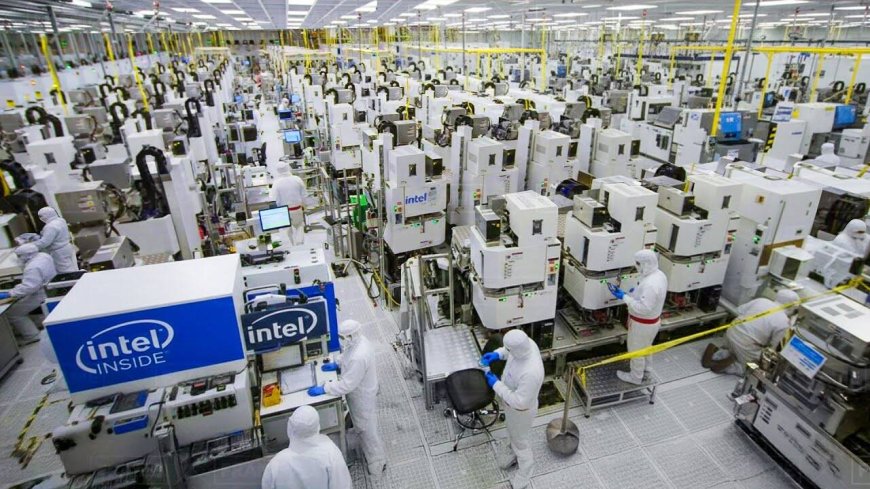
Intel has signed its first external customer for its most advanced chipmaking process, a milestone the company has been chasing for years as it tries to build a contract chipmaking business to rival TSMC. Chief executive Lip-Bu Tan announced the deal on November 18, 2026, at the TomorrowX Summit in Austin, Texas, without naming the customer or disclosing any financial terms.
“Resilient supply on the foundry is very important,” Tan told the audience. “And then 18A, I’m involved in production and we just signed the first customer.”
Intel’s chief technology officer, Pushkar Ranade, later clarified on X that the customer has signed up for 18A-P, the performance-tuned variant of the 18A process, which entered risk production in June 2026. The distinction matters: 18A-P is the version of the node Intel is positioning for outside customers and for its own future products, and it is fully compatible with designs built for standard 18A.
What 18A-P brings
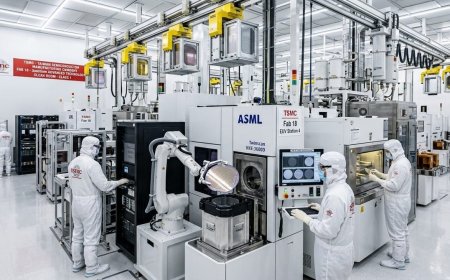
18A is one of the final nodes of Intel’s “five nodes in four years” roadmap, and the first to combine two of the company’s most important manufacturing advances: RibbonFET gate-all-around transistors and PowerVia backside power delivery. RibbonFET packs transistors more densely, while PowerVia routes power from the back of the wafer, freeing the front side for signal wiring.
According to Intel, 18A-P can produce chips that run about 9 percent faster at the same power as standard 18A, or cut power consumption by about 18 percent at the same speed. That kind of gain is what outside chip designers look for when deciding whether to move a design to a new foundry.
Reports from the summit put 18A yields at around 70 percent, a sharp improvement from the levels Tan inherited when he took over in March 2025. On Intel’s third-quarter earnings call, Tan said 18A yields were improving at a double-digit rate and that wafer output on both Intel 3 and 18A had exceeded expectations. He also said 18A-P remains on track to launch by the end of the year across Intel’s internal product portfolio.
Microsoft named as first EMIB customer
Tan used the same event to name Microsoft as the first publicly disclosed customer for Intel’s EMIB advanced packaging technology, alongside a multi-year deal to supply Xeon processors for Microsoft’s Azure cloud infrastructure. EMIB, or Embedded Multi-die Interconnect Bridge, lets Intel stitch several chips together into a single package, a capability that matters for the custom silicon hyperscalers now design for AI workloads.
The two announcements landed together for a reason. Intel’s foundry pitch is not just about transistor technology; it is about offering chip design, manufacturing and advanced packaging as a package, at a time when demand for AI hardware is stretching TSMC’s capacity and pushing large customers to look for a second source.
Why this deal matters
Intel has spent five years trying to become a serious contract chipmaker, and until now it has had no outside customer for its leading-edge node to point to. A signed customer does not prove the foundry business will work — Intel has not said who the customer is, how many wafers the deal covers, or what it is worth — but it is the first evidence that an external designer is willing to commit production to 18A-P.
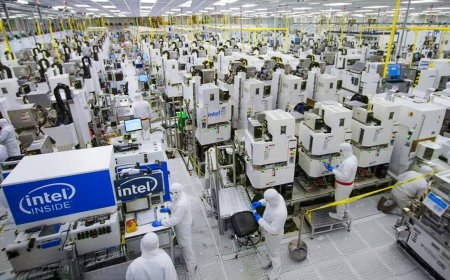
That matters because Intel cannot fill its fabs, including the new capacity in Arizona, with its own products alone. A foundry needs outside volume to pay for the enormous cost of leading-edge plants, and every rival foundry customer Intel wins is volume that would otherwise go to TSMC.
Investors reacted quickly. Intel shares rose nearly 4 percent in after-hours trading on November 18 and climbed about 7.9 percent to $58.98 in regular trading on November 19, according to market data.
What is still unknown
The biggest open question is the customer’s identity. The Wall Street Journal reported earlier this year that Intel and Apple were in talks over a deal that would see Intel manufacture a share of the chips Apple needs, but neither company has confirmed any such agreement, and Intel has said it does not generally identify individual foundry clients. Until Intel or the customer says otherwise, any name attached to the deal is speculation.
The other unknowns are commercial: the size of the order, the timeline for volume production and the revenue it will bring. Tan had hinted at progress on the third-quarter earnings call, saying Intel was engaged with “a couple of highly strategic customers” on 18A. One of them has now signed. Whether more follow will decide whether this is the start of a real foundry business or a single symbolic win.
Sources
Data Center Dynamics — Intel secures first external customer for 18A-P process node
CNBC, via Barron’s and TrendForce — Intel CEO Lip-Bu Tan’s announcement at the TomorrowX Summit, November 18, 2026
TradingView / GuruFocus — Intel share movement, November 19, 2026
What's Your Reaction?
 Like
0
 Dislike
0
 Love
0
 Funny
0
 Angry
0
 Sad
0
 Wow
0