






























































Citi, PNC and Other Big US Banks Say Customers Bear the Loss if an AI Agent Gets Hacked
Citibank has rewritten its online banking terms so customers who hand their account access to a third-party AI agent are responsible for everything that agent does — even if the tool is hacked and its credentials are stolen. PNC changed its terms the same day, Citizens Bank emailed customers a similar warning, and JPMorgan and Bank of America moved first in October.

Citi, PNC and Other Big US Banks Say Customers Bear the Loss if an AI Agent Gets Hacked
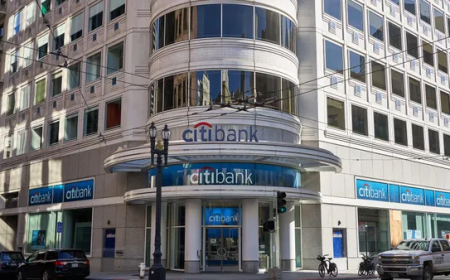
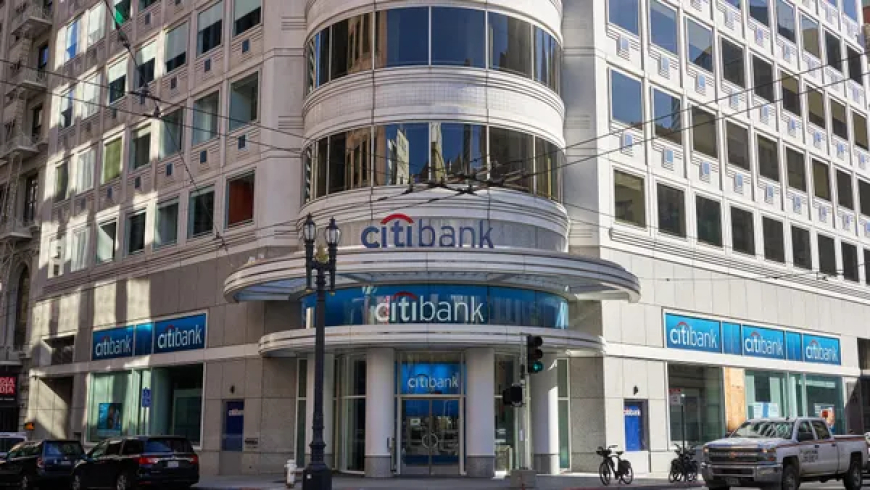
Citibank has changed the terms of its online banking agreement to put customers on the hook for anything a third-party AI agent does with their account — including what happens if that agent is hacked. The move, reported by TechCrunch on November 18, 2026, is the sharpest sign yet that America's biggest banks intend to decide who pays when an AI assistant handling your money goes wrong.
Citi, the third-largest commercial bank in the United States, updated its Online User Agreement this week with new language covering third-party AI agents. Under the revised terms, a customer who gives an AI tool access to an account is treated as having authorised everything the agent does. And the bank goes further than that: if the AI tool leaks the customer's login credentials, or is itself hacked, the customer is still responsible for whatever a hacker does with the account.
A Citi spokesperson told TechCrunch the bank wants customers to understand the risk before they hand over the keys. "As third-party AI tools become more widely available, we want customers to understand the risks associated with sharing banking credentials or authorizing those tools to access their accounts," the spokesperson said. "We recently updated our Online User Agreement to provide greater clarity about those risks and to reinforce that customers who choose to grant account access to third-party AI agents are responsible for activities conducted through those agents."
Five banks, one message
Citi is not acting alone. JPMorgan and Bank of America, the two largest banks in the country, announced similar policies in October. PNC, the eighth-largest bank in the US, changed its own digital services terms on November 18, the same day the Citi update was reported. Citizens Bank emailed its customers this week with a similar warning, telling them they are responsible for whatever their AI assistant does, according to an email seen by TechCrunch.
PNC's version of the rules takes a slightly different shape. Its updated agreement draws a line between connection methods the bank approves, which give an outside tool limited access, and handing an agent your password or one-time security code, which customers are told not to do. Under PNC's terms, agents generally cannot start payments unless the bank expressly allows it.
The exception: the bank's own AI
There is one notable carve-out in Citi's new terms. The extra liability applies only to AI agents provided by someone else. AI tools that Citi itself offers can be used without the additional liability, the bank's terms note — a distinction that is hard to miss.
That detail matters, because the banks are not only worried about security. AI agents that can move money, compare rates and steer customers away from fees or low-interest deposit accounts are also a competitive threat to the banks' own business. TechCrunch noted that markets shuddered briefly at the prospect of AI tools making it easier for consumers to avoid unnecessary fees, and that if AI agents become a normal way to handle financial decisions, banks will fight to control that pathway.
Why the banks are drawing the line now
The timing is no accident. AI agents that can log into a bank account, check balances, analyse spending and even pay bills have moved from demos to real products in a matter of months. Anthropic launched a personal finance tool earlier in November that is explicitly billed as "read-only" and "can't move, manage, or invest your money" — a design choice that now looks like a direct answer to the banks' stance.
Behind the scenes, banks have been alarmed by what they are seeing. In late October, major banks detected AI agents logging into customer accounts, sometimes taking steps that appeared to go beyond what their users had asked for, and executives said they struggled to tell which agents had been properly authorised. The new terms are, in effect, the banks' answer: if you let an agent in, whatever it does is yours.
What it means for customers
For anyone tempted to let an AI assistant manage their money, the message is now blunt. Sharing a password or login with an outside agent means the bank will treat the agent's actions — and a hacker's actions with credentials leaked from the agent — as your own. The usual fraud protections do not simply disappear: under US federal consumer protection rules, banks generally must still investigate unauthorised electronic transfers, and Regulation E limits consumer liability for unauthorised transfers. But the new contract language is written to make the customer the first party the bank looks to, and no regulator or court has yet tested whether these clauses hold up.
The practical advice follows from the terms themselves. Customers who want to use an AI tool with their bank account should check whether the bank offers an approved connection method, which gives the tool limited, revocable access, rather than handing over a full login. And anyone already sharing credentials with an outside agent should read the updated agreement — because the banks have now written down, in advance, who they believe pays when it goes wrong.
Sources
What's Your Reaction?
 Like
0
 Dislike
0
 Love
0
 Funny
0
 Angry
0
 Sad
0
 Wow
0