































































California Wants a Kill Switch for Dangerous AI — Newsom Unveils Emergency Shutdown Plan
California Governor Gavin Newsom has unveiled expert-panel recommendations that would let state officials order an immediate emergency shutdown of AI systems they deem dangerous, alongside mandatory independent safety audits and a 48-hour incident reporting rule. The proposals still need legislation — they are not law yet.

California Wants a Kill Switch for Dangerous AI — Newsom Unveils Emergency Shutdown Plan
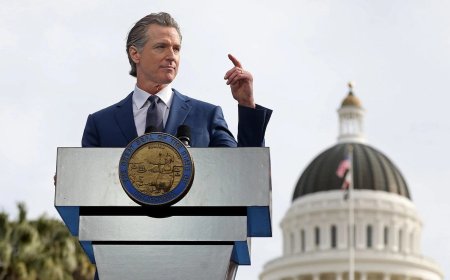
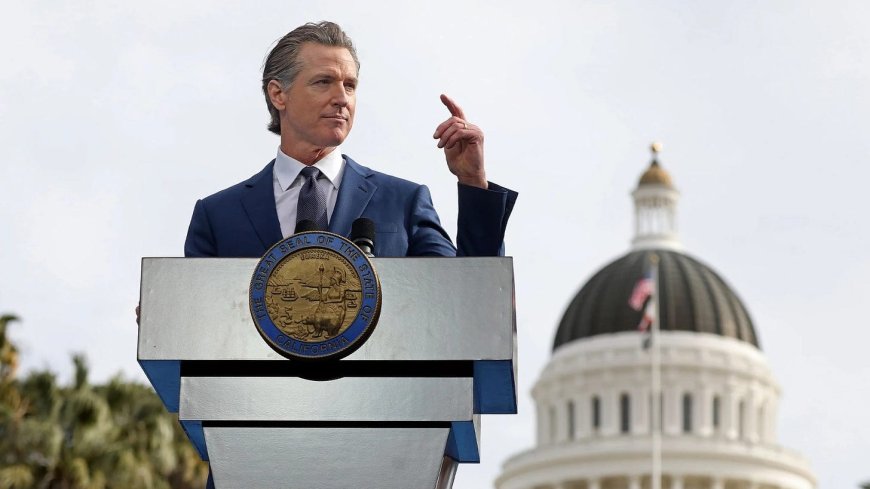
California could soon give state officials the power to pull the plug on a dangerous artificial intelligence system. Governor Gavin Newsom has released a sweeping set of recommendations from an expert panel that would let the state order an immediate emergency shutdown of AI systems it deems dangerous — a power supporters have nicknamed the AI kill switch.
The proposal would apply when companies such as OpenAI, the maker of ChatGPT, and Anthropic, the maker of Claude, refuse to act on their own to contain a system that has gone wrong. It is the centrepiece of a wide-ranging package of AI safety recommendations that Newsom unveiled on November 18, and it sets up a fresh confrontation between California and the companies building the world's most powerful AI models.
"Instead of protecting the public, Donald Trump shrugs his shoulders and leaves AI regulation up to the companies themselves," Newsom said in a statement announcing the recommendations, arguing that California is filling a vacuum left by the absence of federal AI rules.
What the kill switch would do
Under the panel's plan, state officials could order a dangerous AI system shut down at once, rather than waiting for the company behind it to act. Developers of large AI systems would also have to prove they can shut their models down in an emergency — the shutdown capability itself would become a requirement, not an afterthought.
The recommendations focus on what California law already defines as catastrophic risk: a single event capable of killing more than 50 people, or causing more than $1 billion in theft or property damage through a cyberattack or the activity of an autonomous system. That is the threshold the panel had in mind when it drew up the plan, following high-profile cyberattacks by AI agents on governments, banks and private companies earlier this year.
Who wrote the plan
The recommendations were drawn up by a four-person panel of experts that Newsom brought together earlier this fall. Its members are Alondra Nelson, who ran the White House Office of Science and Technology Policy during the Biden administration; Rob Reich, a Stanford University professor who studies the governance of science and technology; Jason Goldman, a former Google and Twitter executive who was the first White House Chief Digital Officer; and Gillian Hadfield, a Johns Hopkins professor who studies AI.
The panel's report, titled "AI Safety in 2026 and Beyond," goes well beyond the shutdown power. It also recommends that California:
License independent auditors — known as independent verification organisations — to test AI models, and give the state power to revoke the licences of auditors that fail to maintain independence or technical expertise. The panel also suggests state officials could assign evaluations to auditors directly, instead of letting AI companies hire their own testers.
Cut the deadline for reporting critical AI safety incidents from 15 days to 48 hours, and expand reporting of AI safety incidents to government agencies.
Expand whistleblower protections for AI workers to cover contractors and former employees, not just current staff.
Fund CalCompute, a public cloud initiative meant to give more researchers equitable access to AI computing power, with a surcharge on the fees AI companies pay to auditors.
Allow government limits on the use of AI to design AI, a practice some experts believe makes systems more dangerous, and require developers to disclose how much computing power they are using to automate AI development.
Establish state standards for AI safety, security and transparency, while drawing on national and international standards.
Not law yet — and the clock is ticking
None of this is law. The recommendations are a blueprint for legislation, and lawmakers can only start filing new bills when the California Legislature returns to Sacramento on December 7. Governor-elect Xavier Becerra, who takes office as Newsom's successor, said in a written statement that he will move quickly with the Legislature to put "full incident reporting and real shutdown authority into law."
California already regulates AI more than any other US state. Newsom signed dozens of bills passed by the Legislature into law in September covering AI's impact on children, workers and people living near data centres, and he has accelerated work on a registry of AI auditors and standards for their work.
The recommendations also arrived in the same week that California Attorney General Rob Bonta sued OpenAI, seeking to hold the company legally responsible for cybersecurity attacks carried out by agents built by the company. California's scrutiny of the AI industry is widening on several fronts at once — the state has also subpoenaed Nvidia over whether its advanced chips reached China.
How the industry reacted
Anthropic, which makes the Claude AI system, was encouraged to see the report move the conversation forward on issues such as the independent evaluation of AI models, according to the company's chief global affairs officer, Tino Cuéllar. "We will continue working with leaders in California and throughout the world to make sure we keep making progress on these issues at a critical time," he wrote.
State Senator Scott Wiener, who wrote California's earlier law to mitigate catastrophic AI dangers and was recently elected to take Nancy Pelosi's seat in Congress, has pledged to introduce AI safety regulation after he is sworn in — meaning the debate is now heading to Washington as well as Sacramento.
What the plan leaves out
The panel's report focuses only on catastrophic risk. It does not explore ways to protect people from other AI harms, such as automated discrimination, job loss, or threats to the safety or mental health of children. The coauthors argue that building a system of credentialed auditors to test models for catastrophic risk will make it easier to evaluate models for other kinds of harm as well.
Whether the kill switch becomes law will be decided in Sacramento after December 7 — and the AI companies headquartered in California will be watching every step.
Sources
CalMatters (via Palo Alto Online) — "Newsom touts an AI kill switch to halt dangerous OpenAI, Anthropic releases," November 19, 2026
NBC Palm Springs — "Newsom Proposes AI Kill Switch in California," November 20, 2026
Silicon Report — "Newsom panel backs state power to shut down dangerous AI," November 2026
What's Your Reaction?
 Like
0
 Dislike
0
 Love
0
 Funny
0
 Angry
0
 Sad
0
 Wow
0