
































































Google to Buy 50 MW of Super-Hot Rock Geothermal Power from Quaise in $500 Million Oregon Deal
Google has agreed to buy 50 megawatts of super-hot rock geothermal power from Quaise Energy's Project Obsidian near Newberry Volcano in Oregon, in a deal worth more than $500 million. Electricity from the first-of-a-kind project is expected to reach Google's data centres in The Dalles as early as 2030.
Google to Buy 50 MW of Super-Hot Rock Geothermal Power from Quaise in $500 Million Oregon Deal
Google is placing a half-billion-dollar bet on a technology that has never produced a single watt of commercial electricity. The company has agreed to buy 50 megawatts of power from a geothermal project in central Oregon that plans to drill three miles into rock hot enough to melt a conventional drill bit, using beams of microwave energy to vaporise stone.
The deal, announced on Tuesday, November 17, 2026, makes Google the first customer of Quaise Energy's Project Obsidian, a super-hot rock geothermal development on the flank of the Newberry Volcano. The power purchase agreement is valued at more than $500 million, according to the Wall Street Journal, which first reported the deal. Neither Google nor Quaise disclosed the price or the structure of the agreement.
Electricity from the project is expected to flow as early as 2030, supporting Google's existing data-centre operations in The Dalles, Oregon. The 50 megawatts on offer is roughly enough to power 50,000 homes, and Quaise is already looking for buyers for a further 200 megawatts of future capacity at the same site.
A first commercial deal for super-hot rock
Geothermal power is one of the oldest ideas in clean energy, but it has always been limited by geography. Conventional plants depend on naturally occurring underground reservoirs of hot water, which are rare and seldom exceed 400 degrees Fahrenheit. Enhanced geothermal systems get around that by engineering reservoirs in hot rock, and super-hot rock geothermal goes further still, chasing temperatures above 572 degrees Fahrenheit (300 degrees Celsius) at depths where ordinary water turns into a supercritical fluid — a state that is neither quite liquid nor gas, and that can carry enormous amounts of energy.
That is the prize Quaise is chasing. A single super-hot rock well could generate 15 megawatts of electricity or more, according to TechCrunch, several times what a conventional geothermal well produces. Fewer wells would mean lower drilling costs, and drilling accounts for roughly a quarter to a third of a geothermal plant's total cost.
The catch is that no one has yet proved the approach at commercial scale. Project Obsidian will cost about $350 million to build, Quaise said, and the deal with Google is the first announced commercial offtake for super-hot rock geothermal. A Bernstein analyst described the agreement as "a bet on a first-of-a-kind technology."
How Quaise plans to drill three miles down
Quaise's technology grew out of research at the Massachusetts Institute of Technology, and it reads like science fiction. The company plans to start with conventional drilling tools, boring down to about 2.5 miles. Then it will swap the drill bit for a gyrotron — essentially a giant microwave — that fires millimetre-wave radiation at the rock ahead, melting and vaporising it into ash.
The reason is simple: at the temperatures Quaise is targeting, metal drill bits wear out fast. Melting the rock instead of grinding through it could make drilling under super-hot conditions cost-effective, and the company is designing wells to reach depths of up to 65,000 feet, where rock temperatures can exceed 932 degrees Fahrenheit.
Investors have already backed the idea with more than $270 million, according to PitchBook figures cited by TechCrunch, from backers including Prelude Ventures, Collaborative Fund and Engine Ventures, with Vinod Khosla as an angel investor. Google's deal is a different kind of backing: a paying customer, years before the first electron flows.
A crowded race: Mazama and XGS
Quaise is not alone in the race. On Monday, November 16, Khosla-backed Mazama Energy announced a technology of its own, called Carbon Chill, designed to keep conventional drill bits working in super-hot rock. Instead of water-based drilling mud, Mazama uses carbon dioxide, which turns supercritical at those depths and temperatures. Just above the drill bit, the gas passes through a valve resembling a rocket nozzle; as it expands, it cools rapidly, absorbing heat from the bit. The carbon dioxide also carries drill cuttings to the surface, where it is filtered and reused.
The early results look promising. Mazama drilled its second well 80 percent faster than its first, and its carbon-dioxide cooling cut drilling time by a further 20 percent, co-founder and chief executive Sriram Vasantharajan told TechCrunch. Mazama has raised $171 million from investors including Khosla Ventures, Doerr Capital and Bill Gates.
Last week, XGS Energy received a grant from the US Department of Energy to develop and refine materials, well designs and models aimed at improving reliability at super-hot depths. XGS is only dipping into super-hot geothermal, while Mazama and Quaise have made it their core focus — taking very different approaches to the same problem.
Why Google is buying early
For Google, the deal fits a pattern. The company was an early investor in and customer of Fervo Energy, the enhanced geothermal developer that went public earlier this year, and it signed a 396-megawatt geothermal power deal with Fervo earlier in November. Google's data centres need power that is both clean and available around the clock, and geothermal is one of the few renewable sources that can run day and night, whatever the weather.
The United States has plenty of geothermal potential — up to 57 terawatts of generating capacity, according to the Clean Air Task Force, more than enough to power the next wave of AI data centres. The question has always been cost, and super-hot rock is the industry's boldest attempt to answer it.
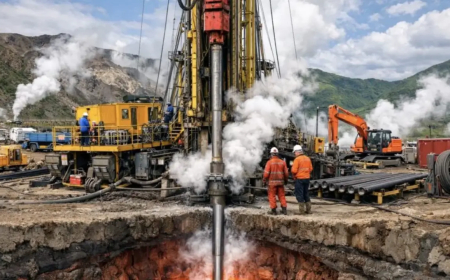
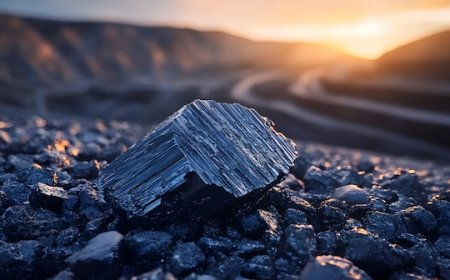
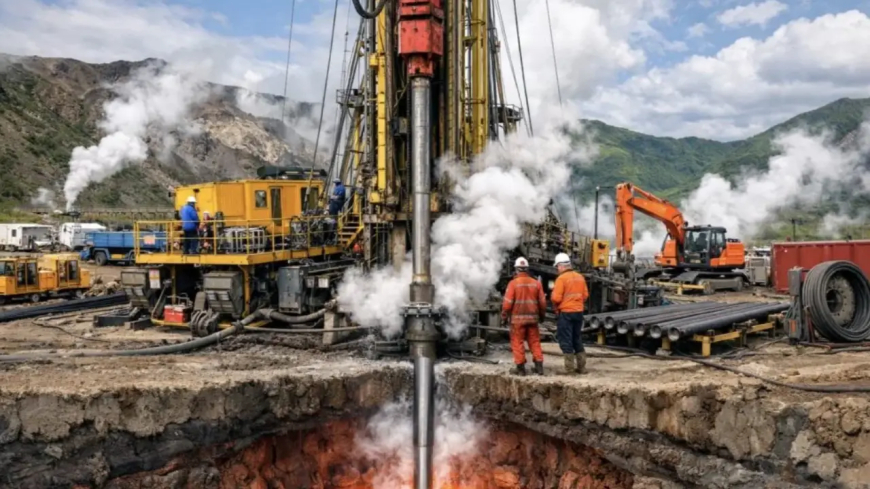
There are real risks. The Oregon site is unbuilt, the technology is unproven at scale, and the 2030 start date is an expectation, not a guarantee. The photo above shows a geothermal drilling operation at work; Quaise's own project is still under development. But Google's willingness to commit more than $500 million to a first-of-a-kind plant is the strongest signal yet that super-hot rock geothermal is moving from laboratory curiosity towards commercial reality.
What happens next
Quaise will develop Project Obsidian in two stages: conventional drilling first, then the millimetre-wave phase to reach super-hot conditions. If the first 50 megawatts arrive on schedule, the company hopes to expand the site considerably, with 200 megawatts of additional capacity already being marketed to future buyers.
For the wider geothermal industry, the week has been a turning point. Three separate developments — a half-billion-dollar customer for Quaise, a new cooling technology from Mazama and a federal grant for XGS — all landed within days of each other. The race to tap the Earth's deepest, hottest rocks is, as TechCrunch put it, heating up.
Sources
- TechCrunch — Super-hot rock geothermal could end data center energy woes (November 20, 2026)
- The Wall Street Journal — Google Embraces Geothermal Technology to Vaporize Rock for Clean Power (November 17, 2026)
- Utility Dive — Google signs 50-MW superhot geothermal PPA with Quaise Energy (November 19, 2026)
- Canary Media — Google bets on superhot geothermal to power Oregon data centers (November 17, 2026)
What's Your Reaction?
 Like
0
 Dislike
0
 Love
0
 Funny
0
 Angry
0
 Sad
0
 Wow
0