









































Italy Approves Tesla Assisted Driving, Becoming the First Major EU Market to Allow It
Italy has given provisional approval to Tesla's Assisted Driving System, making it the first major European Union country to allow the technology and the 12th European country overall. The decision, announced by Transport Minister Matteo Salvini on November 20, comes ahead of a European Union-wide vote expected in December.

Italy Approves Tesla Assisted Driving, Becoming the First Major EU Market to Allow It
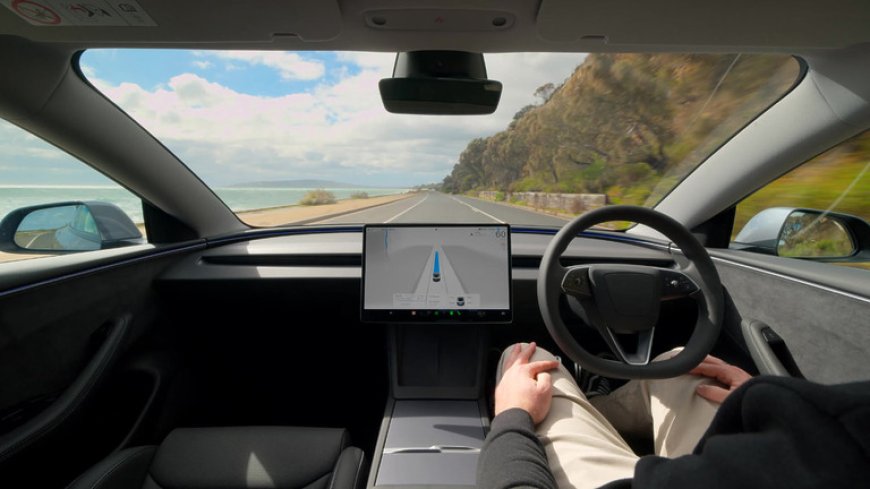
Italy has given provisional approval to Tesla's Assisted Driving System, making it the first major European Union country to allow the technology on its roads. Transport Minister Matteo Salvini announced the decision on Friday, November 20, saying the ministry acted after a thorough technical feasibility assessment — and without waiting for the wider European Union process to conclude.
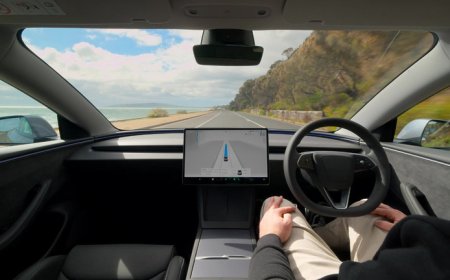
The system, known in Europe as Tesla Assisted Driving (TAD) and formerly sold as Full Self-Driving (Supervised), is a hands-off, eyes-on driver assistance feature. It can steer, brake, accelerate and handle intersections and lane changes, but the driver must supervise at all times and remains fully responsible for the car. It is a Level 2 driver-assist system, not a fully driverless one.
Tesla Europe confirmed the approval on X with a short message — "Now approved in Italy, rollout begins soon" — alongside a video of one of its cars driving through Rome. Tesla chief executive Elon Musk replied to Salvini's post: "Thank you, much appreciated!" No firm rollout date has been given yet, and in Italy the system will be available on a subscription basis for 99 euros per month.
How Italy got here
The path to approval runs through the Netherlands. The Dutch vehicle authority RDW first approved Full Self-Driving (Supervised) on April 10, 2026, under Article 39 of the EU's vehicle type-approval regulation, and other member states have been able to recognise that approval nationally, one by one. Ten did so before Italy: Belgium, Croatia, Czechia, Denmark, Estonia, Finland, Latvia, Lithuania, Slovakia and Slovenia.
Those were mostly small markets. Together with the Netherlands, they cover roughly 70 million people, or about 15 percent of the EU's population. Italy alone has about 59 million people, so Friday's decision nearly doubles the share of Europeans who can legally use the system, to close to 30 percent. Italy is the 12th European country to allow it, and by far the most populous.
Rome's position moved quickly. In April, Senator Carlo Calenda formally asked Salvini's ministry to prioritise the approval. On October 29, Salvini said he had held a "very positive and constructive" call with Musk and that Italy supported a swift EU approval. Three weeks later, Italy went ahead nationally instead.
A lot changed in between. Tesla dropped the "Full Self-Driving" name in Europe after Germany's Transport Ministry called it misleading, and cut the maximum speed margin from 50 percent to 10 percent over the limit. Then on November 16, the RDW approved stricter driver monitoring, including hands on the wheel above 130 km/h. That is the version Italy has now approved.
What happens next in December
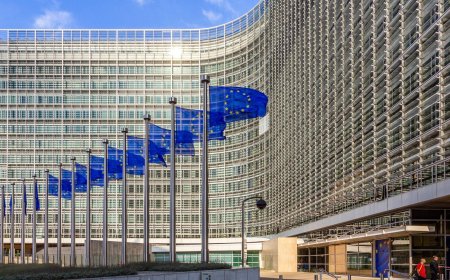
The bigger test comes at EU level. The EU's Technical Committee on Motor Vehicles pushed its Tesla vote to December after holding only discussions in October. Bloc-wide approval needs a qualified majority: at least 15 of 27 member states, representing at least 65 percent of the EU population.
Germany said in October it would back approval after Tesla agreed to the rename and the speed cap. If it follows through, Germany and the 12 approving countries would cover roughly 47 percent of the EU's population — progress, but still short of 65 percent. France refused a national approval in July, and Spain has not recognised the Dutch approval. Tesla needs at least one of them, plus most of the remaining holdouts, to clear the bar.
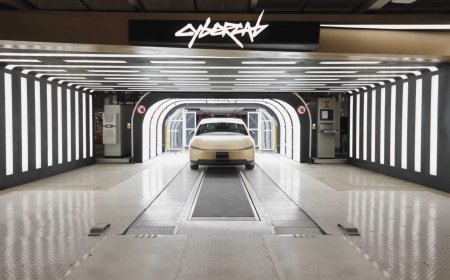
For Italian owners, the wait is shorter. Drivers with compatible cars who have been paying for a feature they could not use at home are now first in line in a major European market, and the decision shifts momentum going into the December vote. Tesla's push into autonomous driving is also visible in its other plans, including the Cybercab, its purpose-built robotaxi, which the company is preparing for production in Berlin.
Sources
- Reuters — Italy gives green light to Tesla self-driving system ahead of EU approval
- Electrek — Tesla FSD approved in Italy, the first big EU market to say yes
- Channel News Asia — Italy gives green light to Tesla self-driving system ahead of EU approval
- Tech Xplore — Italy gives green light to Tesla's assisted driving system
What's Your Reaction?
 Like
0
 Dislike
0
 Love
0
 Funny
0
 Angry
0
 Sad
0
 Wow
0