

































































ChatGPT vs Gemini vs Claude: Which AI Chatbot Is Best in 2026?
ChatGPT, Gemini and Claude are the three AI chatbots most people actually use in 2026 — but they are good at different things. We compare the latest models, coding and writing quality, prices, context windows and ecosystems to help you pick the right one.
ChatGPT vs Gemini vs Claude: Which AI Chatbot Is Best in 2026?
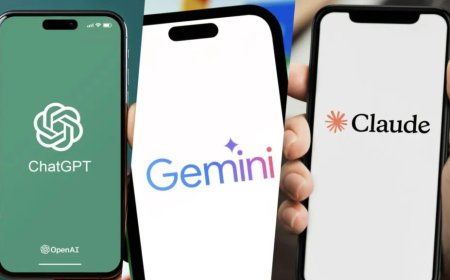
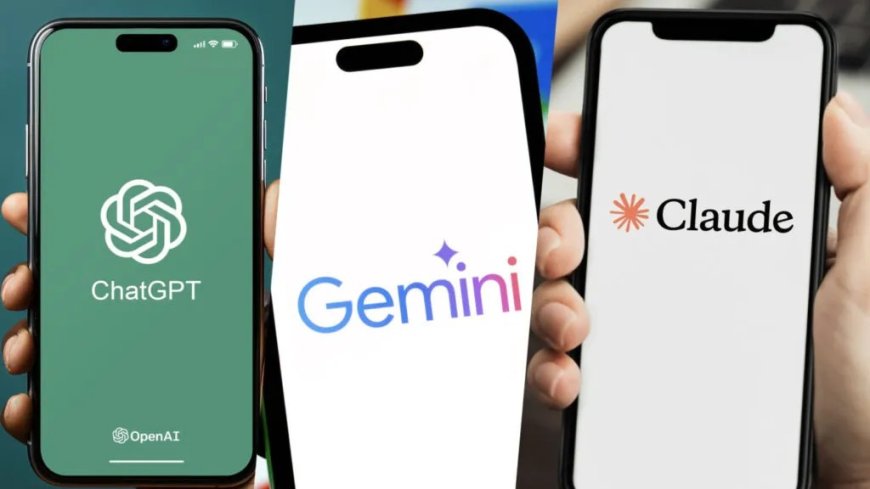
Three names dominate the AI chatbot conversation in 2026: OpenAI's ChatGPT, Google's Gemini and Anthropic's Claude. All three can write, code, summarise documents and answer questions — but ask the same question to each of them and you will get three noticeably different answers. The real question is not which chatbot is "best" in the abstract. It is which one is best for the work you actually do.
This guide compares the three assistants as they stand in November 2026: the models powering them, how they perform at coding, writing and research, what they cost, and where each one fits into the apps you already use. Model names change fast in this field, so where a figure comes from a vendor benchmark or an independent leaderboard, we say so — and prices are as of November 2026.
The short answer
If you want one sentence per chatbot: Claude is the strongest choice for coding and careful long-form writing, ChatGPT offers the broadest ecosystem and the most capable agentic tools, and Gemini is the value pick, with the cheapest flagship pricing and the deepest integration with Google's apps. Most people will be happy with any of the three. The differences show up at the edges — a long codebase, a 200-page document, or a workflow that lives inside Gmail and Google Docs.
ChatGPT vs Gemini vs Claude at a glance
| ChatGPT (OpenAI) | Claude (Anthropic) | Gemini (Google) | |
|---|---|---|---|
| Maker | OpenAI | Anthropic | Google DeepMind |
| Launched | November 2022 | March 2023 | February 2024 (as Gemini, formerly Bard) |
| Current flagship models | GPT-5.5 / GPT-5.6 family | Claude Opus 5.5, Claude Sonnet 5.5 | Gemini 4 Argon, Gemini 4 Carbon, Gemini 4 Hydrogen |
| Standard paid plan | ChatGPT Plus, $20 per month | Claude Pro, $20 per month | Google AI Pro, $19.99 per month |
| Free tier | Yes, limited | Yes, limited | Yes, limited |
| Context window | Up to around 1M tokens via API on recent models | 200,000 tokens in the app | 1M tokens |
| Standout strength | Broadest ecosystem and agentic tools | Coding and writing quality | Value, multimodality and Google integration |
ChatGPT: the all-rounder with the biggest toolbox
ChatGPT is the chatbot most people meet first, and it remains the most versatile of the three. OpenAI's current GPT-5.5 and GPT-5.6 models power the Plus tier, and the November 2026 Terminal-Bench leaderboard — an independent test of how well models complete real terminal tasks — puts GPT-5.5 at the top with 84.7%, ahead of GPT-5.4 at 81.8%.
Where ChatGPT pulls away is everything around the model. It has the largest app and integration ecosystem of the three, built-in computer use for agentic workflows, and newer features such as ChatGPT Wallet, which lets AI agents shop and check out on your behalf in the US. OpenAI has also pushed into coding with Codex, its command-line agent, and the GPT-5 generation is designed to switch between quick answers and deeper reasoning without the user picking a mode.
The trade-off is that ChatGPT rarely leads any single benchmark outright. It is very good at almost everything and the outright best at few things — which, for a general-purpose assistant, is arguably the point.
Claude: the coder's and writer's favourite
Claude's reputation is built on two things: code and prose. Anthropic's current flagship, Claude Opus 5.5, launched in September 2026, and its predecessor Opus 4.6 scored 80.8% on SWE-bench Verified, a benchmark of real-world software engineering tasks — ahead of both rivals' comparable models at the time. The Claude Code command-line tool has made it the daily driver for many professional developers.
Writers notice the difference too. Claude's answers tend to be more carefully structured and less prone to the repetitive, filler-heavy style that creeps into other models' long-form output. Its 200,000-token context window in the app handles entire books, research papers and large codebases in a single session. Anthropic has also been expanding beyond chat: Claude Meetings, now in beta, can join Google Meet calls to take notes and track action items.
The catch is price at the top end. The $20-per-month Pro plan covers the balanced Sonnet model, while the flagship Opus models sit behind the $100-per-month Max plan. If you code for a living, that is easy to justify; if you do not, the Pro tier still gives you most of what makes Claude good.
Gemini: the value pick with Google behind it
Gemini's case is simple: it is the cheapest flagship to run and the one most deeply wired into the apps many people already live in. Google's newest generation is Gemini 4 — Argon became generally available for developers in October 2026, Carbon followed for paying developers in November, and Hydrogen, the fast model, launched on November 12, 2026. Google's Gemini 3 Pro, the model most users still meet in the app, scored 91.9% on GPQA Diamond, a hard science benchmark, and 76.2% on SWE-bench Verified, according to Google's published results.
Gemini's 1-million-token context window is the largest of the three, which matters when you want to feed it a long report, a pile of PDFs or hours of video. Its pricing is also the most aggressive: at the flagship tier, Gemini's models cost roughly two and a half times less per token than GPT-5.6 or Claude Opus 4.8, according to independent comparisons. And the integration is unmatched if you use Google Workspace — Gemini works inside Gmail, Docs, Sheets and Search, and can now even look at your Google Wallet spending to help you budget.
Google says the Gemini app reached 900 million monthly active users as of Google I/O 2026. The trade-off is that Gemini's free tier, while generous, routes you to lighter models, and the newest Gemini 4 Carbon features are limited to Google AI Ultra subscribers in the app.
Head to head: coding
For professional coding, Claude still sets the pace. Its SWE-bench Verified lead and the popularity of Claude Code among developers are hard to argue with. GPT-5.5 has closed the gap — it now tops the Terminal-Bench leaderboard — and Gemini 3 Pro is a strong third, with the advantage of a huge context window for working across an entire codebase. For casual coding help, such as fixing a script or explaining an error, all three are more than capable, and the differences shrink to almost nothing.
Head to head: writing and research
Claude produces the cleanest long-form drafts, with the most natural structure and the least filler. ChatGPT is the most expressive and flexible collaborator, strong at brainstorming, rewrites and adapting tone. Gemini is the strongest researcher of the three: its large context window, Google Search integration and strong scores on knowledge benchmarks make it the best choice for digging through long documents and checking facts against the web. For research, Gemini's ability to ground answers in live search results is a real advantage over models that rely only on training data.
Head to head: price
All three charge about the same for their standard paid tier — ChatGPT Plus and Claude Pro at $20 a month, Google AI Pro at $19.99. The differences appear above and below that tier. Gemini's free tier is the most generous, and its flagship models are the cheapest per token for developers. Claude's flagship Opus models cost the most to reach, behind the $100 Max plan, while ChatGPT's top tier, Pro, sits at $200 a month for heavy users. If price is the deciding factor, Gemini wins; if you only need one $20 subscription, any of the three is fairly priced.
Which one should you choose?
Choose Claude if you write code professionally, draft long documents, or work with large files you need analysed carefully. Choose ChatGPT if you want the widest set of features, the most third-party integrations, and an assistant that can act on your behalf across the web. Choose Gemini if you live in Google's ecosystem, want the most generous free tier, or regularly work with very long documents and videos.
There is also a case for using two of them. Many people now keep ChatGPT or Gemini for everyday questions and quick tasks, and turn to Claude when a piece of code or writing has to be right. All three offer free tiers, so the cheapest way to decide is to try the same task in each and see which answer you actually prefer.
What to watch next
The race is moving too fast for any comparison to stay current for long. OpenAI is rolling out its GPT-6 generation in phases, Anthropic keeps refreshing the Claude 5 line, and Google's Gemini 4 family is still expanding. The practical advice has not changed: pick the assistant that fits your daily work, not the one that topped last week's benchmark, and re-check the pricing and model names before you commit to a paid plan.
Sources
- TechLogHub — Claude vs ChatGPT vs Gemini (2026), updated November 7, 2026
- AIToolRanked — ChatGPT vs Claude vs Gemini 2026, updated November 13, 2026
- Vellum — GPT-5.1 vs Gemini 3 Pro vs Claude Opus 4.5 benchmark report
- Terminal-Bench leaderboard, November 2026 (llmbenchmark.ai)
- Google — Introducing Gemini 4 Hydrogen, November 12, 2026
- Google — Gemini 4 Carbon now available, November 2026
What's Your Reaction?
 Like
0
 Dislike
0
 Love
0
 Funny
0
 Angry
0
 Sad
0
 Wow
0