







































































AI Hacking Tool Artex Suspected as European Commission Confirms Cyberattack on HR Systems
The European Commission has confirmed that a cyber campaign detected on 22 October disrupted its internal HR systems for more than 10 days, taking payroll, leave and medical reimbursement platforms offline. Its cybersecurity team detected the use of Artex, an AI-powered hacking framework, though officials say there is no evidence yet of a staff-wide data breach.
AI Hacking Tool Artex Suspected as European Commission Confirms Cyberattack on HR Systems
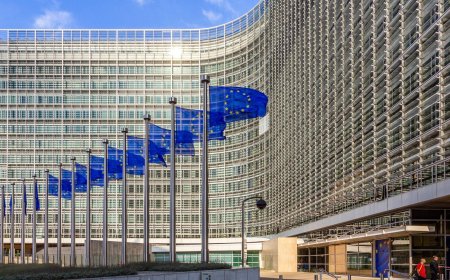
The European Commission has confirmed that attackers armed with an AI-powered hacking tool broke into its internal HR systems, disrupting payroll, leave requests and medical reimbursements for more than 10 days. The incident, detected on 22 October and disclosed on 19 November, is the most serious publicly acknowledged cyberattack on the EU's executive arm in years — and it is still under investigation.
Commission spokesperson Thomas Regnier confirmed the attack at a media briefing on Thursday, saying the institution had taken several applications offline as a protective measure. Most have since been restored. He added that the Commission has "not detected any evidence of a data breach affecting Commission staff as a whole" — a careful formulation that leaves open whether some staff data may have been taken.
HR systems offline for more than 10 days
The attack hit Sysper, the HR platform staff use to check payslips, submit timesheets and request leave, and MyPMO, the Paymaster Office portal that processes medical reimbursements. Both were taken offline as a precaution, along with other applications, and the Commission's translation services also went down on 17 November.
Access to Sysper and MyPMO was restored earlier in the week of the disclosure, but Sysper crashed briefly again on Wednesday 18 November. The disruption forced thousands of Commission staff to fall back on manual workarounds for routine tasks, from claiming expenses to booking time off.
Regnier would not go into detail about the attack while the investigation continues, but he confirmed that "it is a campaign, so there was a series of incidents." The European Data Protection Supervisor was informed of the attack, he said, adding that "there was no hiding whatsoever." No ransom was demanded, according to the Commission.
The Artex connection
According to Politico, which first reported the disruption, the Commission's cybersecurity defenders detected that the attackers had used Artex, an open-source AI-powered penetration-testing framework. The Commission itself has not officially named the tool, and it has not said publicly how the attackers first got in — or whether Artex helped with the break-in itself or was used mainly for reconnaissance once inside.
CERT-EU, the cybersecurity team that protects the EU institutions, had already warned on 5 November that it had observed AI-driven activity against organisations under its watch that "highly likely involved the use of Artex." In the Commission attack, the tool appeared to have been used mainly to search for and locate credentials — the keys that unlock cloud systems.
Artex works by letting an operator describe a target in plain language. AI agents then break that goal into smaller tasks and carry them out with real hacking tools, probing for weaknesses around the clock. It does not include its own AI model; instead, it connects to an external model chosen by the operator, such as Claude, GPT or DeepSeek.
The framework was first released on GitHub in July 2026 and spread fast, reaching an estimated 1,500 to 2,000 users within 10 weeks. Its developer pulled the repository on 8 October after reports that hackers were misusing it, but copies continue to circulate on code-sharing platforms.
The FBI warned about Artex six days earlier
The disclosure came six days after the FBI issued an advisory warning that Artex was becoming a favourite tool of cyber criminals. In its 13 November advisory, the bureau said that since at least August 2026, a variety of malicious actors had used Artex in campaigns against organisations in financial services, government, technology, defence, energy, healthcare and other sectors.
The FBI said the framework "significantly reduces the time required to chain attack techniques, with some intrusions progressing from initial targeting to privileged access in under three hours." It also said Artex can automatically map the effective permissions of cloud credentials — storage keys, service principals and access tokens — checking each one in under a second. Researchers have found more than 1,600 Artex consoles exposed to the internet.
Microsoft has said the tool was being heavily used by a Chinese state-aligned threat actor it tracks as Storm-0940 to gain access to victims' cloud infrastructure, including Microsoft 365 environments. No attacker has been named in the Commission case.
Read more: FBI Warns AI Hacking Tool Artex Breaches Networks in Under Three Hours
Top officials called into emergency talks
The incident reached the top of the institution. The Corporate Management Board, the Commission's senior internal crisis body, held an urgent meeting on the ongoing cyber incidents earlier in November, and Henna Virkkunen, the executive vice-president for technological sovereignty, briefed the full College of Commissioners on Wednesday 18 November.
Security specialists say the choice of HR systems as a target was no accident. Such systems hold names, home addresses, pay grades and health insurance records for EU civil servants — a ready-made targeting list for espionage and social engineering. Even if no data left the building, analysts warn that every Commission employee should expect convincing phishing emails in the coming weeks.
The Commission said it is preventively checking other systems while staying in close contact with CERT-EU and the data protection supervisor. Whether staff personal data was stolen remains the biggest unanswered question, and the full extent of the damage is still unclear.
Sources
- CSO Online — European Commission HR hit by cyber attack
- The Register — European Commission scrambles to contain AI-assisted cyberattack
- Computer Weekly — AI red team tool Artex likely behind cyber attack on EU body
- Security Affairs — European Commission Cyberattack: ARTEX AI Tool Suspected in Prolonged Disruption
What's Your Reaction?
 Like
0
 Dislike
0
 Love
0
 Funny
0
 Angry
0
 Sad
0
 Wow
0