






















































FastUnlock: Unpatched Windows 11 Zero-Day Lets Someone at a Locked PC Run Programs
FastUnlock, a zero-day disclosed on 19 November 2026, lets someone with physical access to a locked Windows 11 PC use the built-in Narrator screen reader to reach Settings and run programs from a USB drive — without signing in. Microsoft has issued no fix, no CVE and no advisory yet, and endpoint-security firm ThreatLocker has independently reproduced the bypass.

FastUnlock: Unpatched Windows 11 Zero-Day Lets Someone at a Locked PC Run Programs
A newly disclosed Windows 11 zero-day lets someone sitting at a locked computer run programs without signing in. The technique, called FastUnlock, was published on GitHub on 19 November 2026 by a researcher who goes by MSNightmare and Nightmare Eclipse, and it was independently tested the same day by endpoint-security firm ThreatLocker, which confirmed it works. As of 21 November, Microsoft has issued no fix, no CVE identifier and no advisory, and there is no evidence the technique has been used in a real attack.
The flaw is a lock-screen bypass, not a remote takeover. It needs someone physically at the keyboard, and it ends in a limited account — not administrator control of the machine. That limit matters, but so does the fact that it works on fully updated, BitLocker-encrypted PCs.
How FastUnlock gets past the lock screen
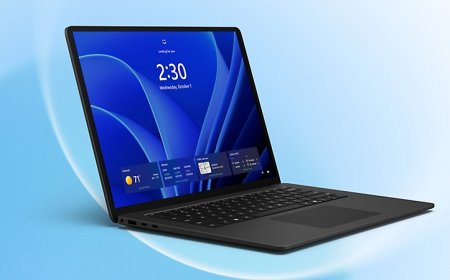
The chain starts where a locked-out user would start: the "I forgot my PIN" recovery screen tied to a Microsoft account. From there, pressing Win+U opens the accessibility menu, and the attacker turns on Narrator, Windows' built-in screen reader.
According to the disclosure, Narrator's redesigned interface opens a hidden window even in the lock-screen context. Using Narrator's keyboard controls — Caps Lock plus the arrow keys — the attacker can navigate from that window into the Settings app. From Settings, the route runs through Bluetooth and devices to AutoPlay, where a plugged-in USB stick opens in File Explorer. Anything started from there runs as WsiAccount, the low-privilege account Windows uses to host the lock screen.
ThreatLocker's test reached the point of running a program from the lock screen in that account, which the firm identified as WSIAccount and described as "not an administrator account". The researcher says he tested the technique on Windows 11 26H2 with the November 2026 security updates installed, and describes it as consistent across the machines he tried.
One honest caveat: the researcher's own demonstration stops short of the final step. He says he did not film the USB execution because he had no flash drive to hand, so what has been shown on video is the escape into Settings rather than a payload actually running. ThreatLocker's test, which did use an external drive, partly fills that gap.
What it does not do
FastUnlock is often described as a BitLocker bypass, and that wording needs care. It does not break BitLocker encryption, and it does not recover the BitLocker key. In the common setup where BitLocker uses a TPM chip, the drive unlocks automatically when the computer starts, so by the time the lock screen appears, the files are already readable. FastUnlock runs after that normal unlock — it never has to defeat the encryption at all.
That is a smaller problem than cracking an encrypted disk, but it is still a real one for a machine someone else is holding. A laptop left locked on a desk, in a shared office or at a front counter is exactly the kind of machine this technique targets.
The conditions also narrow the risk. The attacker needs physical access, and at least one account on the PC has to be linked to a Microsoft account, because the recovery prompt is the way in. No official list of affected Windows versions has been published, so any machine that meets those conditions should be treated as possibly affected until Microsoft says otherwise.
What to do until Microsoft patches it
With no patch available, the useful steps are about physical control and startup protection. Keep laptops that can go missing out of the wrong hands, and shut down or hibernate a device when it leaves your control — a locked screen on its own is not enough.
On sensitive machines, add a startup PIN to BitLocker instead of letting the drive unlock on its own. A PIN protects only a machine that has not yet started, not one already sitting on the lock screen, so it pairs with shutting the machine down rather than replacing that step. Turning off AutoPlay for removable media closes the USB leg of the chain specifically, and the researcher's own suggested stopgap is to stop Narrator from running at all, through AppLocker or a custom access-control list on its executable.
Microsoft's own countermeasures guidance recommends a startup PIN, along with shutting down or hibernating machines when faced with determined, hands-on attackers. The next scheduled Patch Tuesday falls on 8 December 2026, and until an official fix or advisory appears, the advice is to watch for one and apply it when it comes.
Sources
What's Your Reaction?
 Like
0
 Dislike
0
 Love
0
 Funny
0
 Angry
0
 Sad
0
 Wow
0