

































































Xiaomi 18 Pro Max Review: Two 200MP Cameras, a Rear Display and a 4.7/5 Score from GSMArena
GSMArena published its full review of the Xiaomi 18 Pro Max (Global) on 17 November 2026, awarding it 4.7 out of 5 and an Editors' Choice award. The dual 200MP Leica cameras, the 2.9-inch rear display, the Snapdragon 8 Elite Extreme Gen 6 chip and a 23-hour-plus battery endurance score headline the review, while uneven sustained performance, a limited Privacy Display and a steep price are the main caveats.

Xiaomi 18 Pro Max Review: Two 200MP Cameras, a Rear Display and a 4.7/5 Score from GSMArena
Xiaomi spent years keeping its Pro-series flagships exclusive to China. With the 18 Pro Max, that changes: the phone is now on sale globally, and GSMArena's full review of the global model, published on 17 November 2026, gives it 4.7 out of 5 and an Editors' Choice award for 2026. It is a big step up from last year's 17 Pro Max, which the reviewers considered a clear step down from the 17 Ultra. The new phone closes much of that gap, pairing two 200MP rear cameras with a 2.9-inch screen on the back, Qualcomm's fastest mobile chip and a battery that lasted more than 23 hours in GSMArena's endurance test.
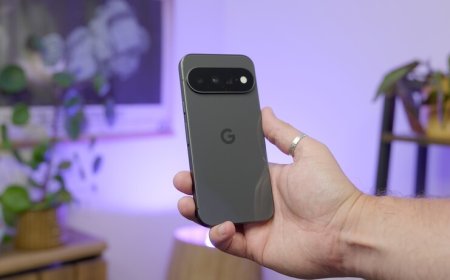
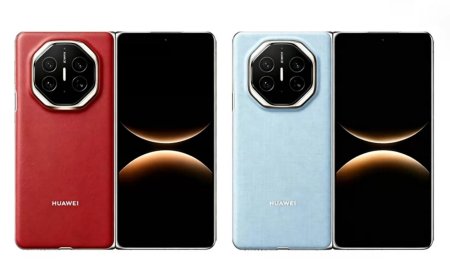
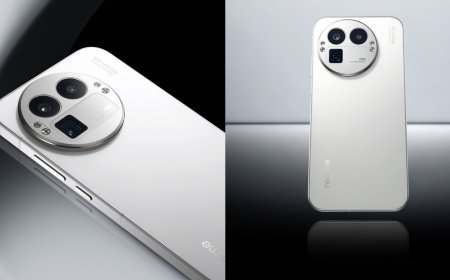
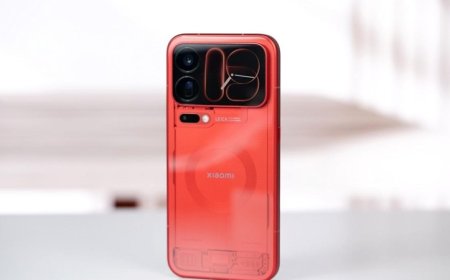
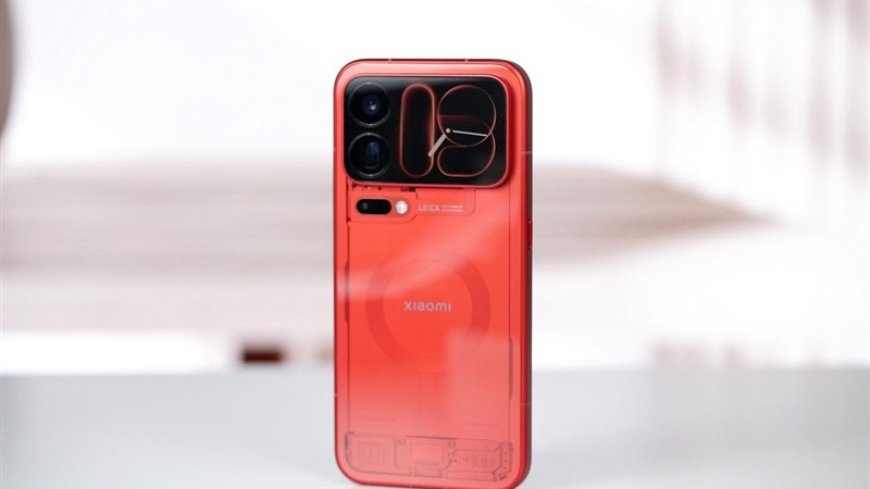
The featured photo shows the limited Transparent Red edition of the phone, a colourway that is exclusive to China. The global model comes in Black, White, Velvet Red and Cosmic Blue.
Design: the rear display is the whole point
The 18 Pro Max is built around its Back Display, a 2.9-inch LTPO AMOLED panel that fills much of the top third of the rear, next to the Leica-branded camera island. It is not a new idea for Xiaomi — the Mi 11 Ultra introduced a rear screen back in 2021 — but the 17 Pro Max made it far larger, and the 18 Pro Max keeps that approach. GSMArena calls it genuinely useful rather than a gimmick: it works as a viewfinder for selfies taken with the rear cameras, shows notifications and camera controls, and runs live translation and small generative AI apps. Third-party app support is still limited, which the review lists as a weakness.
The phone measures 163.4 x 77.6 x 8.4 mm and weighs 229g according to the specification sheet, though GSMArena's hands-on text puts it at 235g and describes it as hefty even by 6.9-inch flagship standards. The frame is aluminium, the front is protected by Dragon Crystal Glass 3, and the rear display is covered by Gorilla Glass Victus 2. The Velvet Red review unit's back panel looked and felt more like fibre-reinforced plastic than glass, and the review notes that Chinese teardowns suggest a glass back may be exclusive to the Cosmic Blue colourway.
There is a customisable button with a red accent on the right side, next to the volume rocker and power button, and the SIM tray takes either two nano-SIMs or one nano-SIM plus an eSIM. The ultrasonic under-display fingerprint reader is fast and reliable, according to the review. Water resistance is rated IP68, good for immersion up to 6 metres for 30 minutes — deeper than the usual 1.5-metre rating — but there is no IP69 rating for high-pressure water jets, which some rivals now offer. The European retail box contains paperwork, a USB-A to USB-C cable and a clear silicone case, but no power adapter.
Display: bright, accurate, and a privacy trick with limits
The main screen is a 6.9-inch LTPO AMOLED panel with a 1208 x 2624 resolution, a 1 to 120Hz adaptive refresh rate, 2160Hz PWM dimming and support for Dolby Vision and HDR10+. Xiaomi advertises a 4,000-nit peak brightness, and GSMArena measured 4,065 nits on a small patch in the web browser, in line with that claim — though it could not reproduce the figure consistently, with YouTube barely passing 1,000 nits at the same patch size and the Gallery app reaching around 2,000 nits. With the Privacy Display switched on, maximum brightness at a 75 percent patch measured 1,104 nits, and minimum brightness sits at around 1 nit.
The Privacy Display is the screen's signature feature, using hardware to narrow the viewing angle so people beside you see less of what is on screen, similar to the system on the Samsung Galaxy S26 Ultra. In testing it mainly limited the vertical viewing angle, while the horizontal angle stayed fairly open, and GSMArena says it is not a replacement for a privacy screen protector in every situation. Colour accuracy is strong, with Standard and Vivid modes averaging a Delta E of 2.1 for sRGB, differing mainly in white point.

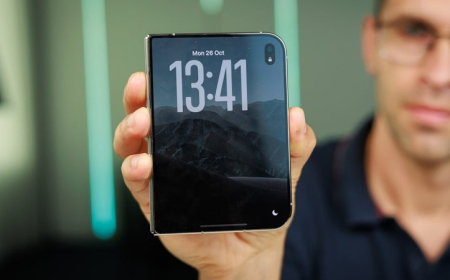
The 2.9-inch rear display doubles as a viewfinder for rear-camera selfies and shows notifications, camera controls and small apps.
Cameras: two 200MP sensors, and a much better telephoto
The camera system is the biggest upgrade over the 17 Pro Max. The main camera uses a new 200MP sensor Xiaomi calls Light Fusion 960L — a SmartSens SCC90XS with a 1/1.28-inch format and LOFIC technology, which Xiaomi says delivers 16.2 stops of dynamic range. It sits behind a 23mm f/1.67 lens with optical image stabilisation. The telephoto is also 200MP now, using Samsung's HP5 sensor, with a shorter 75mm focal length for 3.2x zoom instead of the old 5x, and it focuses as close as 12cm, down from 30cm. The ultrawide keeps its 50MP resolution with a new sensor, as does the 50MP selfie camera.
In daylight, GSMArena found the main camera's Leica Vibrant pictures likeable without being over-saturated, with excellent dynamic range and natural detail at the default 12.5MP output. A 50MP mode captures meaningfully more detail, and the reviewers call the downscaled 25MP results from it some of the best available. The 2x zoom photos are described as properly great, and the 3.2x telephoto is hard to fault in daylight, with strong detail, well-judged colour and convincing portraits. The ultrawide is sharp and detailed during the day, though its 17mm focal length is less wide than most rivals.
Low-light results are strong too: the main camera keeps detail without the watercolour look of heavy night processing, and the telephoto holds up well at 3.2x after dark. The ultrawide is the weakest of the three at night, with merely decent sharpness. Selfies from the front camera are very good, but the review recommends using the rear cameras and the rear display instead — the main camera at 1x and 2x produces sharper shots with nicer background blur.
Video reaches 8K at 30 frames per second and 4K at 120 frames per second on the main and telephoto cameras, with Dolby Vision available at every resolution and frame rate, plus a Pro mode with log recording. GSMArena calls the daytime video very good overall and the stabilisation thoroughly excellent, but notes the ultrawide footage is softer than most rivals and that Xiaomi still offers no 24fps recording mode.
The review's verdict on stills is unambiguous: the Xiaomi 18 Pro Max is a top-class cameraphone, with an excellent main camera day and night, a similarly strong telephoto, and an ultrawide that is excellent in daylight and acceptable after dark.
Performance: fast on paper, uneven under load
The phone runs Qualcomm's Snapdragon 8 Elite Extreme Gen 6, a 2nm chip, with LPDDR5X memory and UFS 4.1 storage, on Android 17 with Xiaomi's HyperOS 4. GSMArena promises five major OS updates and six years of security patches from Xiaomi — shorter than the seven years Samsung and Google offer.
Benchmarks tell a mixed story. In Geekbench 6 the phone scored 3,581 single-core and 10,273 multi-core, rising to 3,924 and 10,752 in Performance mode. AnTuTu v11 returned 3,707,401 points, and 3DMark Wild Life Extreme scored 7,700. The review calls the performance capable but rather uneven: CPU results fall slightly behind rivals and even the older Galaxy S26 Ultra in places, and the RedMagic 12 Pro, which uses the same chipset, scores substantially higher, suggesting Xiaomi's tuning is more conservative.
Sustained performance is the weaker point. Under a long CPU load the chip settles at 50 to 60 percent of its initial performance, with pronounced fluctuations, and the 20-minute 3DMark stress test showed 52.2 percent stability. That is not unusual among flagships, but GSMArena says the phone trails some rivals here, and Performance mode makes a noticeable difference mainly in single-core tests.
Battery and charging: the global model gets the smaller cell
One substantial difference between regional versions is the battery: the global model has a 7,050mAh silicon-carbon cell, while the Chinese version gets 8,500mAh. Even so, GSMArena's Active Use endurance score for the global phone is 23 hours 34 minutes, made up of 43 hours 39 minutes of calls, 23 hours 6 minutes of web browsing, 34 hours 49 minutes of video playback and 12 hours 18 minutes of gaming. That sits slightly behind the Oppo Find X10 Pro Max and vivo X500 Pro Max, but ahead of the Samsung Galaxy S26 Ultra and Google Pixel 11 Pro XL.
Charging is 100W wired, with 50W wireless and 27W reverse wireless. In GSMArena's updated charging test the phone reached a full charge in 52 minutes, with 33 percent after 15 minutes and 60 percent after 30 minutes. Wireless charging needs a compatible Xiaomi charger, and magnetic charging requires Xiaomi's magnetic case, since the phone has no built-in magnets. Battery Protection can stop charging at 80 percent, and Intelligent Charging learns daily habits to apply that limit.
Sound, price and the competition
The three-speaker setup is one of the best GSMArena has tested, rated Very Good at minus 25.4 LUFS, with a fuller and warmer sound than the Galaxy S26 Ultra and impressive bass, though vocals are slightly less clear than on the Samsung.
On price, GSMArena's pricing table lists the 12GB/256GB model at 1,249 pounds on Amazon UK and 1,359.90 euros on Amazon DE, with the 512GB version at 1,449 pounds and 1,529.90 euros. Expert Reviews, which reviewed the phone separately, lists a 1,399-pound starting price in the UK. In Bangladesh the phone is available as an unofficial import, with Dhaka shops listing the 12GB/256GB version from around 1,35,999 taka, according to price listings checked on 21 November 2026.
Against its rivals, GSMArena positions the 18 Pro Max as the distinctive choice: the Galaxy S26 Ultra and Pixel 11 Pro XL are more widely available and promise longer software support, but cost more and charge more slowly; the iPhone 18 Pro Max has a more polished ecosystem and better video, but is pricier with a weaker battery and charging setup; the Oppo Find X10 Pro Max and vivo X500 Pro Max last slightly longer and sustain performance better, but are harder to find globally and run less polished software. Android Headlines, in its own review, scored the phone 4.5 out of 5.
Verdict
GSMArena's conclusion is that the Xiaomi 18 Pro Max is easy to like: an excellent camera, outstanding battery life, fast charging, great sound, premium construction and a distinctive design make it an accomplished all-round flagship, and the secondary display genuinely sets it apart in a segment where meaningful hardware innovation is rare. The compromises are real — the Privacy Display only partly works, sustained performance does not always do the latest Snapdragon justice, there is no charger in the box and no IP69 rating, and software support is shorter than Samsung's or Google's — but none of them is a dealbreaker on its own. At its price they are harder to overlook, yet the phone still earns GSMArena's Editors' Choice award for 2026.
For buyers, the trade-offs are clear. Photographers and creators get one of the best camera phones of the year plus a rear display that turns the main cameras into a selfie system. Power users get more than 23 hours of endurance and a 52-minute full charge. What they give up is the longest software support in the business, the most consistent sustained performance, and the smaller battery of the Chinese model — the global version's 7,050mAh cell is 1,450mAh smaller than the one sold in China.
Xiaomi 18 Pro Max key specifications
- Display: 6.9-inch LTPO AMOLED, 1208 x 2624, 1-120Hz, 2160Hz PWM, Dolby Vision, HDR10+, 4,000 nits peak; 2.9-inch LTPO AMOLED rear display, 596 x 976, 120Hz
- Chipset: Qualcomm Snapdragon 8 Elite Extreme Gen 6 (2nm), LPDDR5X, UFS 4.1
- Memory: 12GB/256GB, 12GB/512GB, 16GB/512GB, 16GB/1TB
- Rear cameras: 200MP main (Light Fusion 960L, 1/1.28-inch, LOFIC, f/1.67, OIS), 200MP telephoto (Samsung HP5, 75mm, 3.2x, f/2.4, OIS), 50MP ultrawide (17mm, f/2.4); front camera 50MP (f/2.2)
- Video: 8K30 and 4K120 on main and telephoto, 4K60 on ultrawide and selfie, Dolby Vision, log recording
- Battery: 7,050mAh global (8,500mAh in China), 100W wired, 50W wireless, 27W reverse wireless
- Software: Android 17, HyperOS 4; five major OS updates, six years of security patches
- Build: 163.4 x 77.6 x 8.4 mm, 229g, IP68 to 6 metres for 30 minutes, ultrasonic fingerprint reader, three speakers, USB 3.2, Wi-Fi 7, eSIM support
- Price: from 1,249 pounds (Amazon UK) / 1,359.90 euros (Amazon DE) for 12GB/256GB; from around 1,35,999 taka unofficially in Bangladesh
Sources
- GSMArena — Xiaomi 18 Pro Max (Global) review, 17 November 2026
- Android Headlines — Xiaomi 18 Pro Max Review
- Expert Reviews — Xiaomi 18 Pro Max review
- Innopark IT — Xiaomi 18 Pro and 18 Pro Max global launch prices and smaller batteries
- Innopark IT — Xiaomi 18 Pro rear display runs Google Maps, Spotify and YouTube Music
- Innopark IT — Samsung Galaxy S26 Ultra review
- BhaloPhone — Xiaomi 18 Pro Max price in Bangladesh, checked 21 November 2026
What's Your Reaction?
 Like
0
 Dislike
0
 Love
0
 Funny
0
 Angry
0
 Sad
0
 Wow
0