


























































Samsung Galaxy S26 Ultra Review: Privacy Display and 60W Charging Lead a Cautious Upgrade
GSMArena's full review of the Galaxy S26 Ultra finds a well-balanced flagship that plays it safe: a genuinely useful Privacy Display, much faster 60W charging and smarter Galaxy AI, held back by small camera downgrades, the same 5,000mAh battery and heavy throttling under sustained load. Read the full verdict, lab results and pros and cons.

Samsung Galaxy S26 Ultra Review: Privacy Display and 60W Charging Lead a Cautious Upgrade
Samsung's Galaxy S26 Ultra arrives as the most important phone in the company's 2026 lineup, and also as one of its most cautious. After weeks of lab testing, GSMArena's full review, published on 6 March 2026, awards the phone a score of 4.5 out of 5 — a strong mark for a device the reviewers describe as an "unexciting upgrade" that is still a well-balanced flagship with no major flaws.
The headline additions are real enough. A new Privacy Display keeps prying eyes off your screen, charging jumps to 60W, and Galaxy AI gets a smarter Bixby, deeper Perplexity integration and a handful of genuinely useful tools. But the hardware story is quieter: the same 5,000mAh battery, a camera system with small but puzzling downgrades, an aluminium frame where titanium used to be, and a processor that throttles hard under sustained load. Here is what the review found, section by section.
Design: thinner, rounder, but with a wobbly camera island
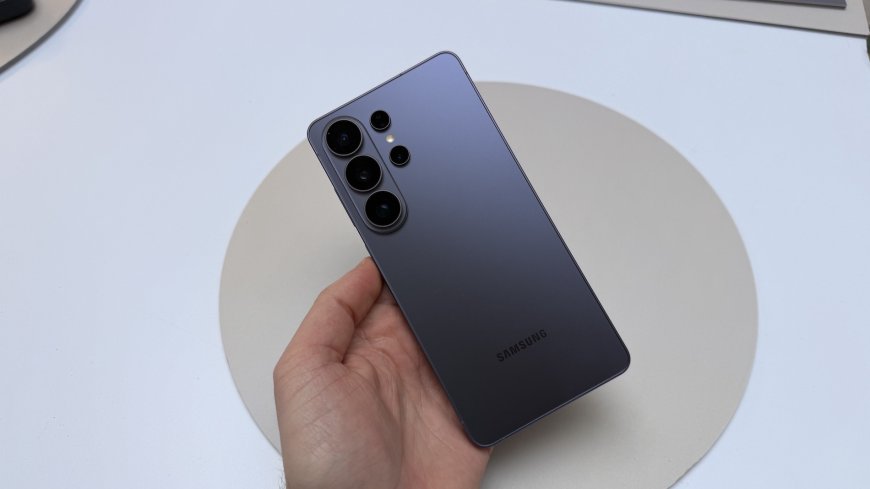
The S26 Ultra looks familiar at first glance, but the details have shifted. It measures 163.6 x 78.1 x 7.9mm and weighs 214g, making it slimmer than the 8.2mm S25 Ultra, and its more rounded corners make it noticeably easier to hold despite being slightly wider and taller. The trade-off is a new, taller camera island: all three lenses sit raised in an oval housing that lifts the phone off a flat surface, so it rocks when you tap the screen unless you use a case.
The frame is now Armor Aluminum 2, a step down from last year's titanium, with Samsung arguing that aluminium absorbs shocks better. The front glass remains Gorilla Armor 2 with the DX anti-reflective coating, the back is Gorilla Glass Victus 2, and water resistance stays at IP68 — a rating Chinese rivals have already moved past with IP69. The S Pen is still in its holster, though its wireless functions disappeared last year and have not returned. Colours are Black, Cobalt Violet, Sky Blue and White, with Silver and Pink Gold as online exclusives; the review unit was the hero Cobalt Violet.
Display: the Privacy Display is the star of the show
The 6.9-inch Dynamic LTPO AMOLED 2X panel is familiar on paper — 1440 x 3120 pixels, 120Hz, HDR10+ and a claimed 2,600-nit peak — but this year it hides a new trick. The Privacy Display uses a hardware filter on half the pixels, splitting them into narrow pixels that beam light straight ahead and wide pixels that spread it at an angle. Turn the feature on and the wide pixels dim, so anyone looking from the side sees far less of your screen.
Crucially, the feature does not compromise the screen when it is off. GSMArena measured more than 700 nits in manual mode with Extra Brightness enabled, 1,480 nits in auto mode on a 75% white patch, and over 2,800 nits on a 10% patch for HDR content. Minimum brightness was just 1.1 nits. With Privacy Display switched on, peak brightness roughly halves, but the anti-reflective coating keeps around 800 nits usable outdoors.
The feature can also work selectively: only for notifications, only for PIN and password fields, only in chosen apps, or on a schedule through Routines. A Maximum Privacy mode makes the screen far harder to read at an angle, but at the cost of grey blacks and collapsed contrast. The reviewers note that standard Privacy mode still lets a determined onlooker make out roughly what is on screen, and that the feature currently works only in system apps and on the lock screen.
What is missing will matter to display enthusiasts: the panel is still 8-bit with frame rate control rather than true 10-bit colour, there is no high-frequency PWM dimming, and Dolby Vision is still absent. New software touches include ProScaler for sharper images and text, and mDNIe for smoother colour gradients.

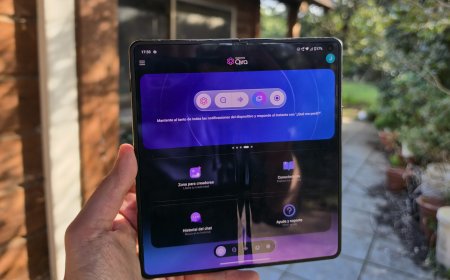
The Galaxy S26 Ultra in hand, showing the redesigned camera island. Image: YugaTech.
Performance: the fastest chip in the charts, until it throttles
As usual, Samsung gets a higher-clocked "for Galaxy" version of Qualcomm's flagship silicon — here the Snapdragon 8 Elite Gen 5, with its two prime Oryon cores running at 4.74GHz instead of 4.6GHz and the Adreno 840 GPU clocked higher too. Configurations run from 12GB of RAM with 256GB of storage up to 16GB with 1TB, and the review unit was the base 256GB model.
In synthetic benchmarks the S26 Ultra tops the charts in CPU, GPU and mixed workloads, comfortably ahead of phones on the standard Snapdragon 8 Elite Gen 5 or MediaTek's Dimensity 9500. The reviewers doubt that gap means much in everyday use, though, and the sustained-performance picture is worse. Despite a redesigned, larger vapour chamber, the CPU dipped below 50% of its maximum performance in stress tests, and GPU throttling in the 20-minute 3DMark Wild Life Extreme test was also worse than the previous generation. That is a genuine weak spot for a phone pitched at gamers and power users.
Software and Galaxy AI: smarter, but not for everyone
The phone ships with Android 16 and One UI 8.5, backed by Samsung's promise of seven major OS upgrades and seven years of security updates. Galaxy AI is again the centrepiece. Bixby has been rebuilt to understand natural language and context better, search the web for live information, and point you to the exact setting that solves your problem — ask why the screen dims, and it takes you to the right toggle.
Perplexity AI is now integrated at system level: say "Hey, Plex" and it can run multi-step tasks across apps, such as creating a calendar event and emailing the details. Now Nudge watches on-screen messages and suggests actions, like adding a dinner plan to your calendar, though it only works in supported messaging apps and Samsung says its data stays on-device unless you consent to share it. Circle to Search can now recognise several objects in one image at once, Photo Assist edits photos from plain-language instructions, and Audio Eraser now works inside third-party apps such as Instagram, YouTube and Netflix. A new Document Scanner in the camera app straightens documents and exports them as PDF.
The catch is language support: Galaxy AI still works in only a handful of languages, so many owners will see little benefit, and several features remain limited to Samsung's own apps.
Cameras: capable, but a step back in places
On paper the camera system barely changes, and the review finds the differences are mostly small downgrades. The 200MP main camera keeps the same ISOCELL HP2 sensor it has used since the S23 Ultra, but gains a brighter f/1.4 aperture. The 5x telephoto also gets a brighter f/2.9 aperture, but Samsung has swapped its periscope lens for an ALoP assembly to fit the slimmer body — minimum focus distance doubles from 26cm to 52cm. The 3x telephoto moves to a smaller sensor, the same size used on non-Ultra Galaxy phones since the S22 era. The 50MP ultrawide is unchanged, and the 12MP selfie camera gains a wider 23mm lens.
Daylight photos from the main camera are genuinely good: fine natural detail, restrained saturation and very good dynamic range. The 5x camera is solid for portraits, and the ultrawide is dependable if unremarkable. But the 3x camera's detail looks sharpened and grainy, and the review concludes it "might as well be scrapped". Low-light shooting is good but held back by a reworked Night mode that can no longer be forced on — it engages automatically, and only when the phone decides the scene is dark enough. Close-up shooting is the biggest casualty: the main camera's minimum focus distance has grown from 8cm to 18cm, so close-ups are, in the reviewers' words, practically impossible with any of the cameras.
The selfie camera is the one clear camera win, with excellent sharpness, wide dynamic range and autofocus that makes for top-class close-ups. Video is extensive as ever: 4K60 on every camera, 8K30 on the main, ultrawide and 5x, a new pro-grade APV codec, pre-loaded LUTs, and a Horizon Lock mode that keeps footage level up to 1440p. Stabilisation is described as about as good as it gets. The overall photo verdict is blunt: a capable cameraphone that is lagging further behind the best Android cameraphones every year.
Battery and charging: finally fast, still small
The 5,000mAh battery is unchanged for another year, but software optimisation squeezed out a little more endurance: GSMArena's Active Use Score reached 16 hours 23 minutes, better than the S25 Ultra in web browsing and video streaming, yet still far behind Chinese rivals and Apple.
Charging is where the upgrade is real. The new Super Fast Charging 3.0 standard runs at up to 60W over USB Power Delivery with a PPS profile, so any compatible 60W charger works — Samsung's own or a third-party one. In testing the phone hit 51% in 15 minutes and 84% in 30 minutes, with a full charge taking 43 minutes, comfortably beating Samsung's own claim of 75% in half an hour. Wireless charging rises to 25W over Qi2.2, but the phone has no built-in magnets, so you need a magnetic case to reach that speed. Reverse wireless charging remains at 4.5W.
Speakers earned a "Very Good" -25.9 LUFS loudness score — slightly quieter than last year, but with better-balanced tuning that the reviewers rate among the best in its class, even if the iPhone 17 Pro Max still leads.
Verdict: a safe flagship that does enough, just about
GSMArena's conclusion is measured. The Privacy Display is genuinely useful and does not compromise the viewing experience, faster charging finally brings the phone closer to its rivals, and battery life has improved. The S Pen remains a defining feature nothing else in the mainstream market matches, and the AI additions are interesting even if many owners will not be able to use them fully.
Against that, the camera downgrades are puzzling given the S25 Ultra was already trailing competing flagships, the battery capacity is behind the curve, and the switch from titanium to aluminium arrived just after Apple dropped titanium from its iPhones. The reviewers read the strategy plainly: avoid costly hardware leaps, add just enough to maintain parity, and lean on AI where Samsung currently has the upper hand.
Their final word is that it is an unexciting upgrade, but still a well-balanced device with no major flaws and a few standout features rivals cannot match — and whether that justifies a flagship price tag north of $1,000 is something the market will decide. For owners of an S25 Ultra, there is little here that demands an upgrade; for anyone coming from an older Galaxy, the S26 Ultra is the polished, dependable flagship Samsung has sold for years, with a privacy trick and charging speeds that finally feel current.
Pros
- Thinner and lighter design
- Solid screen as always, now with the cool new Privacy Display
- Improved battery life from the same capacity cell
- Leading the way with mobile AI features
- Much faster charging capabilities
- Nicer-sounding speakers
- S Pen is still a unique feature
- Cool new features for videography enthusiasts
Cons
- Basic IP68 rating — other Androids get IP69, iPhones can go deeper
- Battery density and capacity are still behind the curve
- Display is missing bit depth, high-frequency PWM and Dolby Vision support
- The camera hardware drags behind the top Android cameraphones
- CPU throttles heavily under longer loads
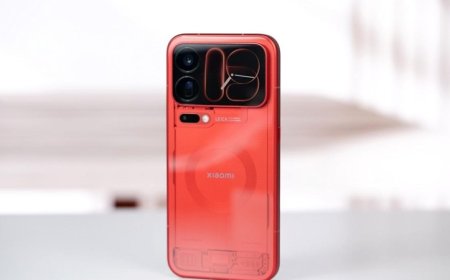
Related: another 2026 flagship, the Xiaomi 18 Pro, takes a different approach to standing out — read our coverage of its rear display and its Google Maps, Spotify and YouTube Music support.
Sources
What's Your Reaction?
 Like
0
 Dislike
0
 Love
0
 Funny
0
 Angry
0
 Sad
0
 Wow
0