






























































Realme GT 8 Pro Review: A Camera-First Flagship With a 200MP Periscope and a 7,000mAh Battery
GSMArena's full review of the Realme GT 8 Pro scores Realme's camera-first flagship 4.4 out of 5. The Snapdragon 8 Elite Gen 5 phone pairs a 200MP periscope telephoto and a Ricoh GR camera mode with a 6.79-inch 144Hz OLED and a 7,000mAh battery — but heavy GPU throttling and a premium price keep it from being an easy recommendation.

Realme GT 8 Pro Review: A Camera-First Flagship With a 200MP Periscope and a 7,000mAh Battery
Realme's GT series has always stood for two things: a very bright display and a very big battery, wrapped around the fastest chipset Qualcomm could offer. The Realme GT 8 Pro keeps all three — and then changes the brief. This time, Realme wants the phone to be taken seriously as a camera phone too, with a 200MP periscope telephoto, a rebuilt ultrawide and a four-year collaboration with Ricoh. GSMArena's full review, published on 20 November 2025, scores the phone 4.4 out of 5, and its verdict is measured: this is a genuinely capable flagship that feels expensive for what it offers.
That framing matters. The GT 8 Pro is not a new launch — it is Realme's current GT flagship, reviewed in depth a year ago, and this article is a review of that testing, not a launch report. What follows is what GSMArena found after living with the phone, from its lab-measured display and battery results to its camera samples and its weak spots.
Design: a camera bump you can swap
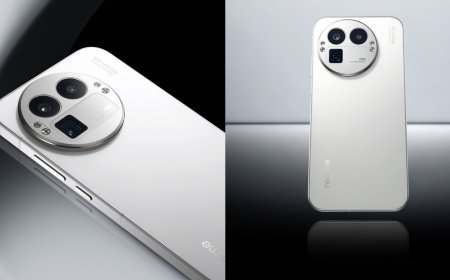
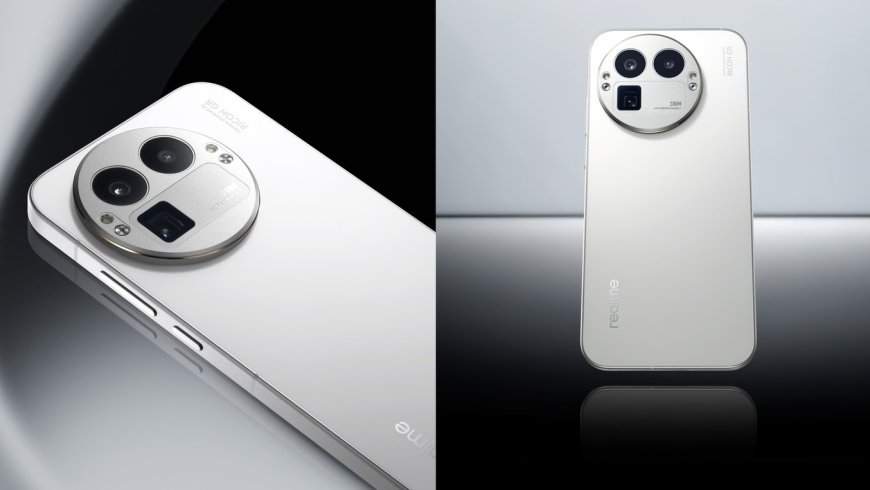
The most unusual thing about the GT 8 Pro is on its back. The triple-camera setup sits inside a removable metal fascia, held on by two tiny Torx screws. Undo them and the actual camera bump is revealed underneath; Realme ships the phone with a round metal cover, and octagonal and transparent rectangular options are also available. The company is even releasing drawings so owners can 3D-print their own covers.
GSMArena calls it a novel idea, but is not convinced the buyer spending upwards of 1,100 euros on a phone is the one who will bother swapping covers or printing them. The covers are purely cosmetic — remove one and the phone works exactly the same, with the same IP68 and IP69 dust and water resistance, rated for submersion to 2 metres for 30 minutes and for high-pressure hot-water jets.

The phone itself measures 161.8 x 76.9 x 8.2mm and weighs 218g, with a glass front, a flat aluminium frame and a choice of a fibre-reinforced plastic back or a silicone polymer, leather-like back. The blue and green versions get the grippy polymer finish, while the white version and the Aston Martin F1-inspired Dream Edition use the more slippery fibre-reinforced plastic. There is an ultrasonic under-display fingerprint sensor that GSMArena found fast and reliable, and a stereo speaker setup that earned a Very Good loudness rating and sounded bigger and more dynamic than the GT 7 Pro's.
Display: one of the brightest panels around
The 6.79-inch OLED is, on paper, one of the best-specced displays in its class: 1440 x 3136 resolution, 144Hz maximum refresh rate, Dolby Vision and HDR10+ support, and a claimed peak brightness of 7,000 nits. In GSMArena's standardised testing the panel delivered 1,951 nits on a 75 percent white swatch under bright light, and 953 nits manually — both excellent results. Under more unusual conditions, with the ambient light sensor blasted by a flashlight, the reviewers measured just over 4,000 nits on a small white patch in the gallery app. Minimum brightness was a praiseworthy 1.6 nits.
There are caveats. The 144Hz mode only appears in some games — Call of Duty switched the display into 144Hz, though the game itself topped out at 90fps — and the panel is not LTPO, so refresh rates step between 120Hz, 90Hz and 60Hz with no 1Hz idle mode. In everyday use, though, the reviewers found everything nicely smooth, and HDR playback worked across Netflix and YouTube with Widevine L1.
Camera: the 200MP periscope is the star
The camera system is where the GT 8 Pro earns its new identity. The main camera is a 50MP unit with a 1/1.56-inch sensor, an f/1.8 lens and optical stabilisation. The telephoto is the headline act: a 200MP Samsung HP5 sensor, also 1/1.56-inch, behind a periscope lens offering 3x optical zoom, with a minimum focus distance of around 19cm for close-ups. The ultrawide is a much-improved 50MP unit, replacing the basic 8MP camera on the GT 7 Pro — though Realme still did not give it autofocus. The front camera is 32MP and fixed-focus.
In daylight, GSMArena found the main camera's images superbly detailed, with pleasing colour and excellent dynamic range, and portraits came out with lively skin tones and natural-looking blur. The 200MP telephoto delivered excellent detail even at its binned 12.5MP output, and 6x zoom shots were nearly as sharp as the 3x ones. At night, the main camera was a dependable performer and the telephoto kept noise well controlled with top-class exposures.
The Ricoh collaboration, four years in the making, adds a dedicated GR camera mode with 28mm and 40mm focal-length presets and a set of colour and black-and-white filters, aimed at street photography fans. GSMArena was unconvinced, finding the colour rendition and dynamic range underwhelming, and called the Ricoh badge a limited selling point. Video is a weaker area too: the main and telephoto cameras record up to 8K at 30fps and 4K at 120fps, but stabilisation is a notch or two below ideal, with a light but persistent tremor on the main camera that even the Ultra Steady mode did not fix.
Performance: fast, but it throttles hard
Under the hood is Qualcomm's Snapdragon 8 Elite Gen 5, built on a 3nm process, with two Oryon cores at 4.6GHz and six at 3.62GHz, paired in the review unit with 16GB of LPDDR5X RAM and 512GB of UFS 4.1 storage. In benchmarks the GT 8 Pro was among the highest-scoring phones GSMArena had tested, keeping pace with other Snapdragon 8 Elite Gen 5 devices such as the OnePlus 15.
Sustained performance is a different story. In the 20-minute 3DMark Wild Life stress test, the phone's lowest run was unusually poor, and stability was notably worse than the reviewers were used to seeing — even for high-end chips known to throttle. The CPU throttling test showed a gradual decline to around 70 percent of initial performance, and surface temperatures reached 54 degrees Celsius. In short bursts the phone is as fast as anything on the market; under continued heavy load, it gives back a lot of that speed.
Battery and charging: a genuine all-day phone
The 7,000mAh silicon-carbon battery is a dual-cell design, and GSMArena's testing gave it an Active Use Score of 20 hours and 24 minutes — a step up from the already impressive GT 7 Pro, though not quite matching the OnePlus 15. Charging is rated at 120W with the bundled SuperVOOC adapter, which took the phone from 1 percent to 100 percent in 40 minutes in testing, reaching 86 percent at the half-hour mark. A good third-party USB PD PPS charger took 53 minutes. The phone is only the second Realme to offer wireless charging, rated at 50W with proprietary accessories, and the first to do so outside China.
One note of caution comes from a second review: 91mobiles gave the phone an editor rating of 8.4 out of 10 but found real-world battery life underwhelming for a 7,000mAh cell, reporting barely six hours of screen-on time on heavy days. Lab endurance and daily use do not always agree, and buyers who push the camera hard should keep that in mind.
Software and updates
The GT 8 Pro runs Realme UI 7 on Android 16, with a promise of four major Android upgrades and five years of security fixes. It is essentially Oppo's ColorOS with Realme styling, and includes Google's Gemini assistant, Gemini Live and Circle to Search, plus AI photo tools such as AI Eraser and AI Unblur. The reviewers found the software polished and familiar, with new lockscreen clock styles and app-drawer grouping among the additions.
Verdict: capable, but pricey
GSMArena's 4.4 out of 5 score comes with a clear list of strengths: the interchangeable camera covers and premium IP68/IP69 body, the super-bright high-resolution OLED, all-round excellent battery life with speedy charging, loud and great-sounding speakers, a fast Snapdragon 8 Elite Gen 5, and a thoroughly capable camera system with excellent stills day and night. The cons are equally clear: heavy GPU throttling under continued load, no autofocus on the ultrawide or front cameras, a Ricoh GR mode of limited appeal, and suboptimal video stabilisation.
Price is the sticking point. GSMArena expected the phone to cost around 1,100 euros for the 12GB/256GB version and 1,200 euros for 16GB/512GB. At that level the competition is fierce: the vivo X300 is at least as good a camera phone and a little cheaper, the OnePlus 15 offers even better battery life for around 150 euros less, and the Oppo Find X9 Pro is a true camera powerhouse for a little more. A discounted Galaxy S25 Ultra or Pixel 10 Pro can also be had for similar money. As GSMArena put it, the GT 8 Pro does not immediately strike you as great value — though a discount in the coming months would make it a lot more appealing.
For buyers who want a flagship that does almost everything well, with a genuinely excellent telephoto camera and two-day battery potential, the GT 8 Pro is a strong option. For buyers who want the best value in this segment, the OnePlus 15 and the vivo X300 deserve a look first.
Sources
What's Your Reaction?
 Like
0
 Dislike
0
 Love
0
 Funny
0
 Angry
0
 Sad
0
 Wow
0