




































































Google's AI Data Centers Are Heading to Space: Blue Origin's New Glenn to Launch Project Suncatcher Satellites in 2029
Google has picked Blue Origin's heavy-lift New Glenn rocket to launch the first dedicated flight of Project Suncatcher, its long-term experiment to run AI computing on solar-powered satellites in orbit. The mission, targeted for the first quarter of 2029, will carry several TPU-powered satellites, each with roughly the computing capacity of a data-center rack, into sun-synchronous orbit.
Google's AI Data Centers Are Heading to Space: Blue Origin's New Glenn to Launch Project Suncatcher Satellites in 2029
Google is taking its search for AI computing power off the planet. The company has chosen Blue Origin's heavy-lift New Glenn rocket to carry the first dedicated launch of Project Suncatcher, its long-term research effort to run artificial intelligence workloads on solar-powered satellites in orbit.
The two companies announced a launch services agreement on Thursday, November 19, 2026. The flight is targeted for the first quarter of 2029 and will deploy several computing satellites into sun-synchronous orbit, an orbital path chosen because it offers near-continuous sunlight for the solar-powered hardware.
One rack of compute per satellite
Each satellite on the mission will carry Google's Tensor Processing Units, the custom AI chips the company builds to run its machine learning systems. According to Google and Blue Origin, a single satellite will hold roughly the computing capacity of one rack of servers in a conventional data center.
That scale is the point of the experiment. Project Suncatcher is a moonshot to test whether AI infrastructure can be scaled in space, where sunlight is abundant and uninterrupted, instead of on the ground, where data centers increasingly compete for electricity, land and water for cooling. Google describes the effort as a long-term roadmap rather than a commercial product, and this dedicated New Glenn flight is the next step on it.
"Project Suncatcher is a long-term moonshot to scale AI infrastructure in space by tapping into the abundant solar power in orbit," said Travis Beals, Senior Director of Project Suncatcher at Google. "This dedicated launch with Blue Origin represents a crucial milestone on our roadmap as we expand the boundaries of what's possible for the future of compute."
From a first prototype to a heavy-lift launch
The 2029 mission builds on work already under way in orbit. On October 1, 2026, Google and Planet Labs launched the first Project Suncatcher prototype aboard a SpaceX rocket. The refrigerator-sized satellite made contact after launch and was reported to be operating as expected.
That prototype is testing the practical questions that will decide whether space-based computing can work at all: whether the chips can survive launch forces, radiation and extreme temperature swings, and how to shed the heat from powerful processors without the airflow that cools data centers on Earth. In space, heat has to be released through pipes and panels instead of conventional cooling systems.
The New Glenn flight moves the project from single demonstration satellites to a dedicated heavy-lift deployment. Blue Origin said the mission will be Google's first dedicated heavy-lift launch for Project Suncatcher.
Why New Glenn, and why now
Blue Origin's New Glenn is a heavy-lift rocket designed for exactly this kind of large payload, and the agreement gives the company a major future mission as it works to expand its launch business. The rocket program has faced delays and a launchpad explosion in May 2026, and Blue Origin has indicated it expects the rocket to return to flight early in 2027.
"Project Suncatcher represents the ambitious missions New Glenn was built to support," said Jordan Charles, Senior Vice President of New Glenn at Blue Origin. "Its heavy-lift capacity and large payload volume give customers the flexibility to bring new capabilities to orbit. We're proud to work with Google to explore space-based computing and its potential to expand the space economy."
Neither company disclosed the value of the launch contract or the exact number of satellites that will fly on the first mission.
A crowded race to orbit
Google is not alone in looking upward for computing capacity. SpaceX and the startup Starcloud are also exploring data centers in orbit, as growing AI use drives demand for computing power and strains the infrastructure supporting ground-based facilities.
Even so, experts caution that orbital data centers are far from a commercial reality. High launch costs, the engineering challenge of keeping chips cool and protected in space, and limited satellite production all stand in the way. The 2029 flight is a research milestone, not the start of a space-based cloud.
For now, the questions the mission must answer are the same ones the prototype is already probing: whether solar power in orbit can keep AI chips running reliably, and whether the economics of launching that much hardware into space can ever compete with building another data center on Earth. Google has more than two years before the rocket lifts off to keep working on the answers.
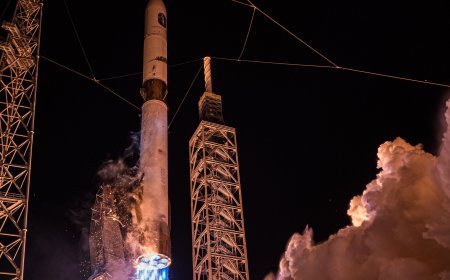
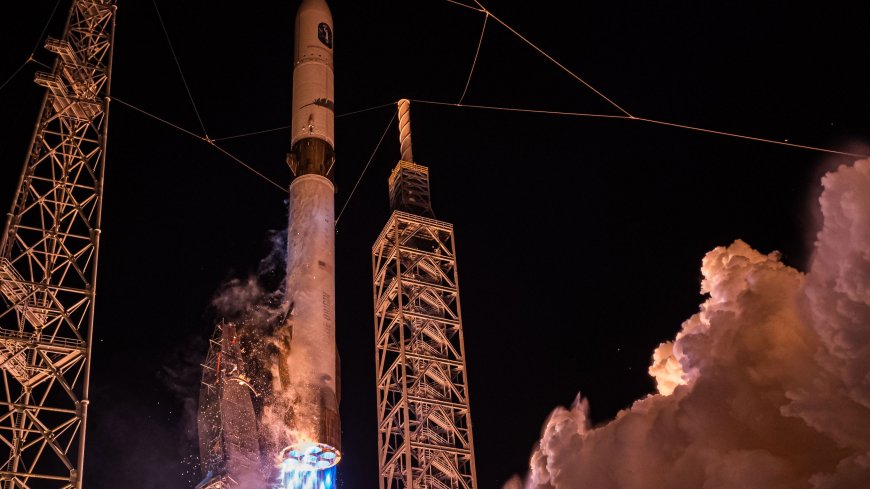
Image: Blue Origin's New Glenn rocket lifts off on its first flight. The same rocket will carry Google's Project Suncatcher satellites in 2029. (Photo: Blue Origin)
Sources
- Google — Google partners with Blue Origin on Project Suncatcher heavy-lift launch
- Blue Origin — Google Selects Blue Origin's New Glenn for Project Suncatcher
- Reuters — Google picks Bezos' Blue Origin to launch AI computing satellites in 2029
- USA Today — Google taps Blue Origin to launch AI satellites into orbit
Related reading: Google's TPU chip variants for AI workloads
What's Your Reaction?
 Like
0
 Dislike
0
 Love
0
 Funny
0
 Angry
0
 Sad
0
 Wow
0