






















































US Chip Curbs Batter Chinese Tech Stocks as Beijing Races for Self-Sufficiency
A flurry of new US restrictions on advanced AI chips has sent Chinese technology stocks tumbling, with AI developers Z.AI down 22% and MiniMax down 34% in two weeks. Alibaba and Tencent warn of tighter computing constraints, while Beijing's push for chip self-sufficiency runs into the hard limits of domestic manufacturing.

US Chip Curbs Batter Chinese Tech Stocks as Beijing Races for Self-Sufficiency
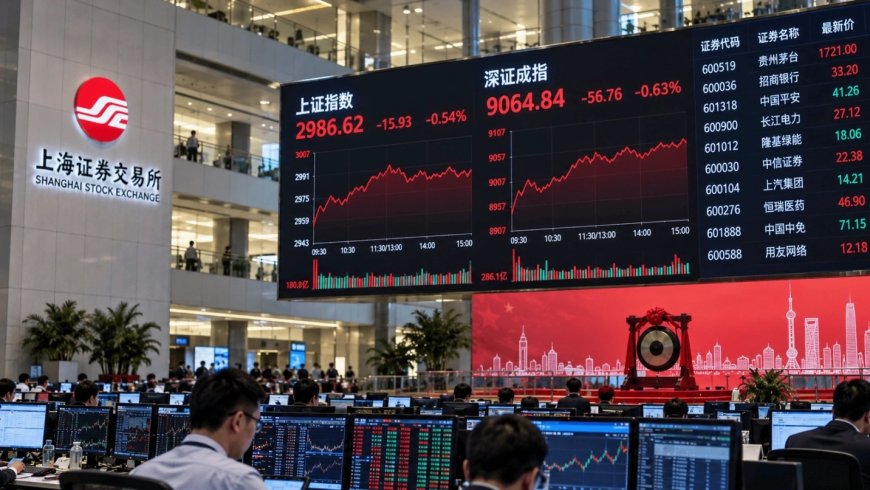
A flurry of new American measures targeting China's access to advanced artificial intelligence chips has further battered Chinese technology stocks this week, forcing investors to weigh a difficult question: will Washington's latest curbs slow Beijing's AI ambitions, or simply accelerate its drive for technological self-sufficiency?
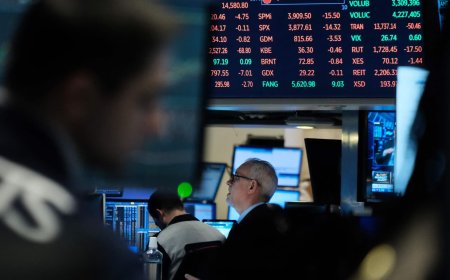
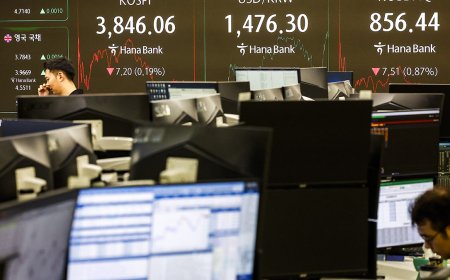
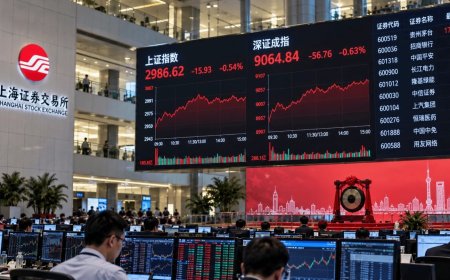
The selling has been swift and broad. Shares in leading Chinese technology companies have slumped since last week, and the pain has been sharpest among the country's listed AI model developers, whose business depends most directly on access to powerful computing hardware.
A week of fresh pressures
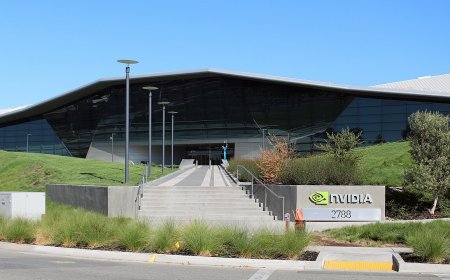
Chinese technology firms faced a series of new pressures in a matter of days. Washington moved to restrict Chinese companies' remote access to advanced AI chips through overseas data centres, closing off a route firms had used to work around existing export bans. Nvidia suspended some chip shipments to China. A shareholder lawsuit was filed against Alibaba. And a US proposal could require American companies to disclose their use of Chinese AI models.
Together, the developments show how the contest between the United States and China for leadership in artificial intelligence is moving beyond semiconductor exports into cloud computing, software and corporate disclosure.
The market reaction followed the resignation of Nvidia co-founder Jensen Huang as chief executive, after reports of extramarital affairs, including one with a suspected Chinese spy. Huang had pushed to preserve Nvidia's access to the Chinese market, and his departure has added another layer of uncertainty for investors assessing the future of US chip sales to China.
The market verdict: smaller AI firms hit hardest
Z.AI has tumbled 22% and MiniMax 34% over the last two weeks, according to Reuters. On Tuesday, Alibaba shed 4.9% and Tencent declined 3.0%, while the two listed AI developers fell further.
Analysts say the damage is uneven. "Closing the gap at the leading edge before 2028, or even by 2030, looks difficult," Neil Shah, vice president of research at Counterpoint Research, said of the impact of the US measures on China's AI industry.
Shah said the impact would be far more prominent in frontier model training than in inference, the process of running an already-trained model to generate responses. AI startups such as Moonshot AI, Z.AI, MiniMax and DeepSeek are more likely to be hit harder than hyperscalers such as Alibaba and Tencent, which have deeper infrastructure and larger financial resources to fall back on.
Training advanced models demands enormous computing power, while inference can run on a wider range of hardware. Restrictions on advanced chips could therefore delay the development of new models without necessarily bringing existing AI services to a halt.
What Alibaba and Tencent told investors
Executives at Tencent and Alibaba, two of China's biggest AI companies, addressed the restrictions during earnings calls this week, and both acknowledged that computing constraints would tighten, though they differed on the near-term impact.
Tencent said its cloud business would be largely unaffected because its AI services rely mainly on inference workloads that can run on domestic chips. But its president, Martin Lau, warned that the US restrictions would slow development of Tencent's next-generation AI model in the near term and accelerate China's shift towards domestically developed semiconductors.
Alibaba chief executive Eddie Wu said the new US rule would affect the company's products and services next year, and could force the company to lower its long-term target of building 20 gigawatts of computing capacity.
Alibaba maintained its long-term goal of generating $100 billion in external cloud revenue by 2030, but said cloud revenue growth was likely to slow to between 30% and 45% next year, down from 53% in the latest quarter, as the company adjusts to the restrictions.
"If (AI) training cycles become longer or the deployment of additional computing capacity slows, product iteration and commercialization could be delayed," said Liu Xingliang, a Beijing-based independent technology industry analyst.
The domestic gap
Both companies said domestic chips would play a growing role in meeting their computing needs. But China's capacity to manufacture advanced chips remains limited, with US export controls on ASML's immersion lithography machines and other tools limiting expansion.
Semiconductor Manufacturing International Corp (SMIC), China's top contract chip manufacturer, is widely regarded as the only Chinese foundry producing advanced chips at scale using a 7-nanometer process. Much of that capacity has been earmarked for Huawei's Ascend AI chips, while Hua Hong Semiconductor's capacity to make advanced chips remains relatively limited.
Alibaba's Wu said the market remained supply-constrained and that domestic computing capacity would become "the primary engine supporting cloud revenue growth."
Other Chinese chip suppliers are moving to reassure investors. Iluvatar CoreX, which supplies chips to ByteDance, said in a statement on its official WeChat account on Friday that it had built close ties with domestic semiconductor supply-chain partners to safeguard supplies, seeking to ease market concerns that had sent its shares down 17%.
The ripple reaches TSMC
The restrictions are also rippling through overseas suppliers. Following the new US licensing requirements announced this week on overseas data centres serving Chinese AI companies, Taiwan's TSMC suspended some previously permitted advanced chip manufacturing orders from Chinese customers, Reuters reported on Thursday.
That development shows how the curbs can reach beyond direct shipments of finished processors, affecting the wider network of manufacturers and infrastructure providers supporting China's AI industry.
Data centre operators in Singapore, Malaysia, Thailand, Indonesia and Brazil now face US licensing requirements before exporting advanced chips, and overseas data centres serving Chinese AI companies have about 90 days to obtain licences, according to reports of the rule.
Why it matters
The immediate question for Beijing is whether domestic supply can scale fast enough to keep its AI industry moving. The longer-term question is whether the curbs, by cutting off access to the world's most advanced chips, end up strengthening the very self-sufficiency drive they are meant to contain.
For now, investors are pricing in the constraint. The model developers with the least computing cushion have fallen furthest, the hyperscalers are trimming growth plans, and the domestic chipmakers expected to fill the gap do not yet have the capacity to do so at the leading edge.
The coming months will show whether China's domestic ecosystem can close that gap — or whether the training of its next generation of AI models simply slows down.
Sources
- Reuters — "US AI chip curbs hit China tech stocks, spur self-sufficiency push" (November 20, 2026)
- Tekedia — "US Chip Curbs Deepen Pressure on Chinese Tech Stocks as AI Supply Constraints Mount" (November 20, 2026)
- Morningstar / Dow Jones — "U.S. Chip Export Curbs Have Mixed Implications for China's AI Industry" (November 17, 2026)
- The Edge Singapore — "Chinese AI stocks down as US chip curbs hit labs and hyperscalers" (November 17, 2026)
- Moneycontrol — "China AI highflier crashes 85% as chip fears hit model makers" (November 17, 2026)
Related on Innopark IT: Nvidia Fallout Throws Spotlight on Southeast Asia's AI Boom and China's $3.2 Billion Nvidia-Powered AI Projects at Risk After Huang Exit.
What's Your Reaction?
 Like
0
 Dislike
0
 Love
0
 Funny
0
 Angry
0
 Sad
0
 Wow
0