

































































Alibaba AI Cloud Revenue Jumps 53% to $9.1 Billion as AI Products Top $10 Billion a Year
Alibaba reported September-quarter revenue of 271.5 billion yuan, up 10% year on year and ahead of analysts' estimates, as its AI Cloud and Compute Services division grew 53% to 60.97 billion yuan. AI-related products have now passed $10 billion in annualised revenue, though heavy spending on AI infrastructure kept free cash flow negative.

Alibaba AI Cloud Revenue Jumps 53% to $9.1 Billion as AI Products Top $10 Billion a Year
Alibaba's bet on artificial intelligence is starting to pay off in a big way. The Chinese technology giant reported on November 19 that revenue from its AI Cloud and Compute Services division surged 53% in the September quarter, the fastest growth in six years, as demand for AI computing power and related products accelerated across industries.
Total group revenue reached 271.52 billion yuan ($40.5 billion) for the quarter ended September 30, 2026, up 10% from a year earlier and ahead of the average analyst estimate of 269.81 billion yuan, according to LSEG data. Reported net income more than tripled to 64.4 billion yuan ($9.7 billion), helped largely by investment gains.
The results show Alibaba's two-track strategy — growing its AI and cloud business while restoring profitability in e-commerce — beginning to deliver at the same time, even as the company keeps pouring money into data centres and its own AI chips.
AI cloud leads the quarter
Revenue from AI Cloud and Compute Services totalled 60.97 billion yuan ($9.09 billion) in the quarter, up from 39.91 billion yuan a year earlier. Revenue from external customers grew even faster, rising 64%, the tenth consecutive quarter in which that growth has accelerated. Recurring revenue from external customers climbed 67%, driven by the increasing adoption of AI-related products.
AI-related products brought in 17.9 billion yuan during the quarter and have now grown at a triple-digit rate for thirteen consecutive quarters. Annualised revenue from those products has passed $10 billion, and they now account for about 49% of Alibaba Cloud's external recurring revenue. Chief executive Eddie Wu told analysts on the earnings call that AI has become "a core revenue pillar" of the cloud business.
"Two quarters ago, we began to see our AI investments cross the commercialization inflection point," Wu said on the call. "Last quarter, growth accelerated, margins expanded. This quarter, those investments are delivering commercial results faster, and the returns are clearer."
Profitability in the cloud division improved sharply alongside the growth. Adjusted EBITA for the segment rose 121% to 8.8 billion yuan, lifting its margin to 14.5%.
Alibaba's separate AI Labs and Applications unit, which houses its Qwen models and agent products, also grew quickly. Revenue rose 51% to about 4.4 billion yuan ($661 million), driven by agent products such as Qwen Office. The unit still recorded an adjusted EBITA loss of 10.5 billion yuan, wider than the 3.4 billion yuan loss a year earlier but narrower than the 13.9 billion yuan loss in the previous quarter, as Alibaba spent heavily on AI investment and inference costs for the Qwen app.
Profit jumps, but adjusted earnings miss
The headline profit figure flattered the quarter. While reported net income rose 213%, that jump was driven mainly by higher investment income and operating profit, and the result on an adjusted basis was more mixed.
Non-GAAP net income leapt 92% to 19.9 billion yuan, helped by stronger profitability and narrowing losses in the company's quick-commerce business. But adjusted earnings per American depositary share came in at 8.10 yuan, below analysts' expectations of about 11.16 yuan.
Alibaba's shares are down about 40% this year, as investors worry about weak consumer demand in China and rising spending on AI and cloud infrastructure. The market's reaction to the results will be a test of whether the cloud growth is enough to offset those concerns.
E-commerce steadies as instant retail losses narrow
The Alibaba E-commerce Group, the company's largest business, reported revenue of about $29.4 billion, up 2% year on year. Its adjusted EBITA jumped 243% to 38.9 billion yuan, driven mainly by a sharp reduction in losses from the instant retail business.
Chief financial officer Toby Xu said the quarter delivered "strong growth in both revenue and earnings because of our strategic focus on AI + Cloud growth and profit sustainability in Alibaba E-commerce Group."
In September, Alibaba reorganised its businesses into four main units: e-commerce, AI cloud and computing services, AI model applications, and other businesses. The reshuffle puts the AI and cloud operations at the centre of the group's structure, matching where its growth now comes from.
Heavy spending continues
Capital expenditure rose 60% to 50.48 billion yuan ($7.5 billion) in the quarter, driven by continued investment in AI infrastructure. Free cash flow was an outflow of 34.47 billion yuan, compared with an outflow of 21.84 billion yuan a year earlier, reflecting the higher spending on cloud infrastructure, partly offset by lower losses at Taobao Instant Commerce and higher customer pre-payments for cloud services.
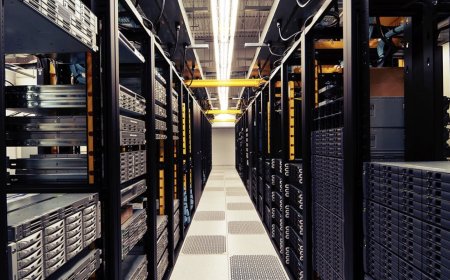
Alibaba launched a $10 billion share placement in August, saying the proceeds would fund computing infrastructure and AI data centres. In September it unveiled plans to expand global data-centre capacity to more than 20 gigawatts by 2032, and said its next-generation Qwen 4 model was in training.
The company is also leaning on its own silicon to cut dependence on outside chip suppliers. Its chip-design unit T-Head, which confidentially filed for a Hong Kong listing earlier in November, has begun shipping its Zhenwu M890 AI processor, with mass production of the next-generation V900 chip expected in the first quarter of 2027. Wu said Alibaba is already using its self-developed chips to train next-generation models. Innopark IT previously reported on Alibaba's plan to list T-Head in Hong Kong and on the unveiling of the Qwen4-Max flagship model.
What comes next
Alibaba kept its long-term cloud targets unchanged: $100 billion in external cloud revenue with a profit margin above 20% by fiscal year 2031. Management expects cloud revenue to grow 30% to 45% next year and to rebound to 50% growth by 2028.
Wu cautioned that progress on new models has lagged over the past two months, which matters because model-as-a-service revenue depends on fresh releases. But he kept the target of 30 billion yuan in annual recurring revenue from AI models and applications by the end of the year.
The September quarter suggests Alibaba's AI spending is no longer just a cost line. The question now is whether the cloud division can keep growing at this pace while the company brings its spending under control — and whether the e-commerce recovery holds long enough to fund it.
Sources
- Alibaba Group, "Alibaba Group Announces September Quarter 2026 Results" — official results announcement, November 19, 2026
- The Straits Times (Reuters), "Alibaba tops revenue estimates on AI cloud growth, profit up on investment gains" — November 19, 2026
- Nikkei Asia, "Alibaba quarterly profit more than triples as cloud services boost sales" — November 19, 2026
- PYMNTS, "Alibaba CEO Says AI Investments Now Deliver Clear Returns" — November 19, 2026
What's Your Reaction?
 Like
0
 Dislike
0
 Love
0
 Funny
0
 Angry
0
 Sad
0
 Wow
0