
































































Senators Introduce AUDIT AI Act to Force Disclosure of AI Financing, Debt and Risks
Four US senators introduced the bipartisan AUDIT AI Act on November 19, 2026, a bill that would require publicly traded companies to disclose how their artificial intelligence investments are financed, who oversees them, and what risks they carry — from joint ventures and special purpose vehicles to dependence on outside AI models.

Senators Introduce AUDIT AI Act to Force Disclosure of AI Financing, Debt and Risks
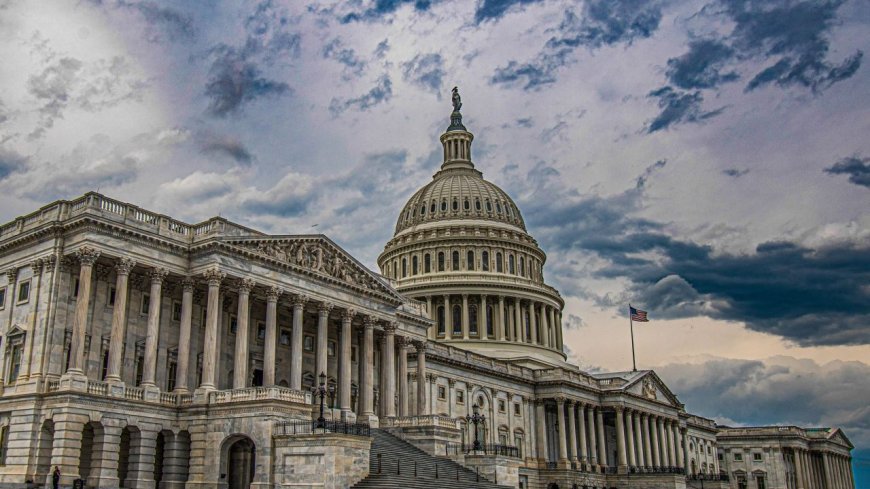
Four US senators have introduced a bipartisan bill that would pull back the curtain on how publicly traded companies are paying for the artificial intelligence boom. The Advancing Uniform Disclosure of Investments and Transparency of Artificial Intelligence Act, known as the AUDIT AI Act, was introduced on Thursday, November 19, 2026, by Sens. Mark Warner of Virginia, John Kennedy of Louisiana, Angela Alsobrooks of Maryland and Mike Rounds of South Dakota.
The bill targets a gap that has grown alongside the AI build-out itself. Companies are pouring trillions of dollars into data centres, chips and energy infrastructure, but much of that spending runs through joint ventures, special purpose vehicles and other debt structures that sit partly outside a company's main accounts. Investors, the sponsors argue, often cannot see the full exposure until something goes wrong.
Warner, a senior Democrat on the Senate Banking Committee, framed the measure as a guard against a repeat of past financial surprises. "Investors and policymakers deserve to know where that money is going, how these deals are being financed, and what risks are involved," he said. "We can't afford to have massive financial exposure building up behind the scenes, only to discover it when something goes wrong."
What the bill would require companies to reveal
The AUDIT AI Act would direct the Securities and Exchange Commission to write new disclosure rules within 180 days of the bill becoming law. Its requirements fall into five parts.
AI infrastructure financing
Non-financial public companies would have to disclose AI-related joint ventures, special purpose vehicles, variable interest entities and other major debt arrangements in their SEC filings, including annual and quarterly reports and offering documents. The disclosures would also cover the leases, guarantees and servicing agreements used to finance AI infrastructure. The SEC could go further and require details on ownership stakes, debt levels, major counterparties and contract commitments.
This is the heart of the bill. Financing structures of this kind have become common as the data centre boom has accelerated, and they can make a company's true exposure hard to assess from its headline accounts alone. Warner has also pointed to circular deals in which a company finances businesses that are also its customers, a pattern sometimes described as round-trip financing. The bill would force those arrangements into the open.
AI governance
Public companies would have to say whether they maintain an AI governance policy and whether they have a board committee dedicated to artificial intelligence, and explain why if they do not. Companies that do have a governance policy would have to make it publicly available. "Our legislation would create transparent disclosure guidelines for public companies regarding their implementation of AI capabilities," Rounds said.
Standardised AI risk disclosure
Companies with significant AI exposure would have to include a standardised AI risk section in their annual reports, covering dependence on third-party foundation models, concentration of compute providers, volatility in training and inference costs, liabilities tied to data licensing and usage rights, and reliance on foreign frontier models.
Financial reporting and market impact
The bill would also direct the SEC to study how companies account for AI research and development, revenues and capital expenditures, and to report annually on how automated investment strategies are affecting price discovery, market efficiency and herding behaviour in financial markets.
Why the sponsors say it matters now
The scale of the spending is the sponsors' central argument. A recent Brookings Institution report estimates that building out AI infrastructure could require 10.3 trillion dollars of investment from 2025 to 2032, equivalent to roughly 3.6 percent of US GDP each year. The report notes that the build-out could surpass historic American infrastructure booms, including railroads, highways and electrification.
That scale is also why the financing matters. A slowdown in the build-out could send shockwaves through the US economy and the financial sector, the sponsors warn, and complex financing arrangements make it harder for investors and regulators to see where the vulnerabilities sit. The bill has been endorsed by former SEC Commissioner Robert J. Jackson Jr., former SEC Chief Accountant Paul Munter and Columbia Business School professor Stijn Van Nieuwerburgh.
The proposal lands in a moment of intense scrutiny of AI financing. Questions about circular deals and off-balance-sheet funding have followed the sector through a volatile autumn, with Nebius planning tens of billions in new spending, Nvidia's fallout rippling through Southeast Asia's AI boom, and AI infrastructure stocks sliding on Wall Street.
What happens next
The AUDIT AI Act is a proposal, not a law. Nothing changes for companies unless it passes both chambers of Congress and is signed by the president. Warner has said his priority in the current lame-duck session is bipartisan AI safety legislation, and he has been working to familiarise colleagues with the disclosure bill in the hope of advancing it soon. That means it may carry into the new Congress, which Democrats will control from January. Its path will run through the Senate Banking Committee, where all four sponsors sit.
For investors, though, the direction of travel is clear. Whether or not this particular bill becomes law, lawmakers are now asking, in public and in detail, who is paying for the AI boom and what happens if the money stops flowing.
Sources
- Office of Senator Mark R. Warner — Warner, Kennedy, Alsobrooks, Rounds Introduce Bipartisan Legislation to Increase Transparency and Oversight of AI Investments
- POLITICO via Senator Warner's office — 'Systemic risk': Warner leads bipartisan bill to scrutinize AI financing
- Financial Markets — Senators Want AI Companies to Show the Debt Behind the Data Centers
- Machine.net — Senators want public companies to show investors the side deals and debt behind their AI spending
What's Your Reaction?
 Like
0
 Dislike
0
 Love
0
 Funny
0
 Angry
0
 Sad
0
 Wow
0