






































































EU Proposes 3% Digital Tax on Big Tech to Pay for Its €1.582 Trillion Budget
European Council President António Costa has proposed a 3% tax on large digital companies, aimed mostly at US tech giants such as Google, Meta, Apple, Amazon and Microsoft, as a new source of revenue for the EU's next seven-year budget. The levy sits inside a slimmed-down 2028–2034 budget draft of €1.582 trillion, which EU leaders will debate at a special summit on 26–27 November.

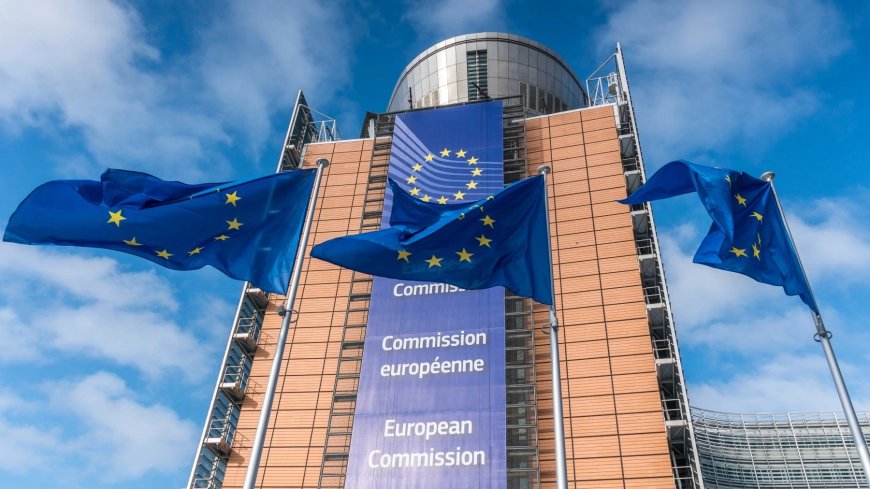
EU Proposes 3% Digital Tax on Big Tech to Pay for Its €1.582 Trillion Budget
The European Union has revived the idea of taxing the world's biggest digital companies, putting a 3% levy on Big Tech at the heart of its next seven-year budget. European Council President António Costa unveiled the proposal on Saturday, 21 November 2026, as part of a slimmed-down draft budget for 2028–2034 — a plan that now heads into difficult talks between the bloc's 27 member states.
The tax would fall on companies earning at least €50 million a year from digital activities inside the EU and more than €750 million in global turnover. Those firms would pay an annual charge equal to 3% of their net turnover from online advertising, digital intermediation services and the commercial use of user-generated data.
On paper, the levy applies to any company that meets the thresholds. In practice, it would land overwhelmingly on US technology giants — Google, Microsoft, Meta, Apple and Amazon — which dominate the markets the tax is designed to capture. That is why the proposal is already being read in Washington and Brussels as a test of how far Europe is willing to go in taxing American Big Tech, and of how the Trump administration will respond.
A smaller budget, and a new way to pay for it
Costa's draft cuts the overall 2028–2034 budget by €40 billion to €1.582 trillion compared with a compromise proposal put forward by the Irish EU presidency in October, and by €180.6 billion against the European Commission's original plan. The deepest cuts fall on the European Competitiveness Fund — set up to help European industry compete with China and the United States — as well as on defence and external spending. Money for agriculture and cohesion is relatively protected.
The budget matters because it is how the EU finances almost everything it does: farm support, infrastructure, border control, defence, student exchanges, help for Ukraine and the salaries of EU officials. It is paid for by national contributions and by so-called "own resources" — taxes and levies collected by member states but dedicated to the EU budget, such as customs duties, a share of VAT and a tax on non-recycled plastic waste. The more own resources the budget has, the less governments must pay from national coffers — and that is the political logic behind the digital tax.
Costa also proposed slowing the repayment of the capital on the more than €600 billion the EU will have jointly borrowed by the end of 2026 for its post-pandemic recovery fund. Repayment of interest and capital is due to start in 2028 and run until 2058, but the capital could be repaid more slowly in the first seven years, freeing money for other priorities.
An old idea, narrowed to Big Tech
The digital tax is not a new invention. It builds on a 2018 proposal from the European Commission that EU governments never adopted. The Commission had also considered a broader charge on large companies in general, but dropped it after most member states objected to the burden it would place on their own businesses. Costa's version narrows the scope to digital firms and raises the revenue thresholds — a change that effectively turns it into a tax on US Big Tech.
Costa rejected that characterisation. "This tax is in no way directed against any particular company or country," he said, describing the aim as fair taxation for companies doing business in the EU market.
Not everyone is convinced by the draft. France criticised the numbers as not doing enough to protect farmers, while Siegfried Muresan, the European Parliament's chief budget negotiator, called the proposal "unacceptable to Parliament" and said it "cannot form the basis for our consent".
The Trump factor
The biggest obstacle may not be inside Europe at all. The Trump administration has repeatedly attacked EU rules aimed at large technology companies — including the Digital Markets Act and the Digital Services Act — as discriminatory against American firms and as non-tariff trade barriers. In June, President Donald Trump warned he would impose 100% tariffs on all products from countries that levy digital taxes on US technology companies, regardless of existing trade agreements.
That threat is one reason many EU governments have been wary of a digital tax for years. Politico has suggested the EU is moving now partly because Trump's political standing has weakened after the Republican Party's midterm election losses, lowering the perceived risk of US retaliation. Even so, the levy needs the unanimous agreement of all 27 member states, and Ireland — where many US tech companies base their European headquarters — is expected to oppose it.
What happens next
EU leaders will discuss Costa's proposals at a special summit in Brussels on 26–27 November, with the aim of narrowing the differences between the bloc's net contributors and net beneficiaries and reaching an agreement in December. The EU is also aiming to agree on a digital tax directive by 2027, with formal adoption of the budget planned the same year.
The timetable is tight by design. Leaders want a deal by the end of 2026 because elections are due next year in France, Italy, Poland, Greece, Estonia, Finland and Slovakia, and the budget is likely to feature in those campaigns. The draft also includes plans for a levy on electronic waste and higher tobacco taxes.
Whether the digital tax survives the negotiations is far from certain. But Costa's draft has put the question back on the table in its sharpest form yet: Europe wants new revenue of its own, and it is prepared to ask the world's biggest digital companies to provide it.
Sources
- Reuters — EU leaders' chair proposes new cuts to EU 2028-2034 budget draft, suggests digital tax
- The Business Times — EU 2028-2034 budget: Antonio Costa proposes cuts, digital tax on tech giants
- Philstar / AFP — EU proposes Big Tech tax, €204B in budget cuts
- ABP Live / Deutsche Welle — EU Proposes 3% Big Tech Tax To Ease Member States' Budget Burden
What's Your Reaction?
 Like
0
 Dislike
0
 Love
0
 Funny
0
 Angry
0
 Sad
0
 Wow
0