






























































Google's Gemini Can Now Phone Businesses for You With Duplex
Google has built its Duplex calling technology into Tasks in the Gemini app, letting the AI assistant phone businesses on a user's behalf — booking appointments, checking availability and handling real-world errands. The system runs on the new Gemini 4 Hydrogen and Gemini 4 Neon models, and every call opens by disclosing that it is an automated system from Google.
Google's Gemini Can Now Phone Businesses for You With Duplex
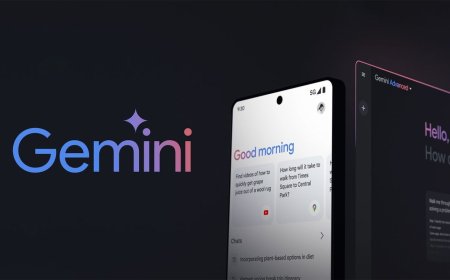
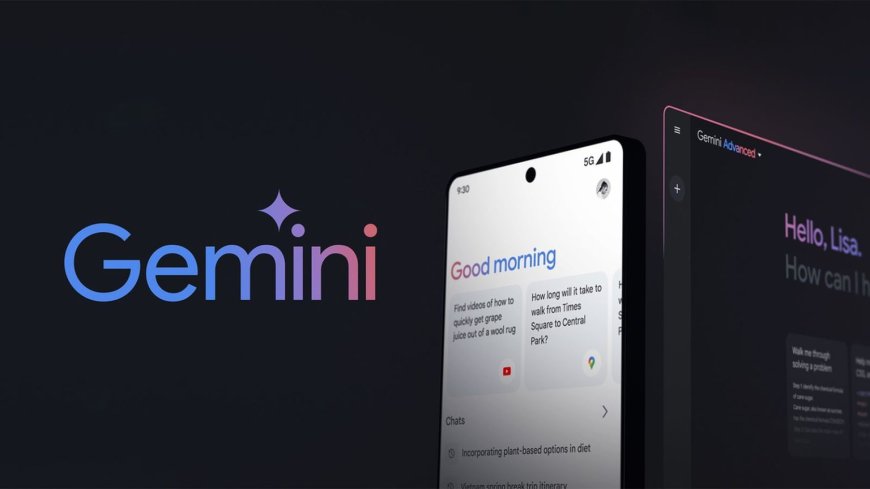
Google has given its Gemini assistant a phone voice. The company has built its Duplex calling technology directly into Tasks in the Gemini app, so the assistant can now ring businesses on a user's behalf — booking an appointment, checking whether a service is available or sorting out a real-world chore that still needs a live conversation. The move turns a capability that has quietly powered parts of Google Search and Maps for years into something users can ask for directly.
Google Research described the launch in a blog post on November 20, 2026, tracing nearly a decade of work on Duplex from its first narrow, task-specific models to a unified system built entirely on Gemini. The new integration runs on Google's latest models, including Gemini 4 Hydrogen and Gemini 4 Neon.
From restaurant bookings to open-ended errands
Duplex began in 2018 as a system for a handful of narrow jobs, such as making a restaurant reservation or checking a shop's holiday hours. Each task needed its own specially trained model, because the system had no general knowledge to fall back on. Over time it grew into shared conversational infrastructure across Google: during the pandemic it verified business information automatically to keep listings accurate, and Google says information gathered through Duplex calls had been shown in Search and Maps more than a trillion times by 2023.
The technology also moved onto phones. From 2019, Duplex models powered Pixel Call Assist features such as Call Screen and Hold for Me across five consecutive Pixel generations. In 2025 and 2026, foundation models opened up broader agentic calling in Google Search and Ask Maps, checking quotes, product availability and service openings from pet grooming to auto repair.
The latest step removes the last constraint. Instead of training a separate dialogue model for every kind of business, Google now prompts the system with a free-text description of the task. That lets the same stack handle new kinds of requests — asking for a window seat, or extra space for a stroller — without being rebuilt for each one. Gemini unifies speech understanding, planning and dialogue generation, so the system can juggle several constraints at once, such as scheduling car maintenance around clashes in the user's calendar, and adapt when a receptionist offers a different time slot.
What Tasks in Gemini can do now
Tasks in Gemini is Google's personal AI collaborator for coordinating real-world chores. With Duplex built in, a user can hand it a phone errand and let it make the call. The assistant steps in where structured digital channels — an online booking form or an API — do not exist, and voice becomes just another tool the agent can deploy.
The calling is only part of a wider workflow. Google says Tasks in Gemini can also analyse utility bills, process transactions securely through the Agent Payments Protocol, and coordinate with users over email and RCS messaging. The phone call is therefore one piece of a longer chain of tasks, rather than a one-off trick.
The advanced calling features are rolling out starting in the United States, while the wider Tasks update is rolling out free of charge in the US, Japan, Korea, Canada, Australia and India, using the Gemini 4 Hydrogen model. Users switch from Chat to Task in the Gemini app to use the feature.
Designed for the business on the other end
Google says Duplex has to work just as well for the business answering the phone as for the user making the request, and that principle shaped several design choices.
Every call opens with a clear disclosure that the caller is an automated system from Google. Businesses stay in control: a merchant can opt out of automated calls in its Google Business Profile settings, or simply say "Please stop calling my business" during a call. And there is nothing for a business to install — Duplex works through the phone the business already answers, with no booking system to maintain and no staff to train. Whoever picks up can handle the call like any other customer, even mid-rush with a queue at the counter.
Details gathered on one call can also answer later questions, so a business is not asked the same thing repeatedly. Google Maps, for example, can show details Duplex collects about a business, such as happy hour specials, patio seating, pet-friendliness or a parking tip.
Why this matters
The launch is less about a single new feature than about consolidation. Duplex spent years as invisible infrastructure, quietly gathering business information and handling calls inside Search and Maps. Putting it inside Tasks in Gemini makes it a visible, user-facing part of the assistant — a sign that Google sees voice calls as a core way its AI agent gets things done in the real world, not just a party trick.
It also sets up a contrast with rival assistants. While some companies are building agents that shop and book through websites and apps, Google is betting that the phone — the channel countless small businesses still run on — remains essential, and that an assistant which can talk to a receptionist is more useful than one that can only click through a form.
The test now is how smoothly the calls go in practice: whether businesses welcome the disclosed AI caller, whether the system handles the messy, fast-moving reality of a live phone conversation, and how quickly the rollout spreads beyond the first markets.
Sources
What's Your Reaction?
 Like
0
 Dislike
0
 Love
0
 Funny
0
 Angry
0
 Sad
0
 Wow
0